

Key Takeaways
- Four ESA Technology CubeSats, SIMBA, RadCube, Sunstorm, and GomX-4B, have reentered Earth’s atmosphere, concluding their missions focused on space technology and scientific research.
- SIMBA successfully measured solar energy and contributed to climate studies, while RadCube monitored space weather impacts during a peak solar activity phase.
- GomX-4B demonstrated pioneering technology, including the first cryptocurrency transaction in space, and will be succeeded by further missions to expand these technologies.
Innovative Missions End with Reentry
The European Space Agency (ESA) has concluded its ambitious initiatives with the reentry of four pioneering Technology CubeSats over the past few months. These compact satellites, comparable in size to a shoebox, have delivered significant advancements in space technology, industrial capability, and scientific data collection.
Roger Walker, who leads ESA’s Technology CubeSats program, explained that while the in-orbit demonstration phases by ESA were completed, the overseeing companies continued to operate the CubeSats, gathering valuable flight experience until their atmospheric reentry. The CubeSats were intentionally launched into low orbits where they would naturally decay over time, aligning with ESA’s space debris regulations.
SIMBA: Solar Monitoring
Among the missions, SIMBA (Sun-earth IMBAlance), developed by a Belgian-led consortium, was launched in September 2020 and reentered on August 14, 2024. The CubeSat utilized an innovative attitude control system based on an experimental star tracker camera, enabling its radiometer to measure total solar irradiance and assess Earth’s radiation budget—crucial to climate research. Principal Investigator Stijn Nevens reflected on the challenges faced in integrating a radiometer within such a small design, highlighting the knowledge gained throughout the mission.
Tjorven Delabie, affiliated with a Belgium-based start-up, noted the crucial role SIMBA played in demonstrating their star tracker technology, which has since helped secure contracts for over a hundred star trackers globally.
RadCube: Space Weather Insights
Following SIMBA, RadCube reentered just six days later. This project, executed by a collaboration among Hungary, Poland, and the UK, was tasked with monitoring space weather impacts on Earth’s magnetosphere. Launched in August 2021, RadCube utilized miniaturized sensors to capture disturbances caused by solar storms, particularly benefiting from its operation during a geomagnetic storm in May 2024. According to Jonathan Eastwood from Imperial College London, RadCube validated the performance of its sensors, demonstrating their effectiveness in space weather monitoring.
Sunstorm: X-Ray Research
The Sunstorm mission reentered on September 5, 2024, focusing on studying solar X-ray emissions. This Finnish-led mission employed a new type of X-ray spectrometer to analyze eruptions on the Sun, known as coronal mass ejections, which can disrupt satellite operations and terrestrial power grids. The lessons learned from Sunstorm will influence upcoming projects, including a similar instrument planned for a US NOAA satellite due to launch in 2029.
GomX-4B: Advanced Applications
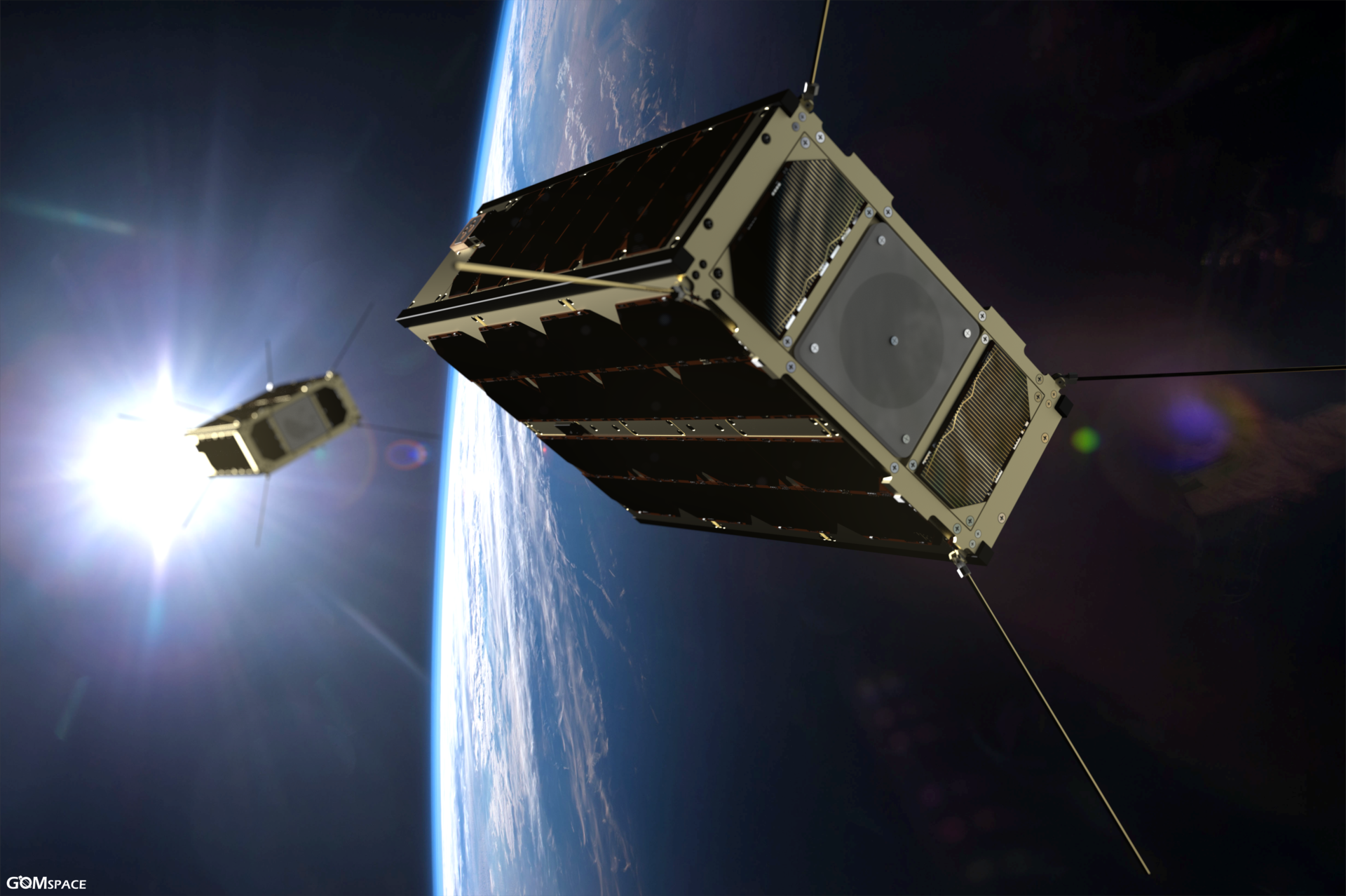
The final reentry was that of GomX-4B on October 9, concluding its mission developed in collaboration with the Danish Ministry of Defence. Launched alongside GOMX-4A in February 2018, it demonstrated advanced technologies in formation flying and inter-satellite communication. Notably, it conducted the first cryptocurrency transaction from space, showcasing its potential for technological innovation. The results from GomX-4B will continue to shape future missions like GOMX-5.
ESA’s Technology CubeSats program supports ongoing innovation, with additional future missions planned for 2026 and beyond, all aimed at advancing space technology in a cost-effective manner. Roger Walker emphasized that these small missions pave the way for future developments, allowing companies to leverage the knowledge gained well beyond the intended lifetime of the satellites.
The content above is a summary. For more details, see the source article.