

Key Takeaways
- Blackswan Space successfully tested its Vision Based Navigation system for autonomous satellite navigation using ESA’s GRALS simulator.
- The system aims to improve space traffic management and facilitate satellite servicing as satellite numbers rise.
- Blackswan’s VBN development is supported by the Lithuanian Space delegation, with plans for an in-orbit demonstration in 2027.
Innovative Satellite Navigation Testing
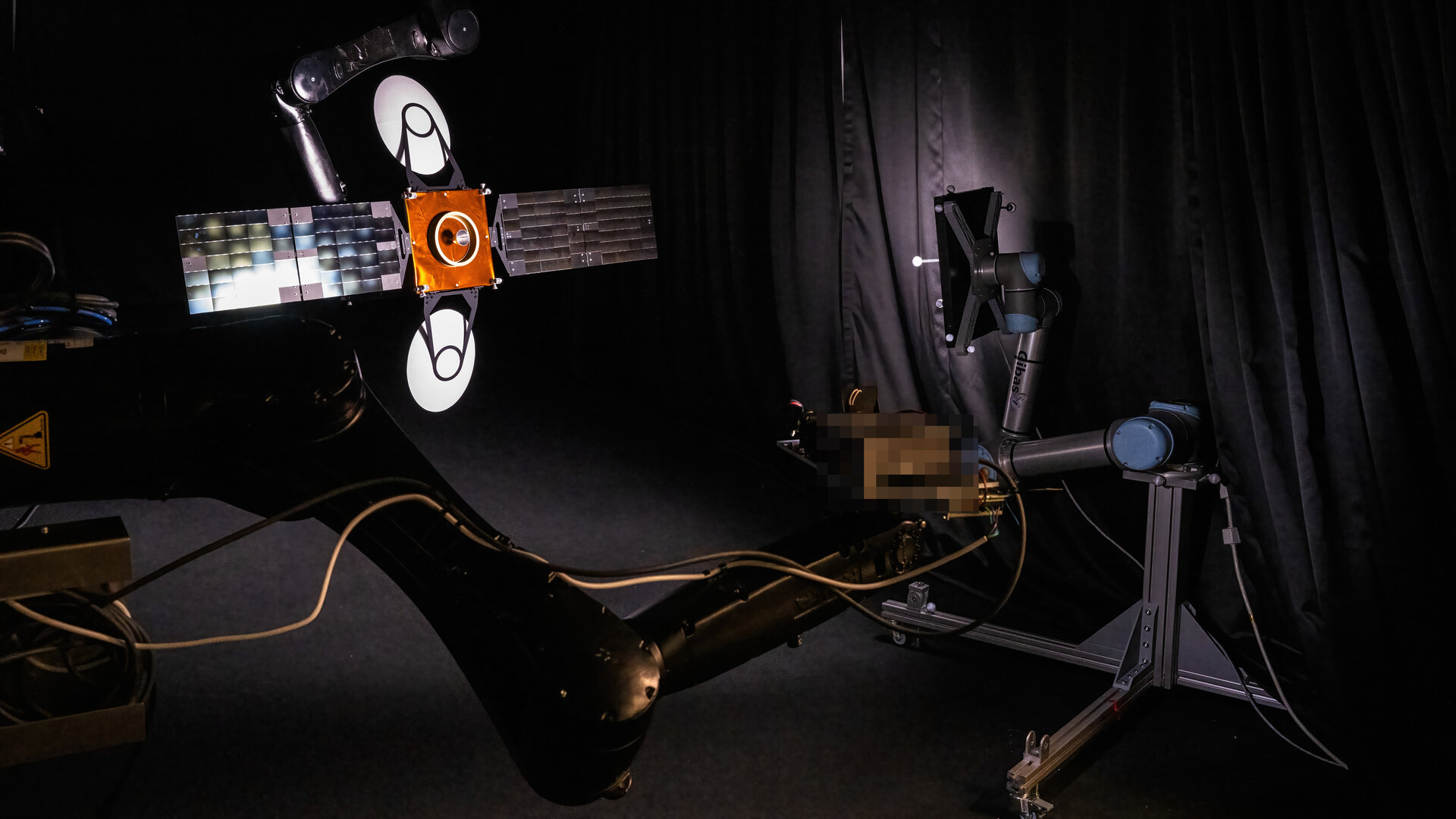
A camera system mounted on a robotic arm is simulating a space rendezvous at the European Space Agency’s (ESA) Guidance Navigation and Control (GNC) Test Facilities in the Netherlands. This facility, known as the Guidance, Navigation and Control Rendezvous, Approach and Landing Simulator (GRALS), is being utilized by the Lithuanian company Blackswan Space to test their autonomous satellite navigation technology.
This technology, called Vision Based Navigation (VBN), uses artificial intelligence to help satellites identify, approach, or avoid other objects in space. Marius Klimavičius, CEO of Blackswan Space, emphasizes the urgency for such capabilities due to the rapid increase in satellite numbers. He notes that this technology is instrumental not only for managing space traffic but also for servicing satellites that either require repairs or run low on fuel.
As the development of vision-based technologies progresses, ESA’s Irene Huertas García explains the shift from software simulation to more tangible hardware testing. GRALS provides a realistic testing environment that mimics space conditions, including controlled lighting and dark surroundings, essential for advancing VBN technology.
The facility features a model satellite, named BlackGEO, designed to replicate the characteristics of a typical geostationary satellite. The model incorporates elements such as multi-layer insulation and solar cells to enhance its realism, having been produced by Blackswan under an ESA contract. This model is available for use by customers of the GNC laboratory.
Blackswan’s successful tests using GRALS have shown how VBN can enhance space traffic management and enable servicing in orbit. The collaboration to develop this system is further supported by the ESA’s General Support Technology Programme (GSTP), which facilitated access to the GNC facility.
In support of this venture, the Lithuanian Space delegation is backing the project financially. They have committed to advancing the VBN system to Technology Readiness Level (TRL) 6 within the next year. Plans are already in motion for an in-orbit demonstration mission, scheduled for 2027.
In parallel, ESA is advancing its own in-orbit servicing mission focused on telecommunications satellites located in geostationary orbit, illustrating a broader industry movement towards enhanced satellite operations and management in the increasingly crowded cosmos.
The content above is a summary. For more details, see the source article.