


Key Takeaways
- Chinese AI company Zhipu AI saw a 48% surge in share price following the release of its open-source GLM-5.2 model.
- The U.S. Commerce Department’s export controls forced Anthropic to block foreign access to its models, affecting its global operations.
- The situation underscores the flaws in America’s tech containment strategy, highlighting the difficulties in controlling software compared to hardware.
Market Shift Sparks Concerns Over Tech Containment Strategy
The recent upswing in the market illustrates significant flaws in the United States’ technology containment strategy. The trend began on June 15, when shares of Zhipu AI, a Chinese artificial intelligence pioneer operating under the name Knowledge Atlas Technology in Hong Kong, jumped 48% intraday. This surge followed the company’s announcement of the open-source release of its GLM-5.2 foundation model. By June 22, Zhipu’s shares reached an intraday high of HK$2,980 (approx. US$380), leading to a market capitalisation exceeding HK$1.2 trillion—a staggering 25-fold increase since its January debut.
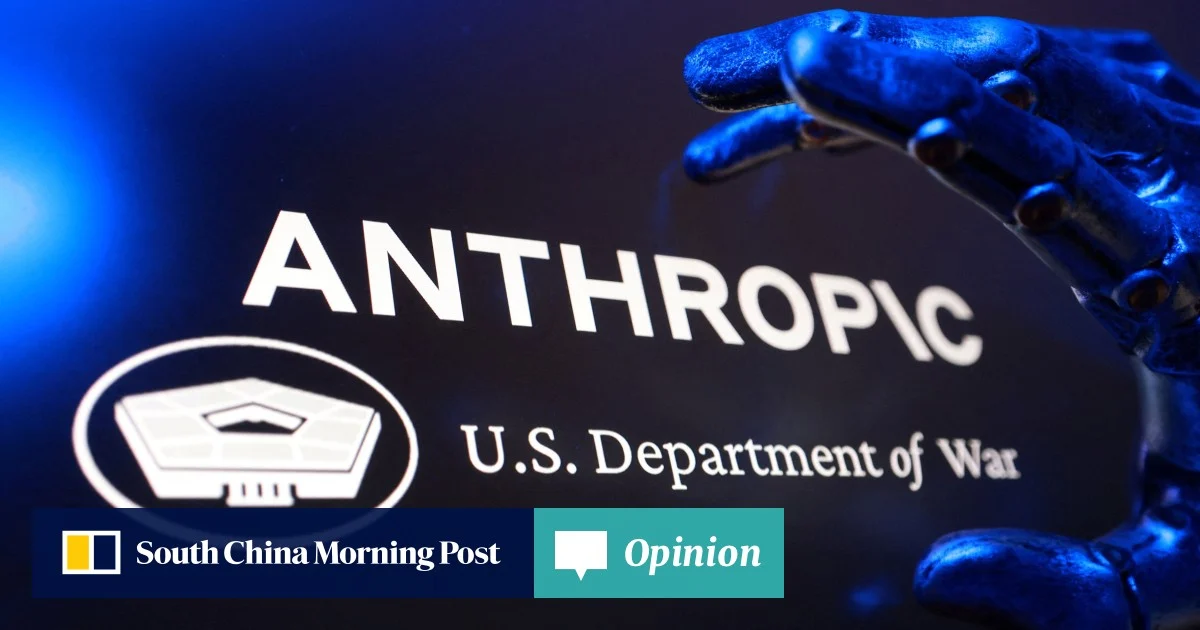
The spike in Zhipu AI’s market valuation coincided with a recent intervention by the U.S. Commerce Department. On June 12, the department mandated California-based Anthropic to prevent foreign access to its new AI models, Fable 5 and Mythos 5. Due to practical challenges in verifying user nationalities in real time, Anthropic was forced to shut down access to both models worldwide, locking out non-American staff and reverting affected customers to an older version.
While the U.S. government attributed this move to a “jailbreak” security vulnerability, Anthropic’s own technical review indicated that the exploit involved only minor flaws prevalent in other public models. This contradiction raises questions about the effectiveness and rationale behind U.S. export controls.
Ironically, Anthropic had previously supported these export restrictions, lobbying for stricter measures. Yet, by aligning with Washington’s regulatory framework, the company now finds itself constrained by it. This situation exposes a fundamental inconsistency in the logic of tech nationalism: software cannot be contained like physical hardware. As code can be disseminated rapidly, denying access merely accelerates the development of alternative technologies in other nations.
This regulatory landscape has not developed in isolation. The U.S. has systematically imposed restrictions on advanced silicon produced by companies like Nvidia since October 2022. The government has expanded its blacklist and includes open-source models in its regulatory frameworks, aiming to limit the global reach of American technology.
The tangible shifts in the market underscore the challenges faced by organizations like Anthropic and Zhipu AI amid escalating trade tensions and the complications of a global tech landscape. As barriers increase, the implications for innovation and competition in AI may lead to unforeseen consequences, urging a reevaluation of the current technology containment policies in the U.S. and their broader global impact.
The content above is a summary. For more details, see the source article.









