


Key Takeaways
- The Smart City Policy (SCP) significantly enhances urban livability in China by approximately 3.67%.
- Variables such as urban population, stricter environmental regulations, and urbanization positively influence urban livability, while foreign direct investment has a negative effect.
- Spatial analysis indicates SCP’s benefits extend beyond pilot cities, promoting livability in surrounding areas as well.
Impact of Smart City Policy on Urban Livability
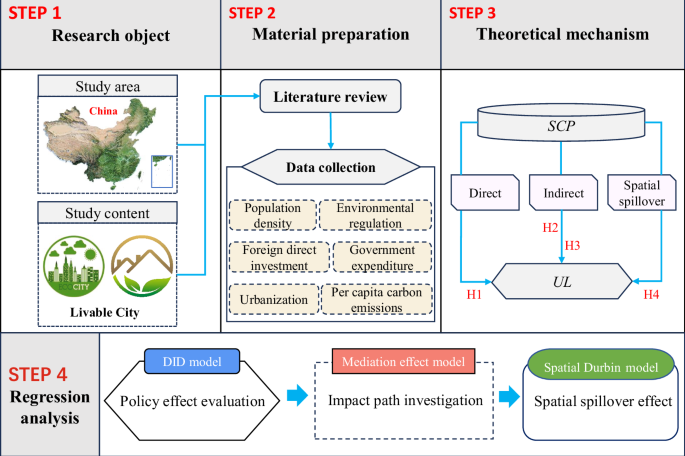
This study utilizes a Difference-in-Differences (DID) model to assess the effects of China’s Smart City Policy (SCP) on urban livability. The analysis indicates that utilizing a fixed effect model is appropriate, as shown by a Hausman test with a p-value under 0.05. The results show a consistently positive coefficient for SCP across all regressions at a 1% confidence level, confirming the hypothesis that SCP positively impacts urban livability.
Further findings reveal that the SCP has improved urban livability in China by approximately 3.67%. Analysis of control variables indicates that increased urban population and stricter environmental regulations contribute positively to livability. However, foreign direct investment correlates negatively, supporting concerns of pollution transfer associated with FDI.
Robustness checks, including a parallel trend test, demonstrate that trends in urban livability were consistent before the implementation of SCP, thereby validating the appropriateness of the DID model for this analysis. Additional methodologies including staggered DID models, entropy balancing, and propensity score matching (PSM) methods also produced consistent results, affirming SCP’s positive influence on livability.
The study examines variations in SCP’s effects based on the size of cities, resource endowment, and the level of human capital. It finds that SCP enhances livability more significantly in larger cities, where better infrastructure and resources facilitate advanced technological integration. In contrast, non-resource-based cities experience more pronounced benefits due to diversified industrial structures that align with sustainable development requirements.
A mediating effect analysis shows that SCP fosters technological innovation and improves social governance, further enhancing urban livability. The study also reveals significant spatial spillover effects, indicating that SCP’s benefits extend beyond pilot cities to neighboring areas, thus promoting wider regional improvements in livability.
Overall, findings consistently suggest that SCP significantly contributes to enhancing urban livability, providing insights into how smart technologies and urban strategies can lead to better living standards across Chinese cities.
The content above is a summary. For more details, see the source article.









