


Key Takeaways
- American Farm Bureau members express concerns about green energy projects encroaching on farmland.
- Ohio Farm Bureau president emphasizes the need for balance between energy production and agricultural needs.
- Proposals for proper valuation of farmland when considering subsidized energy installations are essential.
Concerns Over Green Energy and Farmland Displacement
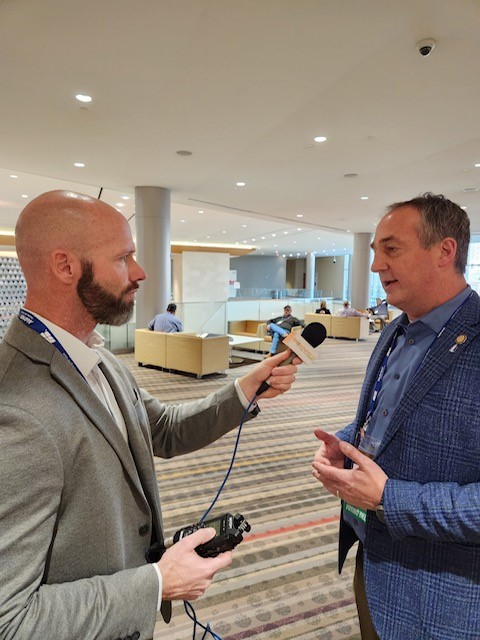
American Farm Bureau members voiced significant concerns at their annual convention in San Antonio regarding the impact of green energy projects on farmland. Ohio Farm Bureau president Bill Patterson highlighted the pressing issue of agricultural land being displaced by energy initiatives. He stated, “There’s a balance, right. And we’re trying to find the balance and trying to figure out how to meet the energy needs of a nation while meeting the food needs of a nation.”
Patterson underscored that it is crucial to establish a system that accurately values farmland when it comes to subsidizing solar energy installations. He mentioned, “There needs to be something; today there’s not. And we just simply have to create that balance.” This sentiment resonates with many farmers who fear that the expansion of renewable energy projects could compromise their ability to produce food.
The issue extends beyond solar energy. Patterson noted that wind energy is also a significant factor, particularly in areas of northwest Ohio, where wind resources are abundant. The increase in both solar and wind energy projects has raised alarms about the long-term viability of farmland as energy developers seek prime agricultural locations for their projects.
Moreover, Patterson expressed concerns about urban sprawl and its impacts on farming communities, further complicating the debate over land use. He advocates for careful consideration of agricultural interests in the planning and development of green energy initiatives to ensure that both food production and energy needs are met without one being sacrificed for the other.
As discussions continue, it becomes clear that finding an equilibrium between agricultural land use and renewable energy expansion is vital not only for farmers but also for the broader community, which relies on both a steady food supply and sustainable energy sources. Policymakers and energy developers are called to address these concerns in a manner that respects the importance of farmland while supporting the nation’s shift towards greener energy solutions.
The content above is a summary. For more details, see the source article.









