


Key Takeaways
- Vietnam’s Central Highlands is a critical region for Robusta coffee, now adapting to new sustainability standards and traceability requirements.
- FarmBlock is implementing a high-tech agricultural model in Gia Lai to enhance compliance with international market demands.
- As the EU enforces stricter regulations, the Vietnamese coffee industry faces challenges related to transparency and data management.
Vietnam’s Coffee Industry: A Shift Towards Technology and Sustainability
Vietnam’s Central Highlands is recognized as the coffee capital of the country, supplying over 40% of the global Robusta coffee market. As the industry faces increasing demands for transparency and sustainability from European markets, agricultural enterprises are investing in high-tech farming solutions. One notable player is FarmBlock, an agricultural technology company that has begun implementing a large-scale digital farming model in Gia Lai Province.
In January 2026, Vietnam exported about 154,635 tons of coffee, generating over $1 billion, reflecting a 100% value increase compared to the previous year. Despite being the second-largest coffee exporter globally, challenges remain, including fragmented supply chains and limited traceability, especially with impending regulations under the European Union Deforestation Regulation (EUDR). This regulation mandates that coffee imports must not be tied to deforestation activities, putting pressure on regions relying on traditional farming practices.
FarmBlock has strategically selected the Chu Puh district in Gia Lai for its high-tech agricultural initiatives. The region features fertile basalt soil optimal for coffee cultivation. Managing 295 hectares, FarmBlock focuses on integrating Robusta coffee with other crops like durian and pepper. The company has developed a 20-hectare tech-driven farm, advancing its management systems to create a traceable supply chain that meets strict global export standards.
To address the challenges, FarmBlock introduced a four-layer digital farming infrastructure that includes:
- IoT Sensor Layer: To continuously monitor environmental indicators like soil moisture and nutrient levels.
- Real-Time Camera Monitoring Layer: Integrating AI technology for crop condition monitoring.
- Digital Twin Layer: Mapping each plot digitally for better management.
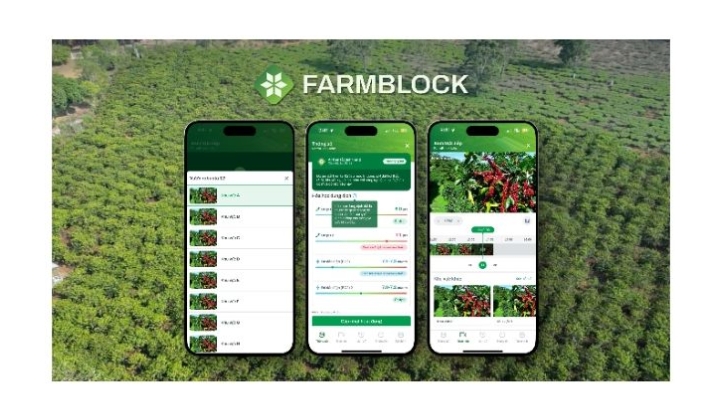
- Mobile Application Layer: Coordinating field operations and generating transparent records for traceability.
In addition to its technological advancements, FarmBlock collaborates with domestic and international organizations to meet global agricultural standards. Partnerships with entities like the Western Highlands Agriculture and Forestry Science Institute and Bureau Veritas are crucial for developing a data infrastructure aligned with EUDR, ESG, and GlobalG.A.P. standards.
As international standards prioritize emissions data and traceability, FarmBlock emphasizes that data is becoming essential for modern agriculture. The company’s CEO, Nguyen Duc Long, notes that improper decisions in agriculture can have long-term repercussions. Looking ahead, FarmBlock aims to further its innovative agricultural model while promoting regenerative practices and standardization in farming data for export markets.
The content above is a summary. For more details, see the source article.









