


Key Takeaways
- Autonomous air taxis are set for commercial operation within five years, starting in select cities.
- The global Urban Air Mobility market is projected to grow from $6.54 billion in 2025 to $92 billion by 2034.
- Key advancements include regulatory support, technologies like AI, and successful test flights, particularly in China and Rwanda.
The Era of Autonomous Air Taxis
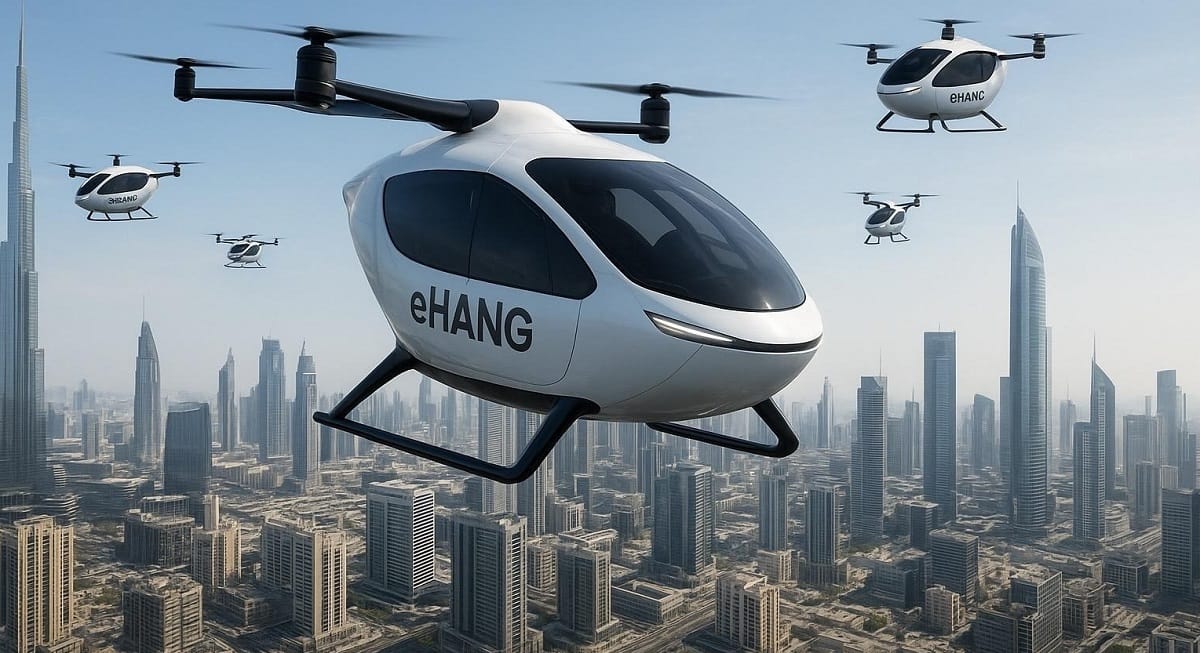
Self-flying, fully electric air taxis are transitioning from concept to reality, with operational services anticipated within five years. EHang, a Chinese company, showcased its EHang 184 prototype in 2018, highlighting urban air mobility’s potential to cut commute times and aid in emergency services. Initially, the vision seemed distant, hampered by regulatory hurdles.
Fast forward to today, technological advancements, particularly in 5G, sensors, and AI, have propelled autonomous aerial vehicles (AAVs) into limited commercial use. EHang has deployed two-passenger AAVs in China for applications including aerial photography and emergency response.
According to a report from Precedence Research, the Urban Air Mobility (UAM) market is on a trajectory to grow significantly, driven by increasing demand for innovative transport solutions. The Asia Pacific region is particularly poised for rapid growth, thanks to government support and urbanization.
In a groundbreaking development, EHang became the first company to obtain certification from the Civil Aviation Administration of China for its EH216-S air taxi. This marks a pivotal step toward operations in major Chinese cities over the next five years. The EH216-S can facilitate quick transportation, drastically shortening travel times—for example, a five-minute flight from Kigali to the airport instead of a lengthy 45-minute drive.
Rwanda, known for its progressive aviation regulations, partnered with EHang to successfully conduct Africa’s first public self-flying air taxi flight. These vehicles boast advanced safety features, including automatic emergency landing capabilities.
Other major players in the sector, like Hyundai and Joby Aviation, are also gearing up for commercial launches by the late 2020s. Despite this progress, significant challenges remain, including consumer trust in autonomous vehicles, ticket pricing, stringent safety regulations, and the necessity of enhanced urban infrastructure for vertiports and maintenance.
For air taxis to achieve mainstream adoption, they must offer affordable and reliable service comparable to traditional ground transport. Moreover, cities must prepare their infrastructures to handle air mobility’s unique operational needs, such as navigational systems capable of managing urban air traffic.
Looking ahead to 2028-2030, some cities in Asia, China, and parts of Africa are expected to feature regular air taxi services. By 2030-2035, fully autonomous air taxis may revolutionize urban travel, particularly in areas with established supportive regulations and infrastructure. While immediate mainstream usage seems likely to emerge in the mid-2030s, the path to widespread acceptance hinges on addressing safety, regulatory environments, and operational efficiency.
The content above is a summary. For more details, see the source article.









