


Key Takeaways
- France orders a fifth Defense and Intervention Frigate (FDI) from Naval Group, to be delivered in 2032.
- The FDI program consists of five vessels with a total budget of €4.28 billion, despite calls for more frigates.
- The FDI is designed for high-intensity combat, equipped with advanced armaments and capable of operating in rough seas.
New Frigate Order Expands French Naval Capabilities
France has placed an order for its fifth Defense and Intervention Frigate (FDI) with shipbuilder Naval Group, marking the final vessel in the series intended for the French Navy. The order was confirmed at the end of March, and the new frigate is set to be delivered by 2032, as stated by the French Armed Forces Ministry.
The latest vessel follows the procurement of the fourth FDI in December. Both ships will be constructed at Naval Group’s facility in Lorient, Brittany. Naval Group’s CEO, Pierre Éric Pommellet, expressed the company’s commitment to enhancing the French Navy’s capabilities and ensuring naval superiority in service of the nation’s sovereignty.
The delivery of the fifth FDI will complete a fleet intended to consist of 15 high-capacity frigates. However, Adm. Nicolas Vaujour of the French Navy highlighted that a need for 18 frigates remains for optimal operational coherence, leading some lawmakers to advocate for an increase in the FDI order to eight units.
The entire FDI program has a budget of approximately €4.28 billion ($4.9 billion) as per France’s fiscal accounts from 2019. The delivery timeline for the fifth frigate has shifted, now expected three years later than the originally planned date of 2029. The delay is attributed to various issues, including industrial challenges with the first unit, disruptions caused by the Covid-19 pandemic, weapon integration setbacks, and a reallocation of production resources for an order from Greece.
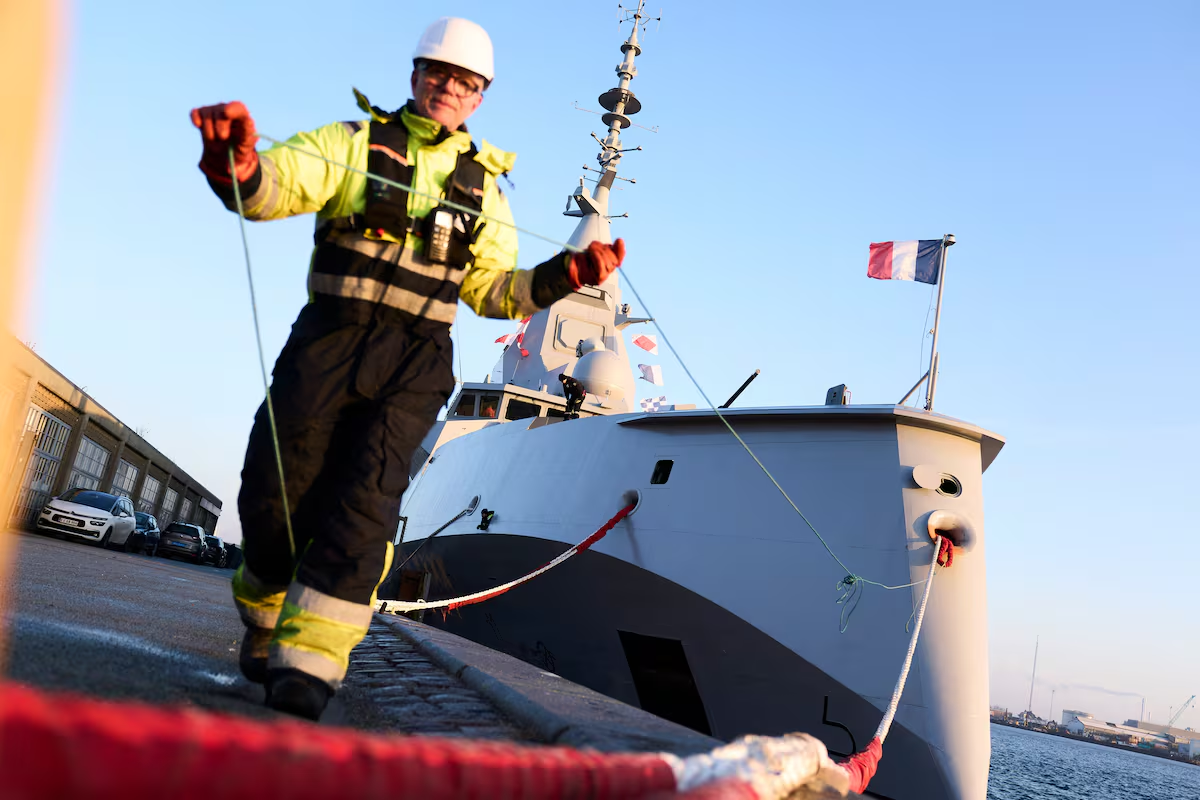
The inaugural ship of the class, named Amiral Ronarc’h, was delivered last October and is currently engaged in a long-term deployment, including operations with the carrier strike group centered around the Charles de Gaulle aircraft carrier. This deployment has allowed the Amiral Ronarc’h to conduct tests on its radars and combat system under operational conditions.
Naval Group has indicated that the FDI frigates can effectively handle rough maritime conditions, demonstrated during trials in Sea State 6, described as “very rough” with waves measuring 4 to 6 meters. With a length of 122 meters and a displacement of approximately 4,500 tons, the FDI is smaller than several newer frigate designs from the U.K., Spain, Italy, and Germany.
Nonetheless, the vessels are optimized for high-intensity operations and come armed with Exocet anti-ship missiles, Aster air-defense missiles, MU90 torpedoes, and a 76 mm cannon. They are also integrated with advanced Thales Sea Fire radar systems.
The FDI program is competing for international orders, including a pending decision from Sweden for four frigates. France has positioned itself to deliver a fully equipped frigate by 2030, aligning with Sweden’s timeline for initial deliveries.
While Norway chose the U.K.’s Type 26 frigate over the FDI last year, Greece has opted for an additional FDI in its fleet, adding to three previously ordered units. Changes in the configurations for the third to fifth French vessels include an upgrade to 32 vertical launch cells, matching Greece’s specifications, while the first two will also see enhancements to their capabilities.
The French Navy promotes the FDI as a fully digital platform, equipped with robust computing capabilities to process onboard sensor data, further enhancing operational effectiveness.
The content above is a summary. For more details, see the source article.









