


Key Takeaways
- Fraunhofer IISB has developed a 750 kW permanent-magnet traction motor for hybrid-electric regional aircraft, achieving an impressive power density of 8 kW/kg.
- The motor utilizes NO15 electrical steel and a unique winding arrangement, enhancing performance and fault tolerance.
- This development is part of the Clean Aviation EU Project AMBER, aiming for significant CO₂ reductions in regional aviation.
Innovative Motor Development
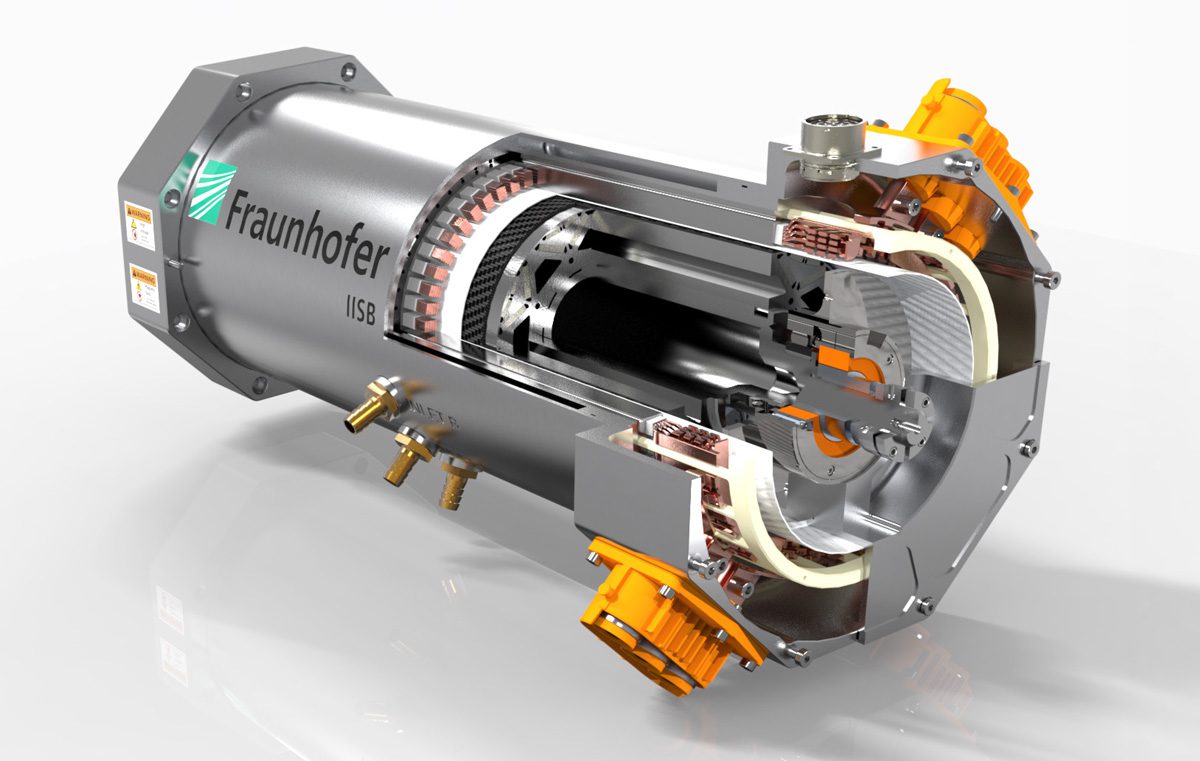
Fraunhofer IISB has unveiled a cutting-edge 750 kW permanent-magnet traction motor tailored for hybrid-electric regional aircraft. This innovative motor achieves an exceptional power density of 8 kW/kg, thanks to its use of advanced materials and cooling techniques.
The motor employs NO15 electrical steel, a thin-lamination type measured at 0.15 mm thick. This special design minimizes eddy currents and alternating current losses, particularly at high rotational speeds, helping meet the stringent power density target in a lightweight package weighing just 94 kg.
Key specifications of the motor include:
- Rated Power: 750 kW at 65 °C oil coolant
- Rated Speed: 21,000 rpm
- Torque: 350 Nm
- Dimensions: 250 mm in diameter and 600 mm in length
- Cooling Method: Direct oil spray
- Winding Configuration: Four independent sections with a 4×3 phase hairpin design
The 4×3 phase hairpin winding arrangement enhances current density within the slots and ensures improved thermal contact with the stator core compared to traditional round-wire coils. This design not only improves thermal performance but also increases fault tolerance; if one section fails, the remainings continue to operate without interruption.
This state-of-the-art motor is a central component of Project AMBER, a Clean Aviation EU initiative focusing on developing a hybrid-electric propulsion system that combines Fraunhofer IISB’s motor/generator with the Catalyst advanced turboprop engine from Avio Aero. Backed by GE Aerospace, the AMBER project aims to reduce CO₂ emissions by at least 30% at entry into service, compared to regional aircraft in 2020.
The entire development process for the motor—covering concept design, CAD modeling, manufacturing, assembly, and rigorous validation—was conducted in accordance with aerospace standards at Fraunhofer IISB. This comprehensive in-house approach showcases the institute’s commitment to advancing sustainable aviation technologies while ensuring adherence to high engineering standards.
In summary, this new motor demonstrates significant advancements in electrical engineering applied to aviation, pushing the boundaries of efficiency and sustainability in the industry. With its robust design and promising specifications, it is poised to play a vital role in the future of regional air travel.
The content above is a summary. For more details, see the source article.









