

Key Takeaways
- GalaxEye successfully tested its SyncFusion Imaging System in extreme space conditions aboard ISRO’s POEM-4 mission.
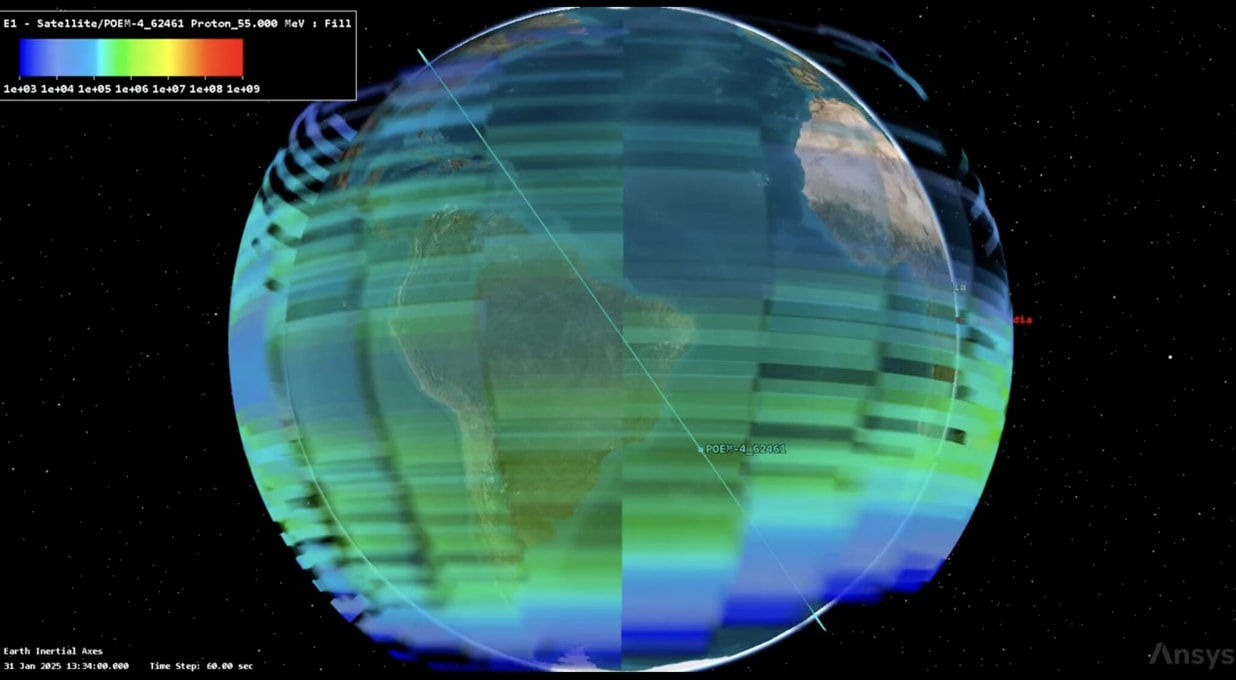
- The GLX-SQ payload performed effectively in the South Atlantic Anomaly, showcasing its resilience against high radiation and extreme temperatures.
- This achievement positions GalaxEye as a leader in Earth observation technologies and indicates India’s growing capabilities in space innovation.
Successful Testing of SyncFusion Imaging System
GalaxEye, a startup specializing in space technology, has reached a significant milestone with the successful testing of its SyncFusion Imaging System. The test was conducted using the GLX-SQ payload during the Indian Space Research Organisation’s (ISRO) POEM-4 mission. The results were impressive, particularly given the challenging environment of the South Atlantic Anomaly (SAA), an area noted for its high radiation levels.
The GLX-SQ payload was tested aboard ISRO’s experimental space lab, which repurposes the fourth stage of the PSLV rocket for innovative payload testing. Notably, the system not only functioned flawlessly in the high-radiation region but also performed well during an eclipse when temperatures fell below -10°C.
Suyash Singh, CEO and Co-founder of GalaxEye, emphasized that the project aimed to “push the limits of our technology to prove its robustness.” He noted that operating in both the SAA and during extreme temperatures demonstrated not only the technology’s performance but also India’s advancements in space innovation.
The South Atlantic Anomaly poses significant challenges for satellite operations due to its weakened magnetic field and elevated radiation. Despite this, the GLX-SQ payload excelled in several crucial performance areas: it captured and processed SAR images impeccably, maintained continuous operation in sub-zero temperatures, and exhibited the effective functioning of its thermal insulation systems under severe conditions.
This success builds on GalaxEye’s prior innovations, particularly in merging Synthetic Aperture Radar (SAR) with optical imagery, solidifying its status as a pioneer in Earth observation. The company’s achievements not only validate its technological prowess but also underscore India’s potential to contend with complex space conditions.
Looking ahead, GalaxEye is set to advance its initiatives with Mission Drishti, which aims to bolster innovative space solutions across various sectors, including defense, agriculture, and disaster management. As the company makes continued progress in space technology, it is establishing a foundation for India’s leadership in future global space exploration and advancements.
The content above is a summary. For more details, see the source article.