


Key Takeaways
- Residents in Mirsarai, Bangladesh, face climate-related challenges, worsening access to safe drinking water.
- The Global Center on Adaptation is enabling local communities to develop People’s Adaptation Plans for climate resilience.
- Inclusive governance and community collaboration are key to transforming Mirsarai into a truly “smart” city.
Climate Challenges in Mirsarai
In Abbas Ali Bhuiyan Hazir Bari, Mirsarai, fishing is a vital source of income for families like that of Ali Murtoza. However, rising temperatures are causing fish health issues, leading to increased pesticide use. Additionally, the community faces challenges with water quality from local ponds and tubewells, which can be high in iron and even arsenic.
The Global Center on Adaptation (GCA) supports the development of People’s Adaptation Plans in Mirsarai and neighboring municipalities, Feni and Laksam, as part of the Asian Infrastructure Investment Bank’s Smart Cities Development Project. Climate impacts like extreme heat are exacerbating existing issues, such as limited access to safe drinking water. The concept of a “smart” city extends beyond technology; it encompasses inclusive governance, informed decision-making, and collaboration among communities, local governments, and NGOs to safeguard natural resources and provide financial tools.
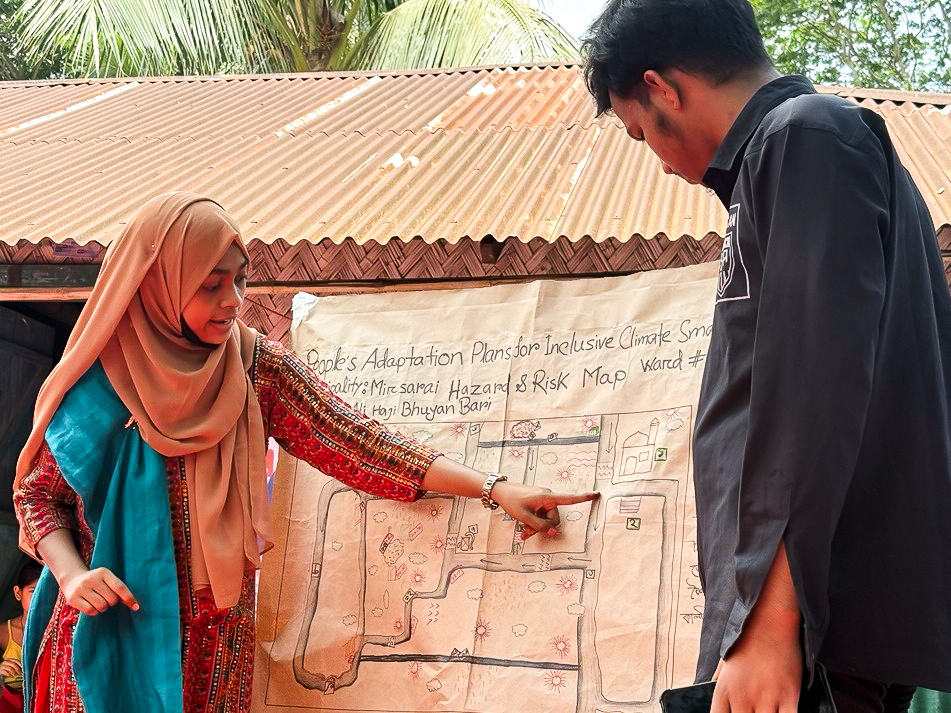
To combat these challenges, GCA is partnering with Save the Children and Young Power in Social Action (YPSA) to facilitate a bottom-up planning process. Community mobilizers, trained by GCA, have mapped climate vulnerabilities across nine low-income communities. These mobilizers conducted detailed household profiles and geotagged data collection for 502 households, offering a comprehensive overview of demographics, socioeconomics, and climate-related concerns.
In conjunction with this community data, researchers from Jahangirnagar University have produced high-resolution satellite maps, identifying current and potential climate hazards. Discussions on adaptation priorities are based on this combined data. A recent GCA visit led by Anju Sharma highlighted various community issues, including:
– Declining water quality and availability, leading to health problems.
– Persistent flooding that contaminates water sources and disrupts essential services.
– Unpredictable weather patterns adversely impacting agriculture and fisheries.
– Extreme heat affecting livelihoods, particularly in vulnerable housing conditions.
– Storm damage causing frequent destruction to homes.
– Financial struggles amplified by high-interest loans.
Municipality Administrator Mr. Saiful Islam acknowledged these interconnected problems and expressed a commitment to work alongside trained community mobilizers to implement climate-resilient solutions. This collaborative effort aims to redefine what it means to be a “smart” city, centering on the needs of its most vulnerable residents and fostering resilience from the ground up.
The content above is a summary. For more details, see the source article.









