


Key Takeaways
- The German Navy is deploying two ships to the Red Sea for a potential mine-clearing mission in the Strait of Hormuz.
- The mission requires parliamentary approval from Germany’s Bundestag, expected to be presented before the summer recess.
- Iran has warned against the presence of European warships in the region, stating it would respond decisively to any such actions.
Deployment of German Ships to the Red Sea
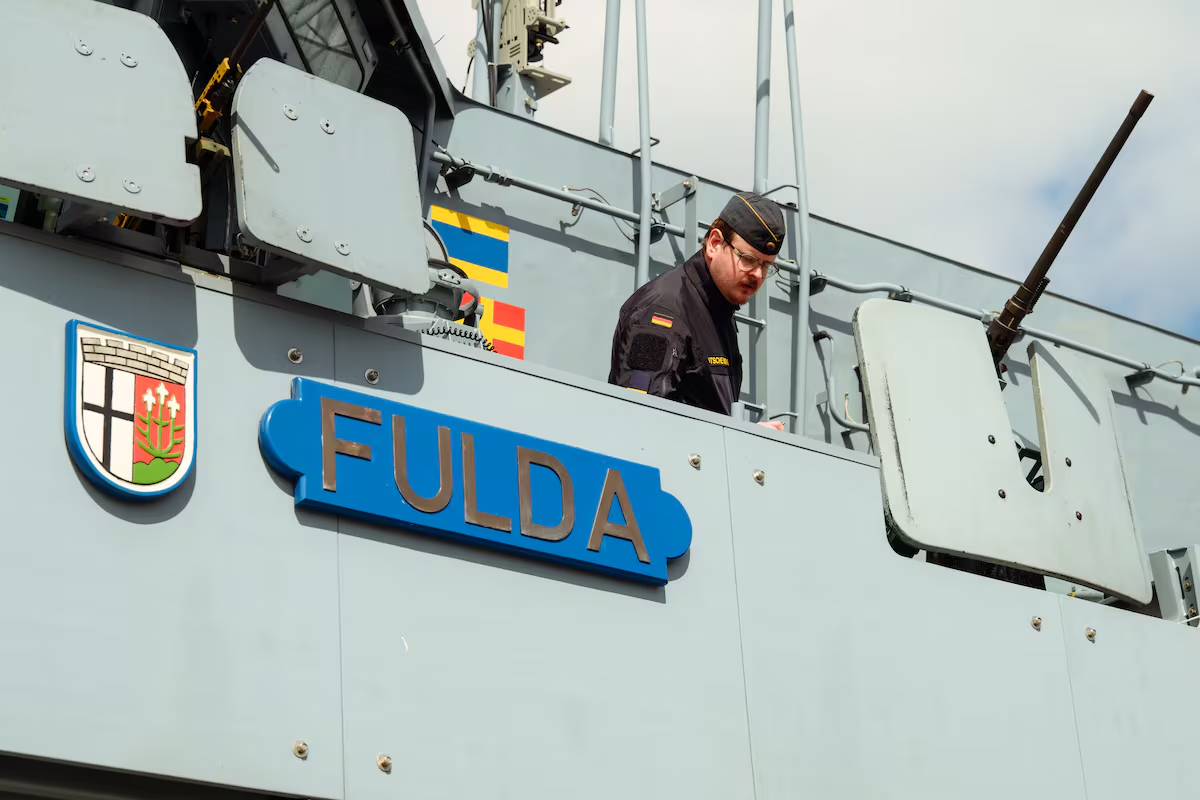
Germany’s defense minister, Boris Pistorius, announced the deployment of two Navy ships to the Red Sea, preparing for a potential mine-clearing operation in the strategic Strait of Hormuz. The mine-clearing vessel Fulda and the supply ship Mosel have successfully transited the Suez Canal and are on their way to Djibouti, where they are expected to arrive within five to seven days for refueling and resupply. Currently, the ships are part of the European Union’s operation Aspides, launched in response to attacks on commercial vessels by Iran-backed Houthis in Yemen.
The German Ministry of Defense has confirmed that 140 German soldiers, including mine clearance divers and protective teams, are aboard the vessels. Pistorius stated that while operations in the Red Sea would bolster overall situational awareness for the EU mission, any specific action in the Strait of Hormuz would require approval from the Bundestag, Germany’s parliament. A resolution for this purpose is intended to be submitted for consideration before the parliamentary summer recess starting July 10.
To engage in activities in the Strait of Hormuz, conditions must include an end to hostilities with Iran and a multinational mandate. Pistorius emphasized the necessity for a “permissive environment,” particularly involving consent from both Iran and Oman for mine-clearing operations. He acknowledged ongoing negotiations between the U.S. and Iran, underlining that the specifics of any German involvement would depend on their outcomes within the next 60 days.
There has been a growing call for a multinational naval mission in the Strait, led by the United Kingdom and France, and incorporating a diverse group of nations including Australia, Canada, and several European states. Recently, leaders from France, the UK, Germany, and Italy issued a joint statement in support of the ceasefire announced by U.S. President Trump, reiterating their commitment to a defensive mission for commercial shipping safety and mine clearance.
However, tensions persist, as Iran has previously cautioned European nations against sending warships, asserting that such actions would be met with a “decisive and immediate response.” Iranian deputy foreign minister Kazem Gharibabadi declared the Strait of Hormuz as not being a domain for foreign powers, emphasizing Iran’s sovereignty as a coastal state in the region.
The situation is complex and evolving, and the international community watches closely as the German Navy prepares for potential engagement in the highly sensitive waters of the Strait of Hormuz.
The content above is a summary. For more details, see the source article.









