


Key Takeaways
- Google’s Gemini AI will soon be integrated into its Home API, enhancing smart home automation.
- New collaborations with companies like Yale and Cync will bring further innovations in smart home technology.
- Google aims to simplify custom automation creation, making it accessible for DIY homeowners.
AI Integration in Google Home
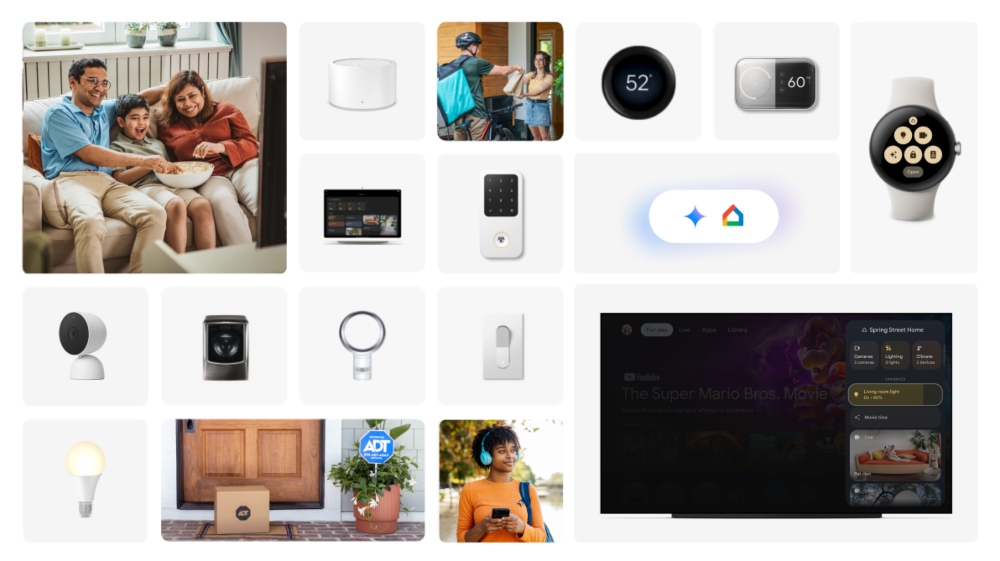
Google’s I/O developer conference showcased a significant focus on artificial intelligence, particularly Google’s Gemini AI, which will soon enhance its smart home offerings. With its Home APIs opened to developers last year, various companies, including ADT and Hisense, have created bespoke integrations, signaling a collaborative evolution in smart homes.
Looking ahead, Google plans to directly incorporate Gemini AI into its Home APIs, promising to deliver “the best of Google’s AI” to homeowners. This integration aims to make automation creation easier, empowering users to develop customized setups without requiring programming skills. Previously, in November 2024, a limited version of Gemini’s automation capabilities was made available to select Nest Aware Plus subscribers through the ‘Help Me Create’ feature, enabling voice-activated automation requests.
Gemini’s functionality will extend across the home platform, allowing users to converse with the AI for personalized automations. The system will analyze device usage patterns to suggest useful automations, such as skipping sprinkler activation after rain. Google’s strategy parallels that of companies like Nice, which have also prioritized simplifying automation processes for both professional and DIY markets.
As Google targets the DIY segment of smart homes, Gemini’s integration will enable control through widely used devices, enhancing accessibility and fostering innovation. While it may be seen as catching up to advanced professional systems, Google’s advancements showcase the potential of AI to democratize smart home technology. The extent of Gemini’s capabilities compared to existing sophisticated systems remains to be seen, but Google is inviting interested developers to sign up for its Developer Newsletter to explore new API opportunities.
The content above is a summary. For more details, see the source article.









