


Key Takeaways
- The Sarisa II unmanned combat aerial vehicle (UCAV) demonstrated its combat readiness during live-fire tests from February 10-12, 2025.
- Successful precision strikes were achieved with Thales’ laser-guided rockets, showcasing the drone’s autonomous capabilities.
- The tests highlight Greece’s advancements in drone technology and its effective integration with modern weaponry.
Successful Testing of Sarisa II UCAV
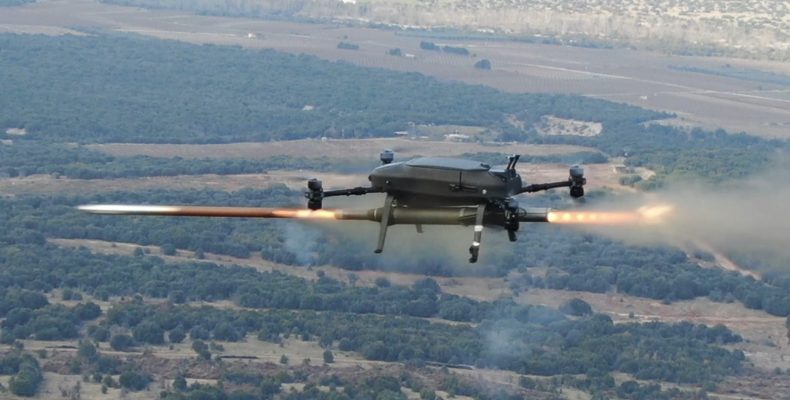
Greece’s domestically-produced Sarisa II unmanned combat aerial vehicle (UCAV), known as the SRS-2A, recently completed a successful three-day live-fire testing program at the Litochoro Firing Range, confirming its combat readiness. Conducted from February 10th to 12th, 2025, the tests were overseen by the Hellenic Ministry of National Defense, with support from Thales Belgium and Hellenic Defense Systems (HDS).
During the first day of testing, the SRS-2A launched unguided rockets, validating its flight stability and the accuracy of its optical sighting systems. On the second day, the drone targeted a 5×5 meter area with remarkable precision using Thales’ FZ275 laser-guided rocket (LGR), achieving a Circular Error Probable (CEP) of less than one meter from a distance of 1,700 meters, despite this distance being below the preferred operational range of 3-5 kilometers. This performance demonstrated the drone’s autonomous firing capabilities under challenging conditions.
The tests culminated on February 12th with a demonstration attended by military representatives from the Hellenic Army, Navy, Air Force, and Special Forces, along with international delegations. The drone successfully fired an FZ275 LGR from a distance of 450 meters, again maintaining a CEP under one meter. Additionally, the event showcased precision grenade drops from the Hellenic Special Forces’ Empusa EMPX6T UCAV. Although a planned launch of the AIHMI loitering munition from the SRS-2A was canceled due to adverse weather, the overall testing underscored the capabilities and readiness of Greece’s drone technology.
The Thales FZ275 LGR is engineered for precision strikes against targets such as vehicles and infrastructure, operating effectively at ranges between 1,500 to 7,000 meters. Its design minimizes collateral damage, with the rocket compatible with standard 2.75-inch launchers and utilizing both Lock-On Before Launch (LOBL) and Lock-On After Launch (LOAL) methods for target acquisition.
The successful testing of the Sarisa II marks a pivotal advancement in Greece’s military capabilities, reaffirming the UCAV’s operational readiness and effective integration with cutting-edge weapon systems.
The content above is a summary. For more details, see the source article.









