


Key Takeaways
- VI-grade partners with MoBeLIV to enhance electric vehicle powertrain validation through simulation.
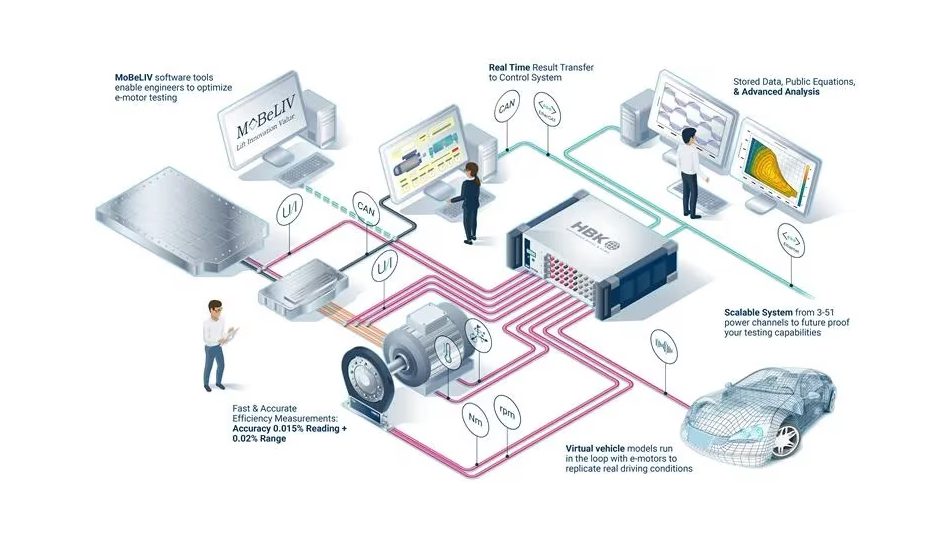
- The collaboration integrates MoBeLIV’s software with HBK’s testing solutions, improving efficiency and accuracy.
- Engineers gain access to a powerful virtual testing platform, accelerating electrified powertrain development.
Partnership Overview
Germany-based VI-grade, part of the Virtual Test Division of testing and measurement firm Hottinger Brüel & Kjær (HBK), has announced a partnership with electric drive simulation specialist MoBeLIV. This collaboration aims to enhance the validation of electric vehicle (EV) powertrains for engineers in the automotive sector.
Under this agreement, HBK and its affiliates, including VI-grade, will become resellers of MoBeLIV’s simulation software. By combining HBK’s advanced testing solutions with MoBeLIV’s powerful simulation capabilities, engineers can expect to validate and refine their results faster and more effectively.
Mitchell Marks, Director of Automotive Strategy and Business Development at HBK, emphasized the importance of bridging the gap between simulation and measurement. He stated, “Customers want to understand and bridge the gap between simulation and measurement. MoBeLIV’s expertise in test-informed modeling and real-time simulations enables us to offer advanced results in electric motor testing, complementing HBK’s portfolio with simulation tools that seamlessly incorporate test data.”
Additionally, Alessio Lombardi, Head of EMEA and NA Sales at VI-grade, pointed out that the collaboration will further enhance capabilities by connecting MoBeLIV’s real-time electric motor models with VI-grade’s flagship solution, VI-CarRealTime. Lombardi explained, “With this integration, OEMs and suppliers gain a powerful virtual testing environment, both offline and on the driving simulator, accelerating the development of electrified powertrains with higher fidelity and confidence.”
This partnership represents a significant advancement for the automotive industry, as it combines simulation-driven insights with traditional testing methods, ultimately aiming to streamline the development processes for electric vehicles. The improved methodologies will provide engineers with better tools and data to support their work, facilitating faster and more reliable product development.
The content above is a summary. For more details, see the source article.









