


Key Takeaways
- Minister J.P. Nadda led a CEO roundtable at India Medical Device 2026, focusing on enhancing India’s MedTech ecosystem.
- A report on AI in MedTech outlines five priorities to promote the integration of AI into India’s healthcare sector.
- Robust clinical evidence and transparent reimbursement mechanisms are essential for the adoption of innovative medical technologies in India.
Strengthening India’s MedTech Ecosystem
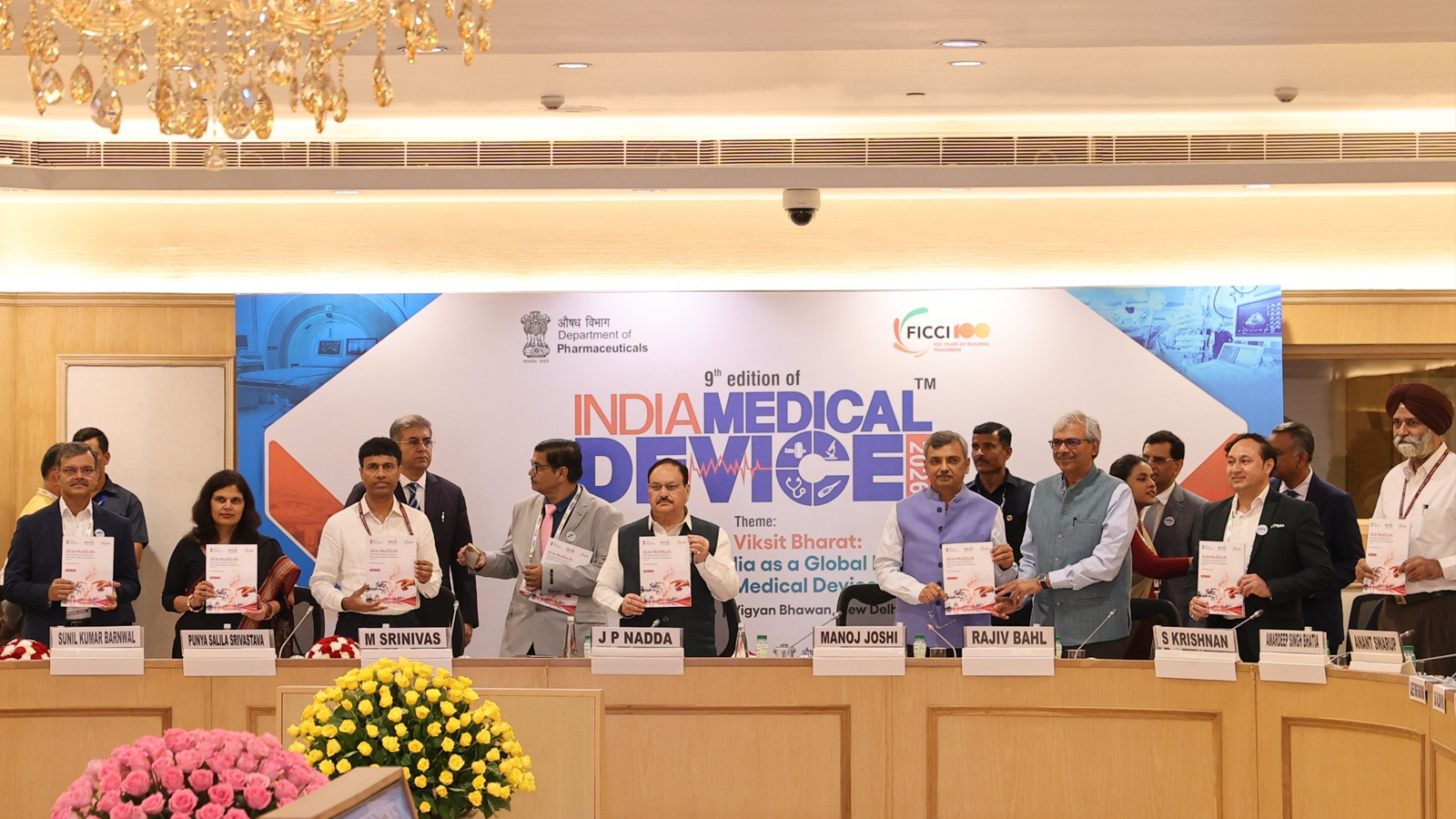
On Saturday, Union Minister J.P. Nadda chaired a CEO roundtable at the India Medical Device 2026 event, assembling over 40 CEOs from medical technology companies and MSMEs to discuss the enhancement of India’s MedTech landscape. Organized by the Department of Pharmaceuticals and FICCI, the event aimed to spur innovation, boost investments, and foster domestic medical device manufacturing, thereby creating a conducive environment for Indian MedTech firms to expand globally.
During the discussions, critical policy and regulatory measures were deliberated to position India as a competitive hub for medical device manufacturing and development. In conjunction with this, Nadda unveiled a report titled “AI in MedTech: Revolutionizing Healthcare Through Artificial Intelligence,” jointly developed by Praxis Global Alliance and FICCI. This report provides a roadmap for the responsible integration of AI in healthcare and outlines necessary interventions for transitioning AI solutions from pilot stages to widespread clinical application.
The report identifies five key priorities for accelerating AI adoption in the MedTech sector. It emphasizes MedTech as a major and scalable opportunity for AI, capable of embedding specialist expertise into devices and improving healthcare access. Despite existing frameworks like the Ayushman Bharat Digital Mission, challenges remain, including fragmented health data and limited clinical evidence. The report advocates for a shift from successful AI pilot programs to routine clinical use, necessitating AI-ready data, lifecycle-based regulations, and effective reimbursement approaches that recognize AI technologies’ value.
A session led by ICMR Director General Dr. Rajiv Bahl highlighted the significance of robust clinical evidence for guiding decisions on new medical technologies. Bahl pointed out that medical innovations must translate into affordable and sustainable healthcare. He warned that skipping evidence-generation requirements could hinder the demonstration of new technologies’ value before Health Technology Assessment (HTA) authorities.
The roundtable served as an important platform for dialogue between government officials and industry leaders on enhancing India’s medical device ecosystem. Discussions focused on fostering investment and innovation, strengthening manufacturing capabilities, and exploring routes for Indian medical device companies to expand internationally. Coordinated action among government bodies, regulators, healthcare providers, payers, and the industry is deemed vital for large-scale, responsible AI deployment in healthcare.
With advancements in digital infrastructure, AI, and a burgeoning domestic manufacturing base, India’s commitment to becoming a competitive and innovation-driven global MedTech hub is solidified through engagements like the India Medical Device 2026.
The content above is a summary. For more details, see the source article.









