

Key Takeaways
- ESA’s Hera spacecraft conducts a flyby of Mars on March 12, 2025, aiding its journey to the Didymos binary asteroid system.
- The flyby will provide valuable imaging data of Mars and its moons, Deimos and Phobos, enhancing mission objectives.
- Scheduled to reach the Didymos system in December 2026, Hera aims to refine asteroid deflection techniques used in planetary defense.
Hera’s Mars Flyby and Asteroid Mission
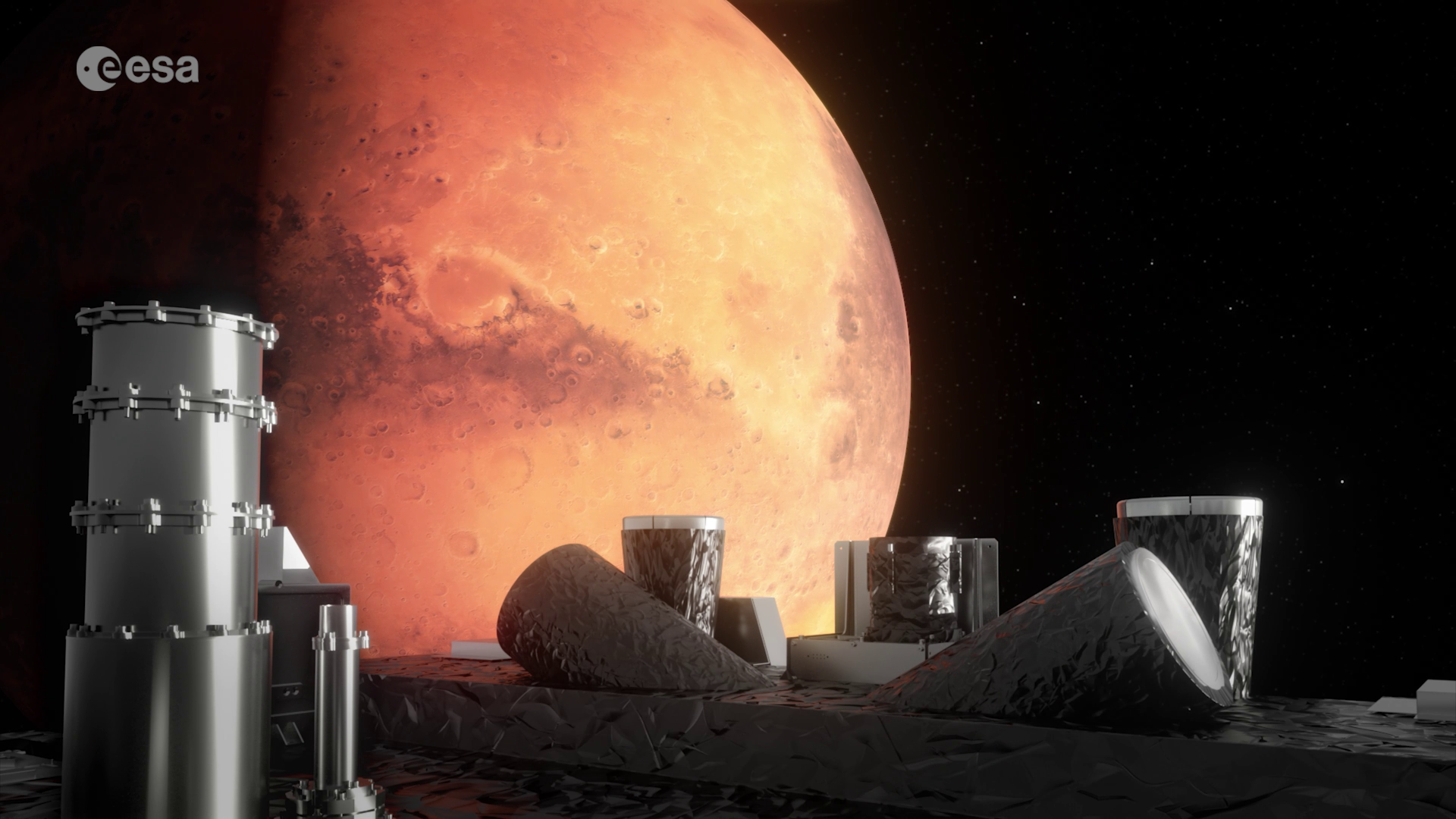
On March 12, 2025, the European Space Agency’s (ESA) Hera spacecraft will perform a critical flyby of Mars as part of its mission to study the Didymos binary asteroid system. This maneuver leverages Mars’s gravity to adjust Hera’s trajectory, significantly shortening its travel time and conserving fuel for the remainder of its journey.
During the flyby, Hera will come within approximately 5000 kilometers of Mars’ surface. It will capture images of Mars’s moons, including Deimos, from as close as 1000 kilometers away and even venture within 300 kilometers. The spacecraft will also observe Phobos, the larger moon of Mars, in the process.
Launched on October 7, 2024, Hera is on a mission to gather essential data about Dimorphos, an asteroid whose orbit was changed through human intervention when NASA’s DART spacecraft collided with it in 2022. By closely analyzing this asteroid, Hera aims to establish a robust understanding of kinetic impact methods for asteroid deflection, an increasingly relevant technique in planetary defense.
The mission is set to culminate when Hera arrives at the Didymos system in December 2026. Through its investigative work at the site of the DART impact, Hera will help convert asteroid deflection from a theoretical concept into a proven technique, enhancing humanity’s preparedness for future asteroid threats. Live images from the Mars flyby will be released by the mission’s science team on March 13, starting at 11:50 CET, further engaging the public in this groundbreaking mission.
The content above is a summary. For more details, see the source article.