


Key Takeaways
- Samsung Medical Center evolved its EHR to DARWIN by adopting an agile approach and integrating clinician feedback.
- The new system enhances workflows and connections between clinicians and their work, exemplified by the introduction of AI and robotics in care.
- AI is set to revolutionize patient interactions, evolving from merely predictive roles to actively assisting throughout healthcare journeys.
Evolution of Samsung Medical Center
Dr. Seung Woo Park, President and CEO of Samsung Medical Center, highlighted the health system’s significant advancements since its inception as a filmless hospital in 1996. Key milestones included the implementation of a mobile electronic health record (EHR) system in 2003 and the recent overhaul of its EHR into a more sophisticated platform called DARWIN, which stands for Data Analytics and Research Window for Integrated Knowledge.
The journey to becoming a recognized advanced healthcare organization, acknowledged by HIMSS, faced notable challenges. According to Park, the initial version of DARWIN was a failure because the organization aimed for perfection too early. “The first version of DARWIN failed totally,” he noted, reflecting on the pitfalls of their ambitious expectations.
Recognizing these shortcomings, the organization adopted a more agile approach. This method prioritized essential functions first, allowing for the gradual enhancement of the system’s features. Chief Medical Information Officer Dr. Meong Hi Son emphasized that success this time stemmed from continuous collaboration with clinicians, ensuring the system aligns with real-world requirements. “We actively integrated input from medical professionals,” she said, aiming to create a system that resonates with the daily experiences of healthcare providers.
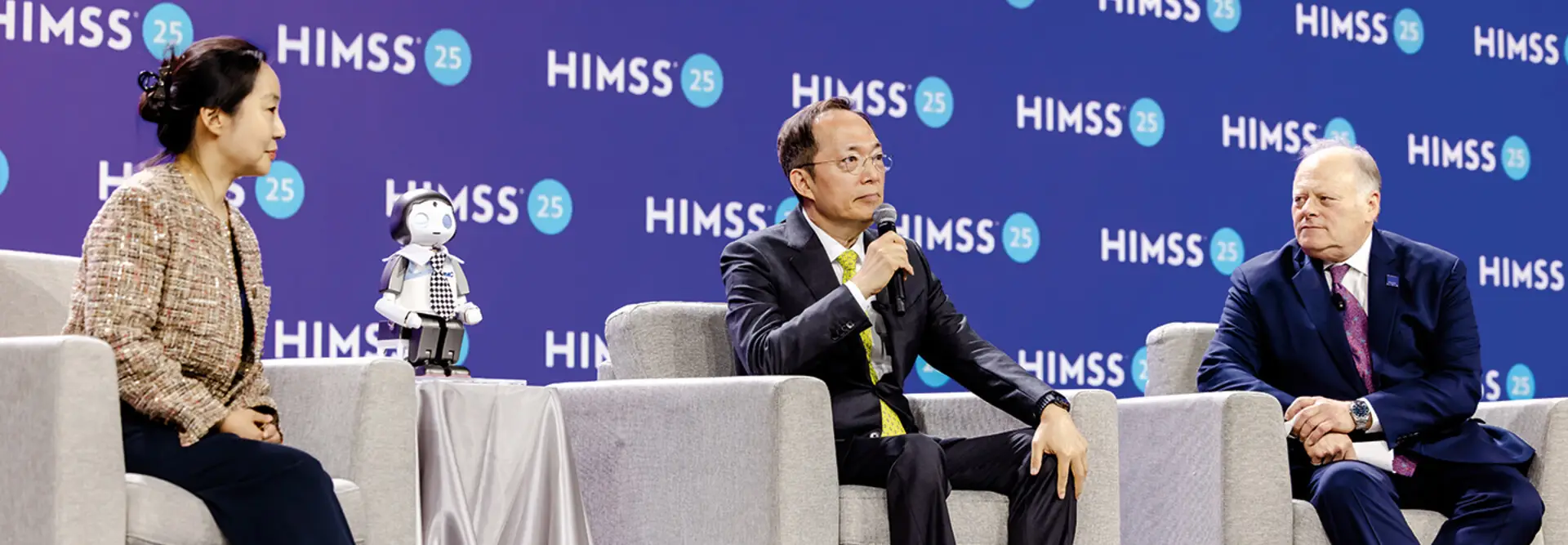
Another aspect of the innovative environment at Samsung Medical Center is the integration of technology in patient care. Son, who is also a pediatrician, introduced two robots, Nova and Lumi, which assist in pediatric care through remote guidance and AI augmentation. This advancement not only streamlines processes but also enhances the quality of care delivery.
Looking toward the future, Park shared insights on the transformative role of artificial intelligence (AI) in healthcare delivery. He highlighted the Data-Based Operation and Communication Center, an integrated AI system that improves operational efficiency, thus reducing wait times for patients. Son elaborated on the evolving role of AI, shifting from predictive analytics to a more interactive and supportive function for patients. “I envision a future where AI becomes agentic,” she stated, underscoring the potential for technology to provide personalized assistance throughout a patient’s healthcare journey.
This evolution at Samsung Medical Center illustrates the organization’s commitment to innovation while fostering a work environment that values clinician engagement and feedback, paving the way for a brighter, more efficient future in healthcare delivery.
The content above is a summary. For more details, see the source article.









