


Key Takeaways
- Ho Chi Minh City prioritizes smart, integrated transportation systems to boost regional connectivity.
- Plans include developing new urban areas around metro stations and enhancing existing transport networks.
- The city envisions becoming a leading financial and technological hub in Southeast Asia by 2050.
Urban Development Plans
Ho Chi Minh City’s recent merger expanded its area to 6,773 square kilometers, covering 2.04% of Vietnam’s territory, and bolstering plans for an integrated metropolitan region. The draft Political Report for the 2025-2030 term underscores the necessity of an intelligent, multimodal transportation system to connect various centers, including urban, industrial, seaport, airport, and financial hubs.
Key transportation projects include the construction of Ring Roads 2, 3, and 4, as well as expressways linking the city to various growth corridors. Notably, a new freight railway corridor is set to connect Cai Mep–Thi Vai Port with Binh Duong’s industrial zones, aiming to alleviate road congestion and reduce emissions. The development of coastal routes and inland waterways will further facilitate cargo and passenger transportation.
Urban planning management is also a focal point, with goals to finalize the Thu Thiem New Urban Area by 2030 and encourage growth in coastal urban projects such as Can Gio. Plans are in place for a network of smart satellite cities connecting the metropolitan core and surrounding areas. The development initiative includes creating multi-functional growth belts along the coastline that integrate transport, industrial, urban, and ecological areas, with special emphasis on green spaces and cultural hubs.
A Vision for Connectivity
Professor Nguyen Quang Trung from RMIT University is optimistic about the city’s potential as a smart urban leader and a key hub in ASEAN. He highlights that the merger with neighboring provinces has positioned Ho Chi Minh City as one of Southeast Asia’s largest metropolitan regions. By 2050, he envisions it as a primary center for finance, technology, and innovation, expanding its regional influence.
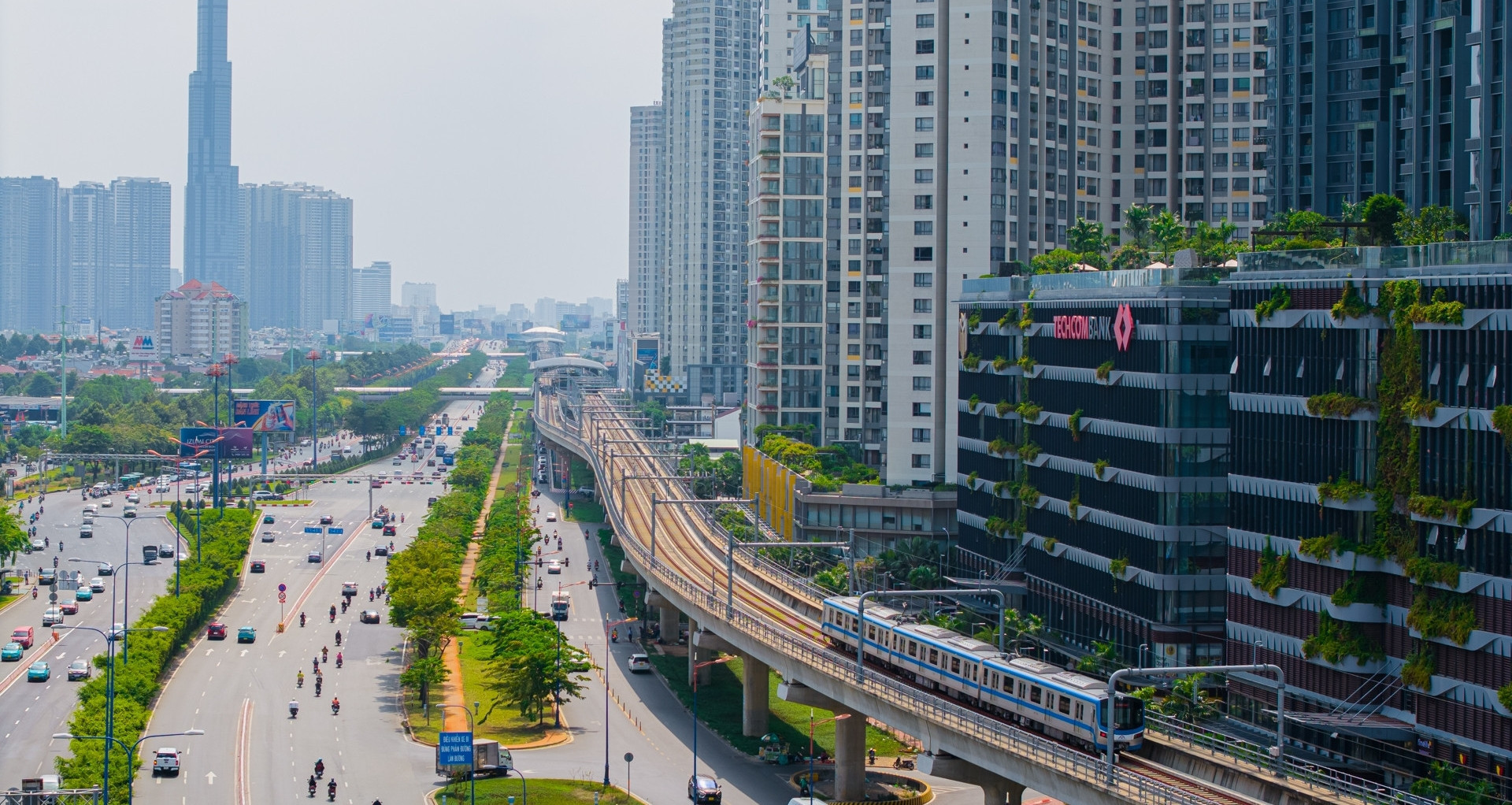
The city’s transformation strategy is based on the Transit-Oriented Development (TOD) model, which aims to link 355 kilometers of metro lines from the city center to suburban areas by 2035. Focus on developing high-density, pedestrian-friendly urban zones is paramount, complemented by rapid advancements in 5G infrastructure and AI-enhanced public services. Ho Chi Minh City seeks to draw inspiration from successful models in cities like Singapore and Seoul.
As the city gears up for an urban transition, Professor Trung emphasizes the need for decisive actions over the next decade. Prioritizing public transport, digital infrastructure, and cultivating human capital through public-private partnerships and innovation-friendly policies is crucial. This transition presents a unique opportunity to redefine the essence of an Asian megacity. The aim is for Ho Chi Minh City to not merely expand but to evolve into an inclusive community where businesses, workers, and cultural spaces thrive together.
The content above is a summary. For more details, see the source article.









