


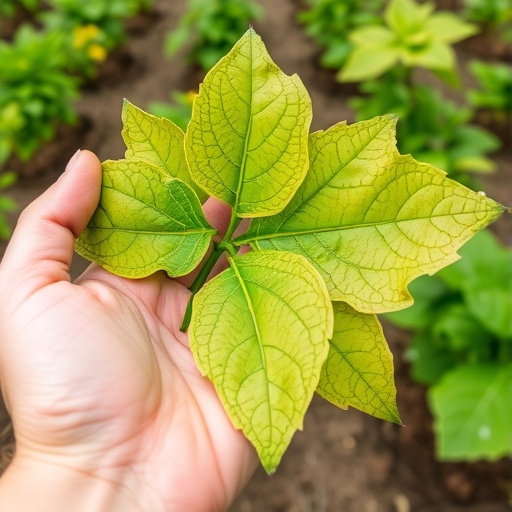
Key Takeaways
- Researchers have developed the Hybrid IGWO-Dingo optimized DeMoHybridNet model for improved plant disease diagnosis.
- The model significantly enhances accuracy in identifying multiple leaf diseases using advanced deep learning techniques.
- This innovation supports sustainable agriculture by facilitating early disease detection and reducing reliance on chemicals.
Revolutionizing Plant Disease Detection
In the field of agricultural technology, a new advancement promises to change how plant diseases are detected and managed. Researchers Palei, Mohapatra, Mallick, and their team have developed the Hybrid IGWO-Dingo optimized DeMoHybridNet model, which combines computational intelligence algorithms with deep learning. This revolutionary approach enhances accuracy and efficiency in diagnosing plant leaf diseases, which could significantly impact global agricultural productivity and sustainability.
Accurate leaf disease identification has historically been a challenge, with traditional methods relying heavily on manual inspection and expert knowledge, making them time-consuming and prone to errors. This is especially critical in large-scale agricultural operations, prompting a shift to machine learning and deep neural networks. The new model tackles the problem of distinguishing between multiple diseases that often exhibit similar visual symptoms.
Central to the innovation are two metaheuristic optimization techniques: the Improved Grey Wolf Optimizer (IGWO) and the Dingo Optimizer. The IGWO enhances convergence speed and avoids premature stagnation during training, while the Dingo Optimizer contributes global search capabilities. Together, they create a synergistic process that adapts during the learning phase.
The DeMoHybridNet architecture employs modular convolutional blocks designed to extract diverse features from leaf images and improves sensitivity to specific disease patterns. It implements adaptive feature recalibration layers, enhancing its ability to differentiate between diseases.
The hybrid IGWO-Dingo algorithm aids in tuning hyperparameters like learning rates and regularization factors, promoting a robust training regime. Extensive datasets of high-resolution leaf images, annotated by expert pathologists, validated the model’s performance, showing marked improvements in accuracy, precision, recall, and F1-scores compared to existing methods.
The model also includes visualization techniques to enhance interpretability, fostering trust among users like farmers and agronomists. Its efficacy extends to real-time disease identification, promoting proactive disease management and supporting sustainable practices.
With a design that facilitates transfer learning, the model can be adapted to other plant species or new disease categories. The computational efficiency of the hybrid optimizers streamlines the training pipeline, making it suitable for deployment on mobile devices and drones, delivering immediate diagnosis capabilities to farmers.
The researchers emphasize ethical and ecological implications, stating that accurate disease identification can lead to targeted pesticide applications, aligning with sustainable agricultural practices. Open-source components and user-friendly interfaces encourage system adoption among agricultural service providers and researchers.
Future integration with IoT platforms could create comprehensive monitoring systems, combining environmental and predictive data for proactive disease management. Overall, this innovative research advances the intersection of AI, plant pathology, and sustainable agriculture, offering tools vital for food security in a changing climate.
The content above is a summary. For more details, see the source article.









