


Key Takeaways
- The Hyundai Ioniq 9 is positioned as the top three-row family electric vehicle, surpassing the Ioniq 5.
- A notable competitor is the Kia EV9, sharing the same architecture but with slightly less range and cargo space.
- The Ioniq 9 offers impressive specs and comfort, but faces challenges in the current market dominated by gas-powered SUVs.
Stylish Design
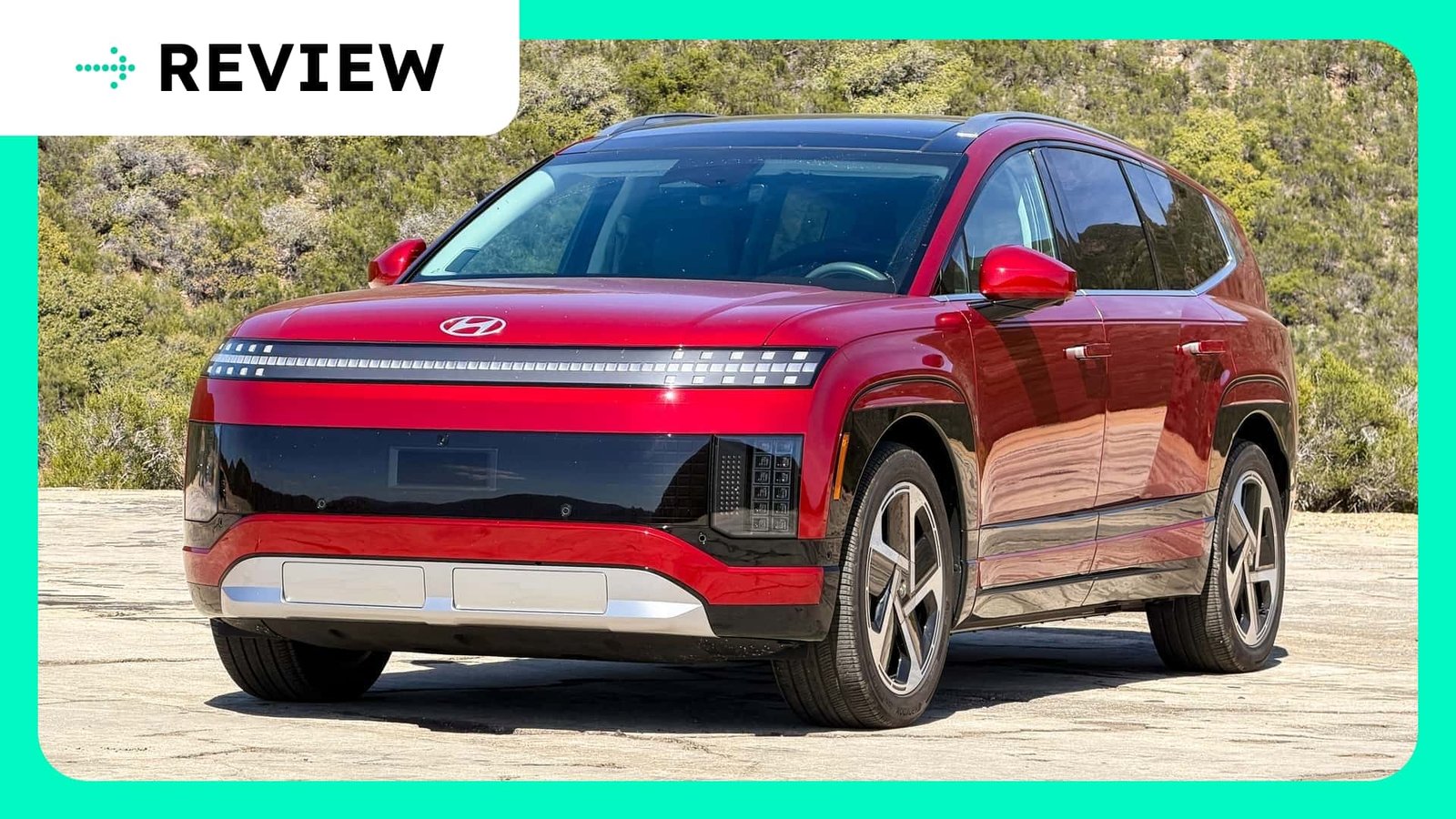
The Hyundai Ioniq 9 captures attention with its bold design, setting itself apart from typical three-row crossovers. Its futuristic front and smooth contours offer a distinctive appearance. Innovative lighting elements, such as pixelated headlights and vertical LED strips, enhance its aesthetic appeal. Despite a strong front view, some find the rear design less cohesive, especially in lighter colors.
Interior Comfort
Inside, the Ioniq 9 excels with a well-appointed cabin featuring comfortable seating and high-quality materials, though some finishes may disappoint upon closer inspection. The vehicle is spacious across all three rows, accommodating tall passengers comfortably. Noteworthy features include highway driving assist, heated and cooled front seats, and a panoramic roof.
Performance and Range
The Ioniq 9 boasts a maximum EPA range of 335 miles for its rear-wheel-drive model, while the all-wheel-drive version offers about 311 miles. Charging is efficient, thanks to an 800-volt architecture that allows for quick top-ups. The dual-motor setup delivers a robust 422 horsepower, providing lively performance despite the car’s hefty weight.
Driving Experience
Though primarily designed for family use, the Ioniq 9 performs well in terms of acceleration and handling compared to traditional gas vehicles. It’s suited for long highway drives with a quiet cabin and cushy suspension. However, it is less maneuverable in tight spaces. The Highway Driving Assist 2 system is useful but may require more driver attention than expected.
Market Position
The Ioniq 9 faces limited competition as the market currently lacks a variety of three-row electric SUVs. While its price point is higher than conventional gas models, it offers unique benefits like lower operating costs and reduced maintenance. Last year, sales figures illustrated the struggle of electric three-row vehicles, with less than 5,200 units sold compared to over 120,000 of Hyundai’s gas-powered Palisade.
Future Outlook
Despite present challenges, the Ioniq 9 represents an important step toward the future of family electric vehicles. With advancements in technology and decreasing costs, Hyundai’s early investment in this segment may position it favorably as market demand for electric family vehicles grows in the future.
The content above is a summary. For more details, see the source article.









