


Key Takeaways
- The transportation sector must decarbonize by 2050, with sustainable aviation fuel (SAF) playing a crucial role.
- HEFA (Hydroprocessed Esters and Fatty Acids) is the leading SAF pathway, though other methods like alcohol-to-jet are gaining attention.
- Sustainable fuels offer a way to mitigate the impact of geopolitical instability on energy prices while enhancing energy security.
Decarbonizing Aviation for a Sustainable Future
The urgency to decarbonize the transportation sector by 2050 is driven by the need to combat climate change. Sustainable aviation fuel (SAF) is identified as a core component in achieving this goal. IDTechEx’s report, “Sustainable Biofuels & E-Fuels Market 2026-2036,” highlights that the push for SAF goes beyond environmental concerns, addressing the vulnerabilities of fossil fuels exacerbated by rising oil prices.
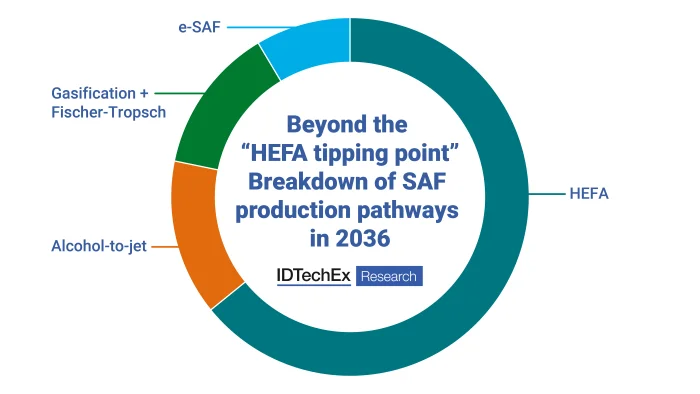
The dominant production pathway for SAF over the next decade is expected to be HEFA (Hydroprocessed Esters and Fatty Acids). This method utilizes waste oils, such as used cooking oils, significantly reducing the carbon footprint compared to traditional jet fuels. However, while interest in HEFA has surged due to current fuel crises, production challenges persist. The expense remains a barrier, as HEFA-SAF is still pricier than conventional jet fuels. Additionally, Europe faces complexities in sourcing enough used cooking oil, often relying on imports.
Despite these challenges, HEFA-SAF remains a critical player in future aviation fuel strategies, aiming for local production that minimizes environmental impact. The scale-up of this pathway will be limited primarily by the availability of appropriate feedstocks.
Diverse Pathways to SAF
Aside from HEFA, other SAF production pathways merit attention for their potential feedstock flexibility. The alcohol-to-jet pathway is particularly favorable for regions with established bioethanol industries, like the US and Brazil. Additionally, gasification methods that convert municipal solid waste into jet fuel are being developed, such as the Altalto facility in the UK, which plans to produce 30 million liters of SAF leveraging Fischer-Tropsch synthesis.
Though production costs may be higher than those for HEFA, the broader access to diverse feedstocks makes it essential for the growth of the SAF sector. The industry aims to transcend the “HEFA tipping point,” promoting a more varied sustainable fuel landscape by 2036.
Evaluating e-SAF and Other Alternatives
The future looks promising for e-SAF, derived from the interaction of captured CO2 and green hydrogen, offering a theoretically limitless production model. However, practical challenges, such as high energy costs and limited CO2 capture utilization and storage (CCUS) infrastructure, hinder its immediate deployment. The EU has already made strides to address the green premium that comes with this technology.
In addition to aviation fuels, the search for alternatives to traditional gas sources continues, especially in light of geopolitical turbulence affecting energy prices. Sustainable options, including biomethane and e-methane, have the potential to enhance energy security further.
The Path Forward
Investing in sustainable fuel production not only benefits the environment but also helps stabilize oil and gas prices against geopolitical unrest. With the possibility for localizing fuel supply chains, low-carbon fuels provide a promising long-term strategy for energy security. As technological advancements continue and regulatory frameworks evolve, there is a solid business case for adopting sustainable fuel solutions in the future.
The content above is a summary. For more details, see the source article.









