


Key Takeaways
- The Strait of Hormuz remains effectively closed after President Trump’s statement to block the channel following failed peace talks with Iran.
- Market reactions included a nearly 1% decline in South Korea’s Kospi index and a rebound in crude oil prices above $100 per barrel.
- Asia-Pacific countries are heavily reliant on Qatari LNG, with significant supply disruptions anticipated due to damage from recent attacks.
Market Impact of Strait of Hormuz Closure
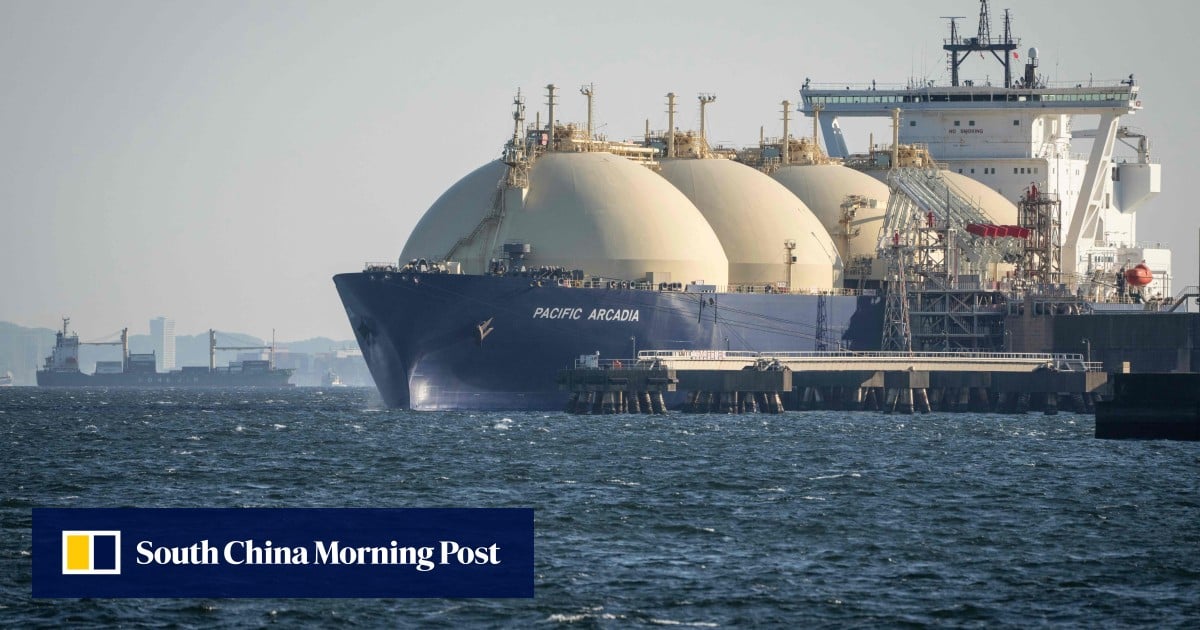
The Strait of Hormuz, vital for global energy transport, is facing significant disruptions. About a quarter of the world’s seaborne crude oil trade and 20% of liquefied natural gas (LNG) shipments pass through this narrow waterway. Tensions escalated when U.S. President Donald Trump declared potential blockades following the breakdown of peace negotiations with Iran. This announcement has sent ripples through global markets, triggering a negative response from investors.
On Monday, South Korea’s benchmark Kospi index fell nearly 1%, and tech giant Samsung Electronics saw its shares drop by 2.4%. Taiwan Semiconductor Manufacturing Company also recorded a minor decline of 0.5%. In the energy sector, crude oil prices rebounded above $100 per barrel, while the Japan/Korea Marker for LNG approached $20 per million British thermal units. While this price is lower than figures from late March, it remains among the highest for 2023.
A report by BMI, a unit of Fitch Solutions, highlights the differing energy exposures of various regions. Unlike Europe, where natural gas is the main energy source, the Asia-Pacific’s energy concerns are primarily linked to crude oil and refined petroleum. This situation directly impacts manufacturing costs, transport, and trade financing.
Countries like South Korea, Taiwan, and Singapore depend heavily on Qatari LNG to meet their energy needs, relying on it for 15% to 35% of their total supplies. Notably, Singapore generates around 90% of its electricity from natural gas. The Ras Laffan complex in Qatar, which accounts for about one-third of the global LNG supply, has faced significant challenges following attacks from Iran in March. Qatar’s Energy Minister Saad Sherida al-Kaabi noted that repairs to the facility could take three to five years, adding to the energy supply uncertainties in the region.
As these developments unfold, the reliance on Qatari LNG amid increasing geopolitical tensions raises concerns about future energy stability in the Asia-Pacific region and its broader economic implications.
The content above is a summary. For more details, see the source article.









