


Key Takeaways
- AI is transforming gardening by providing quick, accessible advice on various plant issues.
- While AI offers broad, generalized information, it struggles with location-specific gardening advice.
- Using AI alongside expert advice and local resources can enhance gardening results and accuracy.
AI and Gardening: A New Era of Support
As gardening season begins, many enthusiasts are turning to artificial intelligence (AI) chatbots for swift answers to their gardening questions. AI can swiftly diagnose plant problems, recommend growing techniques, and offer general gardening advice, making it a powerful tool for both novice and seasoned gardeners.
AI functions by analyzing vast data sets, identifying patterns, and generating responses based on this analysis. This adaptive learning design uniquely positions AI to provide answers more quickly than traditional resources. However, it’s essential to recognize that both AI and educators like those from the University of Idaho rely on existing knowledge; thus, the reliability of answers may vary.
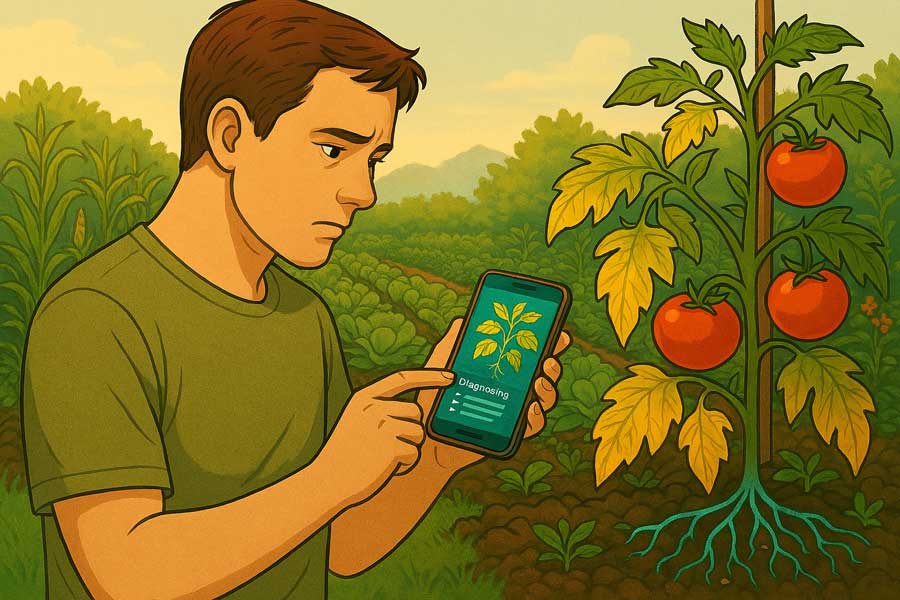
AI excels in providing answers that are broad in scope and low in risk. Home gardeners can ask it to explain basic concepts, suggest suitable plant varieties, or identify potential causes of plant health issues, like the yellowing of tomato plant leaves. Effective inquiries include questions about suitable vegetables for local climates or general planting advice. The specificity of the question often determines the quality of the response. As with any technical support, using precise terminology is crucial; vague language can lead to less informative answers.
On the flip side, AI has notable limitations. It often fails to consider critical gardening factors such as local soil conditions, climate variations, or specific timings needed for planting. Consequently, AI-generated advice can be overly generalized, outdated, or even inaccurate. Concerns also arise over AI’s inability to differentiate between credible research-based data and potentially misleading information from unreliable sources.
The proliferation of AI-generated content poses a risk by inundating gardeners with inaccurate advice, including false plant images or unfounded gardening “hacks.” As misleading information spreads, gardeners may inadvertently adopt practices that harm their plants or the environment.
To navigate this new landscape effectively, gardeners should treat AI as a starting point rather than a final authority. Best practices involve verifying AI insights against trusted resources, consulting local Extension offices, and providing specific questions that incorporate essential context, such as climate and soil type. Furthermore, critical decisions, particularly those involving safety or chemical use, should not rely solely on AI outputs.
Looking forward, the integration of AI with expert knowledge presents a promising path for improving gardening practices. Collaborative efforts between AI tools and established Extension systems aim to enhance reliability and accuracy in gardening advice. In this evolving digital landscape, while AI provides valuable rapid assistance, it is most effective when combined with local expertise and science-based recommendations.
The content above is a summary. For more details, see the source article.









