


Key Takeaways
- National leaders convened at the Crystal Bridges Museum to explore AI’s role in enhancing community health.
- Conference featured discussions on integrating AI into healthcare, with insights from top industry figures.
- The event aims to foster collaborations and innovations to address health challenges in rural communities.
Innovative Health Insights through AI
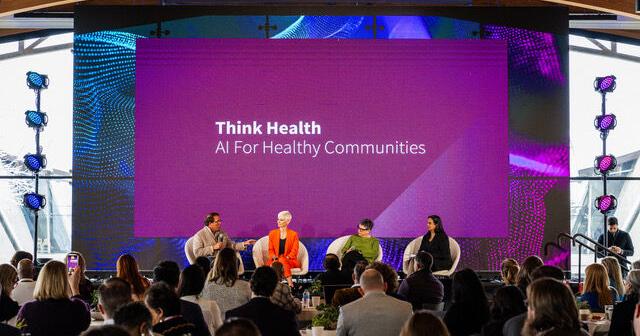
National leaders in health, technology, education, and policy met on January 10 at the Crystal Bridges Museum of American Art in Bentonville, Arkansas, for a conference titled “Think Health: AI for Healthy Communities.” Hosted by the Alice L. Walton School of Medicine and Stanford Medicine, the event featured notable figures including Chelsea Clinton, Michael Milken, and Ariana Huffington.
Dr. Natasha Bray, dean of the Oklahoma State University College of Osteopathic Medicine at the Cherokee Nation, emphasized that while the integration of AI in medicine is still in its infancy, its promise is clear. She expressed optimism about technology’s potential to create an equitable healthcare system, stating, “This conference offered a hopeful vision of a future where technology and human compassion converge.”
The conference focused on AI’s capacity to improve healthcare delivery and prepare future health leaders to adapt to these changes. By addressing issues particularly relevant to the heartland, this event aimed to enhance community engagement with AI, exploring strategies for utilizing current advancements and developing regional capacities to benefit from the evolving health tech landscape.
Alice Walton remarked on the significance of northwest Arkansas in leading the AI health revolution, highlighting the region’s unique health challenges and the prospective impact this could have across the U.S. “The school of medicine is poised to be a leader in this field,” she added.
Sharmila Makhija, founding dean and CEO of the Alice L. Walton School of Medicine, conveyed her confidence in AI’s transformative potential for healthcare. The school, expecting its first class soon, plans to engage faculty and students in adopting AI tools in innovative ways that prioritize holistic health.
The importance of inclusive dialogue regarding AI development was a recurring theme throughout the conference. Lloyd Minor, dean of Stanford School of Medicine, stated, “The heartland is a unique region – with many opportunities to harness AI to improve the lives and health outcomes of its people.”
Additionally, participants experienced technology demonstrations showcasing various AI applications including virtual reality for mental health support, interactive personal health coaching, and tools for medical education. The conference sought to catalyze future investments and partnerships in AI, addressing health needs faced by heartland communities and similar regions across the nation.
The content above is a summary. For more details, see the source article.









