


Key Takeaways
- India aims to enhance weather forecasting accuracy to support its growing renewable energy sector.
- Current forecasts lack the granularity needed for efficient power grid management with a 15-minute cycle.
- The country plans to increase non-fossil fuel power capacity to 500 GW by 2030, emphasizing the need for reliable weather predictions.
Improving Forecasts for Renewable Energy
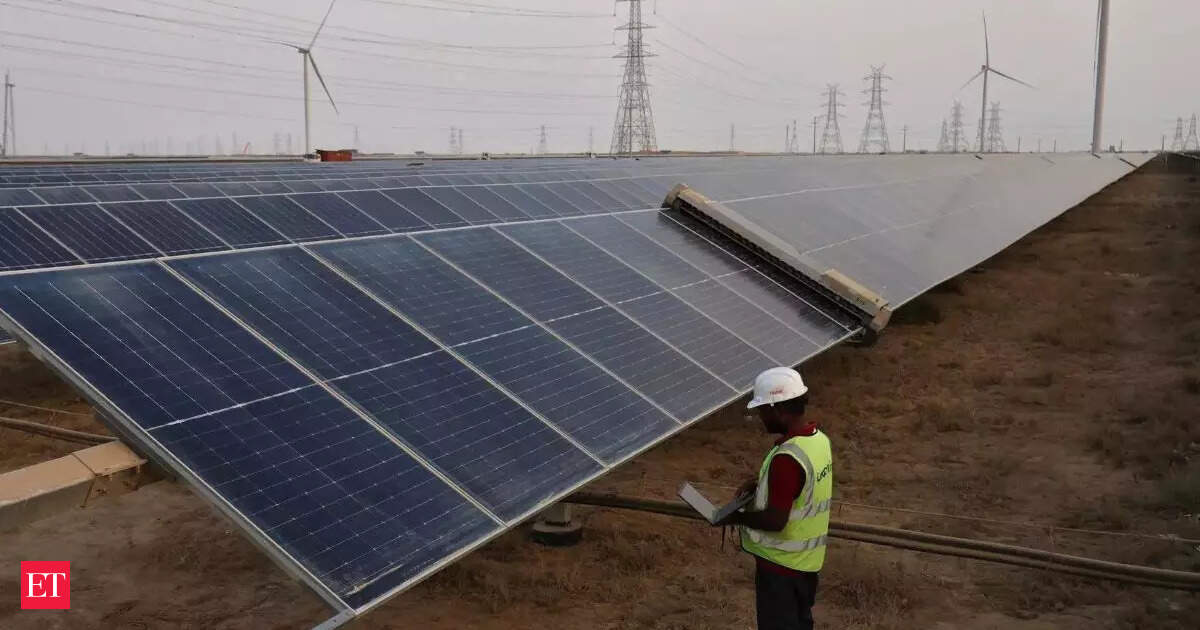
India is actively working to refine its weather forecasting systems to align with the increasing demands of its renewable energy sector. A senior official from the Central Electricity Authority (CEA), Ghanshyam Prasad, highlighted the necessity of more precise weather forecasts during a recent BloombergNEF Summit on green energy. The current method of broad-scale weather predictions, which often rely on regional or state-wide data, is no longer adequate for the needs of solar and wind energy generation, both of which are highly influenced by local weather conditions.
Prasad emphasized the importance of monitoring cloud movements at localized levels, asserting that a granular forecast is essential for optimizing energy generation and management. Presently, India’s forecasting resolution does not correspond with the power grid’s operational cycles, which function in 15-minute intervals, leading to a need for rapid adjustments based on fluctuating weather conditions. The goal is to enhance predictive capabilities to the smallest possible geographical areas and timeframes.
In addition to immediate forecasting improvements, the Indian government is also focused on developing long-term predictive tools that can provide insights into weather patterns over multi-year spans. Prasad noted the challenge in achieving such visibility, stating, “Across the world, nobody has that kind of visibility to forecast weather for that kind of horizon.” Nonetheless, the government is striving to create long-range forecasting capabilities to aid planners in anticipating weather trends, which are essential for achieving stability and reliability in the power sector.
Furthermore, the Indian power sector has already implemented measures to stabilize the grid amidst increasing renewable energy sources. The Ministry of New and Renewable Energy (MNRE) recently reported that the country has curtailed solar and coal power output during periods of low demand, anticipating congestion within the power lines as a result of growing green energy supply.
In the first half of 2025, India recorded an unprecedented addition of 22 GW in new solar and wind capacity. The government is also making ambitious plans to expand non-fossil fuel power capacity to 500 GW by 2030, further necessitating advancements in accurate weather forecasting to ensure that the transition to renewable energy can be sustained.
To support these reforms, the CEA is transitioning from a traditional five-year energy planning cycle to an annual model. Prasad remarked, “That’s a challenge that we have taken – if I do it every year, that means I will be able to capture the forecast better.” This change aims to enhance the responsiveness and adaptability of energy planning in light of evolving weather conditions, thus enabling a more robust renewable energy framework in India.
The content above is a summary. For more details, see the source article.









