


Key Takeaways
- India launched its first hydrogen-powered train between Jind and Sonipat, marking a significant advancement in clean transportation.
- This initiative is part of the ‘Make in India’ campaign and supports the country’s push towards sustainable mobility.
- The train operates on hydrogen fuel cell technology, resulting in zero carbon emissions and reduced dependence on fossil fuels.
Train Launch and Significance
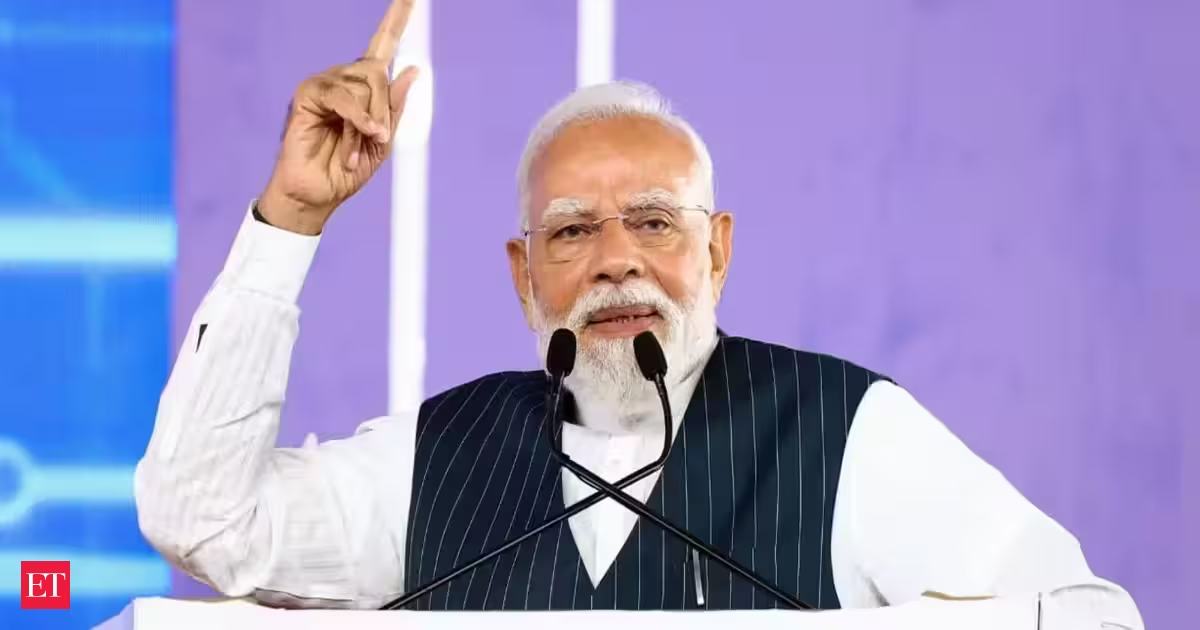
India’s first hydrogen-powered train was officially launched by Prime Minister Narendra Modi, connecting Jind to Sonipat in Haryana. This train is seen as a key development in advancing clean and sustainable mobility within the railway sector. It signals India’s entry into an exclusive group of countries utilizing hydrogen train technology.
The train, which covers an 89-km distance in just two hours, will stop at 12 intermediate stations, showcasing its efficiency. In addition to the train’s inauguration, Modi dedicated various development projects valued at Rs 14,700 crore.
During the launch, Modi described the hydrogen-powered train as a significant achievement of the ‘Make in India’ initiative. He declared it the “world’s most powerful hydrogen train” and emphasized India’s current energy challenges, particularly in light of recent geopolitical tensions affecting oil supplies. Nonetheless, he praised India’s railways for maintaining operational continuity despite such challenges, asserting that the railway system would have faced severe setbacks had these issues arisen prior to 2014.
Modi reminisced about his ties to Jind, reflecting on the city’s growth and the wider implications of this rail project for regional governance. He expressed optimistic sentiments about Jind, Sonipat, and Haryana being associated with this significant milestone in transportation technology.
Union Minister of Railways, Ashwini Vaishnaw, echoed the Prime Minister’s sentiments, lauding the day as historic and highlighting this development as a major technological breakthrough for India. He attributed this success to the government’s bold decision to focus on indigenously developing hydrogen fuel cell technology. Vaishnaw also noted that testing is ongoing in the Sonipat-Delhi section, with plans for the train to extend its route to Delhi.
The hydrogen-powered train features a distinctive sky-blue and white color scheme and employs hydrogen fuel cell technology to convert hydrogen into electricity for propulsion. The process produces only water vapor as a byproduct, ensuring zero carbon emissions during operation. This train eliminates tailpipe emissions, thereby lowering reliance on fossil fuels while also reducing noise pollution. Unlike traditional electric trains that require constant overhead electrification, hydrogen trains generate electricity onboard.
The transition to hydrogen-powered transportation diminishes the reliance on fossil fuel-based power sources, representing a crucial advancement in India’s commitment to sustainable transit solutions. The latest train is configured with ten coaches and runs on a 3,200 HP propulsion system, making it one of the most powerful hydrogen trainsets available, with a hydrogen fuel cell propulsion system rated at 1,200 kilowatts, accommodating around 2,600 passengers.
This initiative not only enhances transportation efficiency but also contributes significantly to India’s green energy goals, reinforcing the nation’s path toward sustainability in public transport.
The content above is a summary. For more details, see the source article.









