


Key Takeaways
- India’s Tata Motors and Mahindra lead global EV efficiency rankings, surpassing Tesla and BYD.
- Their smaller, lighter electric vehicles are tailored for urban environments, optimizing daily range.
- Efficiency can arise from design, showing that smaller batteries can reduce costs and weight without sacrificing performance.
Indian EVs Outperform Major Players
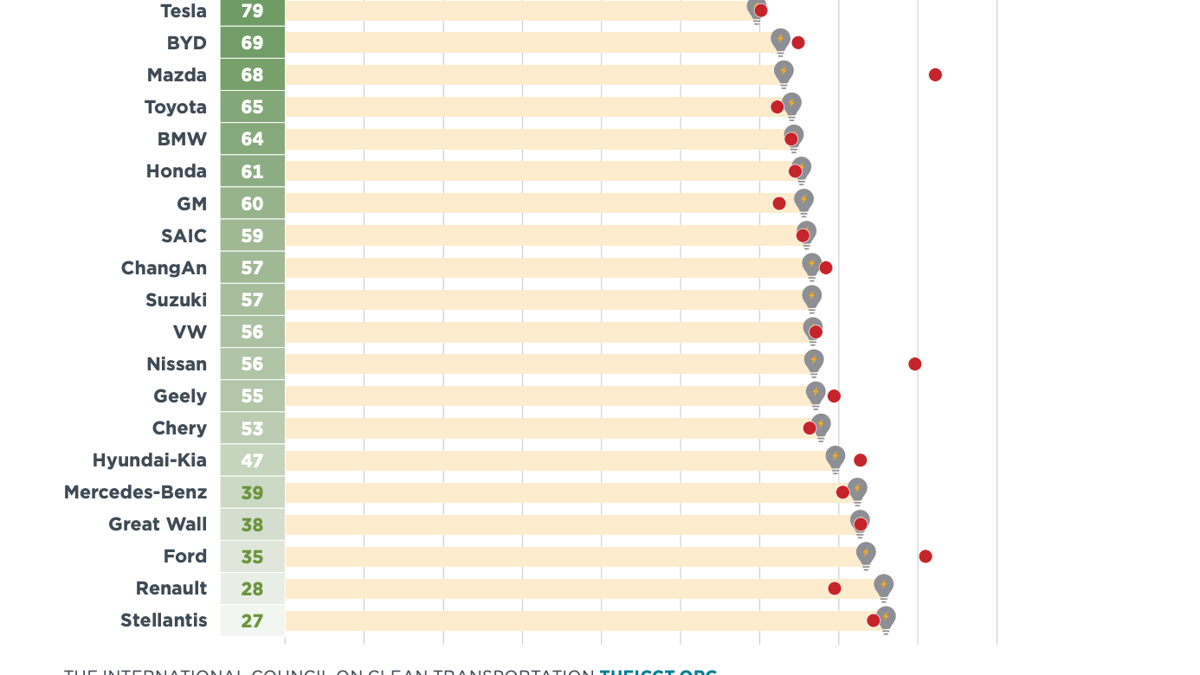
India’s Tata Motors and Mahindra have emerged as leaders in electric vehicle (EV) efficiency, according to the International Council on Clean Transportation’s (ICCT) assessment for 2025. This report evaluated the energy efficiency of various automakers, with Tata and Mahindra achieving the top rankings among 22 major companies. Notably, Tesla and BYD secured third and fourth positions, respectively.
The design approach of Indian manufacturers plays a crucial role in their success. Tata and Mahindra primarily produce compact electric SUVs, which cater well to urban environments marked by congestion, shorter daily commutes, and a price-sensitive consumer base. This focus on smaller, lighter vehicles allows them to achieve significant energy efficiency, as the ranking indicates that Tata’s EVs average approximately 106 Wh/km, while Mahindra’s average around 113 Wh/km.
However, efficiency does not solely depend on technology. The ICCT’s rankings reflect the overall strategy and size of each manufacturer’s vehicle lineup. Companies that emphasize compact vehicles gain a natural advantage over those offering larger and more powerful models, such as those from Tesla. This suggests that while Tata and Mahindra may not necessarily have more sophisticated technology, their product strategy aligns better with the specific needs of their market.
Furthermore, smaller EVs aren’t automatically more efficient; various factors, including weight, aerodynamics, and battery management systems, also influence energy consumption. The rankings imply that Tata and Mahindra’s vehicles are not just benefiting from smaller dimensions, but are also optimized for their intended markets.
Importantly, the ICCT findings do not imply that Tata and Mahindra have fully overtaken Tesla or BYD regarding other aspects of EV development. However, the results challenge the notion that established brands hold the exclusive right to efficiency in the industry. The concept that designing EVs around smaller batteries can provide a competitive advantage is revolutionary, particularly as battery packs remain among the most costly components in electric vehicles. Reducing the size of the battery not only cuts costs but also contributes to a lighter overall vehicle.
Historically, the spotlight in the EV industry has been on larger batteries that offer longer ranges and quicker acceleration. However, the performance of Tata and Mahindra suggests that reducing energy consumption may be equally important. The next significant advancement in the EV sector may not necessarily come from enhancing battery capacity, but rather from the development of lighter, more efficient vehicles that require less energy to operate. This shift could redefine industry standards and consumer expectations in the EV market.
The content above is a summary. For more details, see the source article.









