


Key Takeaways
- Indonesia and South Korea confirm the transfer of a KF-21 fighter jet prototype after halting plans for domestic production.
- Jakarta has reportedly shifted its focus to purchasing ready-made jets due to financial and practical considerations.
- Officials are exploring alternative procurement options, including additional deals for French Rafale jets and Turkish KAAN stealth jets.
KF-21 Prototype Transfer Finalized
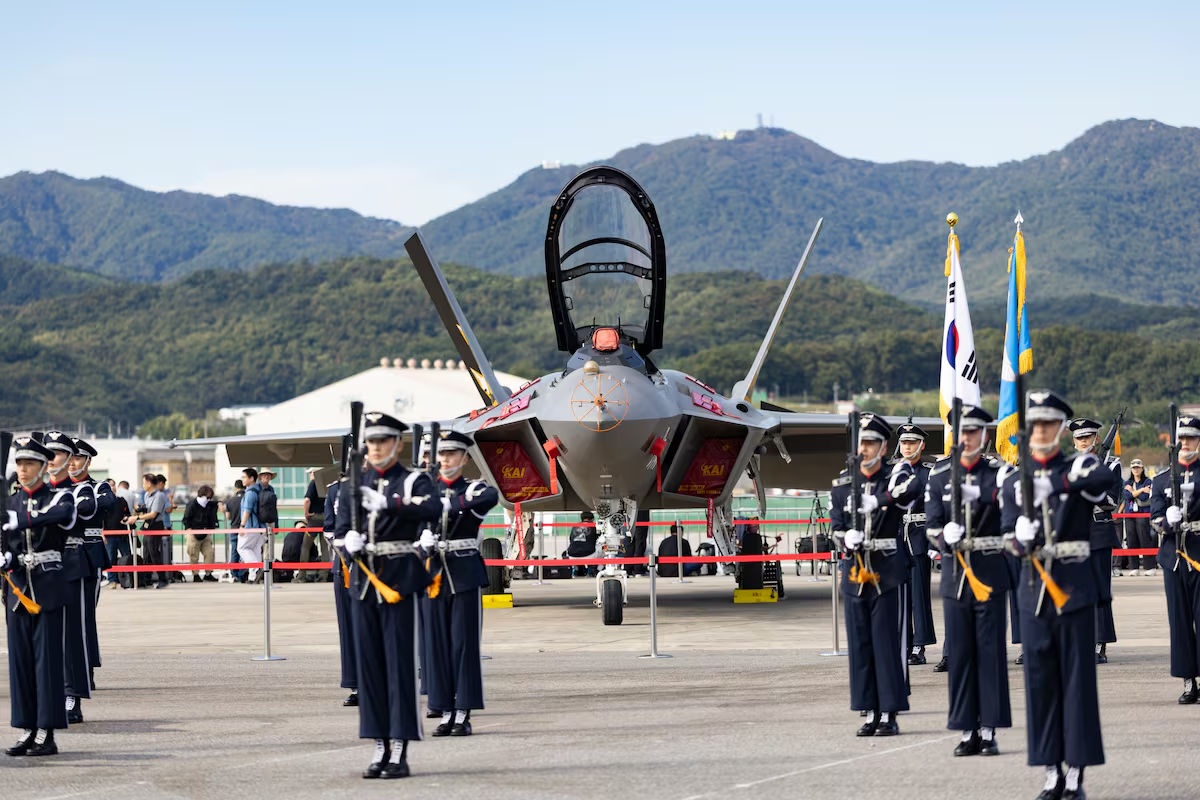
Seoul and Jakarta have reached an agreement for the transfer of a single KF-21 fighter jet prototype, bringing an end to a prolonged negotiation that aimed to establish a co-production agreement for the jets in Indonesia. The Defense Logistics Agency’s head, Yusuf Jauhan, confirmed that domestic production plans will not proceed, marking the cancellation of the 2015 co-production agreement.
The KF-21 Boramae is a twin-engine fighter developed by Korea Aerospace Industries, intended to replace South Korea’s aging F-4 and F-5 fleets. Indonesia initially committed to covering 20% of development costs, amounting to approximately 1.6 trillion won ($1.3 billion), slated for payment until 2026. The agreement included the transfer of one prototype and technology for producing 48 KF-21 Block-I units through state-owned PT Dirgantara Indonesia (PTDI).
However, delays in payments and allegations of data theft impeded negotiations, leading to multiple discussions over cost-sharing. In 2024, Indonesia requested to extend the payment deadline to 2034, but South Korea rejected this, fearing it would disrupt their deployment plans. A new agreement reduced Indonesia’s financial responsibility to just 600 million won, resulting in a significant reduction in technology transfer benefits.
In April 2023, Indonesian authorities disclosed that domestic production would be halted, and by June, the government officially scrapped the program. This decision was made after Jakarta settled the reduced financial commitment in exchange for the prototype. The shift in strategy suggests that Indonesia is now more inclined to purchase completed aircraft rather than engage in local co-production.
Analysts believe that Jakarta’s choice reflects practical and financial considerations. Hyung-Ju Kim, president of the Security Management Institute, noted that while Indonesia may still desire the KF-21, it seeks to avoid the complexities of local production. From South Korea’s standpoint, this resolution may ease management challenges and enhance the KF-21’s appeal in the international market.
Future procurement plans are still under evaluation, with PTDI indicating that internal discussions are ongoing, and no final strategy has been established. Although purchasing KF-21 jets remains a possibility, sources suggest that existing contractors offering more favorable technology transfer arrangements are currently favored.
In addition to the KF-21, Indonesian officials are considering acquiring 24 additional French Dassault Rafale jets, complementing an earlier order of 42 units finalized in 2022. Furthermore, Jakarta signed an overseas loan agreement in April for the purchase of 48 KAAN stealth jets from Turkish Aerospace Industries, anticipated to be delivered starting in 2032.
The evolving landscape of Indonesia’s defense procurement is aimed at enhancing the country’s military capabilities while navigating financial constraints and international partnerships effectively.
The content above is a summary. For more details, see the source article.









