


Key Takeaways
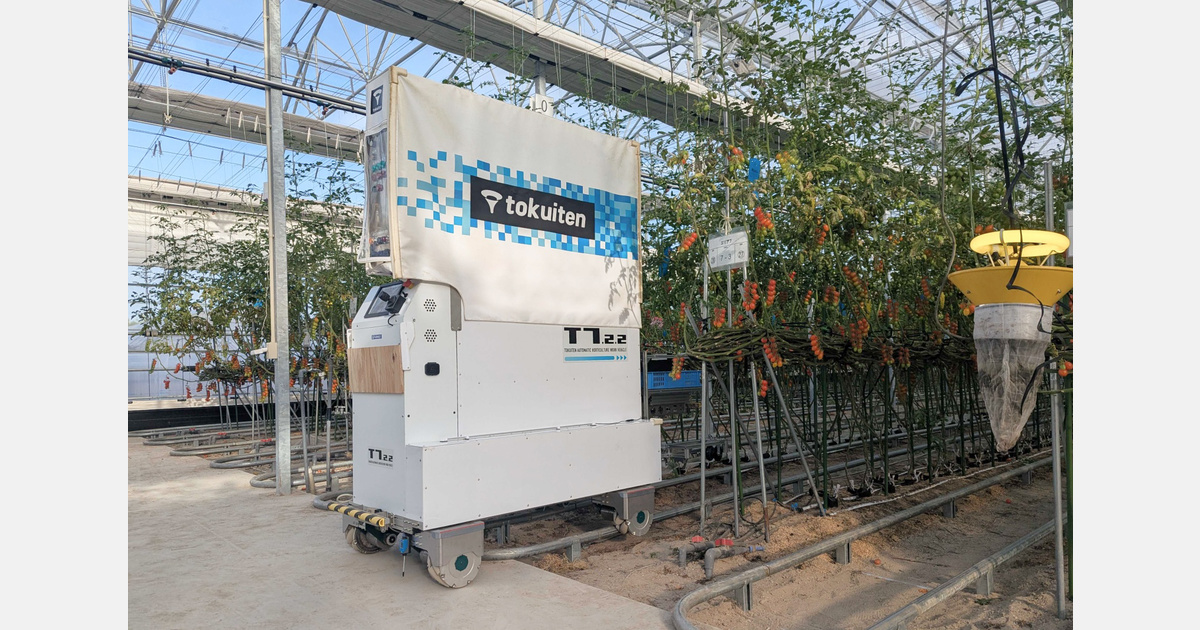
- Tokuiten Inc. has launched Japan’s first suction-type cherry tomato harvesting robot for commercial use.
- The robot autonomously harvests 31 kg of tomatoes daily and meets quality standards equivalent to hand-picked fruit.
- A new greenhouse facility is under construction, aiming to scale automation across various agricultural tasks and greenhouse conditions.
Robot Harvesting Breakthrough
Tokuiten Inc., a Japanese agricultural technology firm, has successfully launched its proprietary suction-type cherry tomato harvesting robot, transitioning from pilot testing to full-scale production use at its 2,000 m² organic JAS-certified cherry tomato farm in Chita city, Aichi Prefecture, effective May 25, 2026. This initiative represents a pioneering deployment in Japan, as well as one of the few globally where fruit vegetable harvesting robots are utilized in ongoing commercial operations.
The development journey for this harvesting robot began in 2023 and involved approximately three years of extensive testing. The device can autonomously harvest 31 kg of cherry tomatoes daily, with internal evaluations confirming that its output meets the same quality standards as hand-harvested fruit. Tokuiten’s CEO, Ryuichiro Toyoshi, expressed satisfaction with this achievement, highlighting the company’s commitment to automating agriculture.
The robot operates twice weekly, specifically on evenings before human harvest days, where it spends about five hours picking ripe tomatoes. It utilizes a patented suction-type harvesting mechanism, which detaches fruit gently from the plant, alongside an onboard AI system that assesses fruit maturity in real time. The robot moves autonomously through the greenhouse using rails and Mecanum wheels, allowing for efficient navigation without human intervention.
Tokuiten’s Director, Hiroki Mori, noted the development involved multiple prototypes and a focus on reliability in real farm conditions, which included consistent improvements in both harvest accuracy and operational reliability. The company is now looking to expand its operations and is seeking joint pilot partners to implement their operational framework in different environments and with various tomato varieties.
Furthermore, Tokuiten is expanding its efforts through a new 1-hectare greenhouse facility, funded in part by the Ministry of Agriculture, Forestry and Fisheries’ SBIR program. This facility, scheduled to open by March 2027, aims to deploy six harvesting robots and broaden the scope of automation to tasks such as leaf pruning and carbon-neutral horticulture trials.
In the context of Japan’s shrinking agricultural workforce, which has decreased significantly from 2.4 million in 2000 to around 1.02 million in 2025, the introduction of harvesting robots is vital. Harvesting cherry tomatoes is particularly labor-intensive due to their small size and frequency of picking. As the demand for agricultural automation grows, the transition to robotic assistance is essential to sustain productivity and address labor shortages in the sector.
The content above is a summary. For more details, see the source article.









