


Key Takeaways
- Japanese energy company JERA seeks federal approval for a $1.5 billion LNG terminal in Oahu.
- Environmentalists and lawmakers express concerns over potential delays in renewable energy progress.
- If approved, the power plant could reduce electric bills by 20% and start operation by 2030.
Project Overview
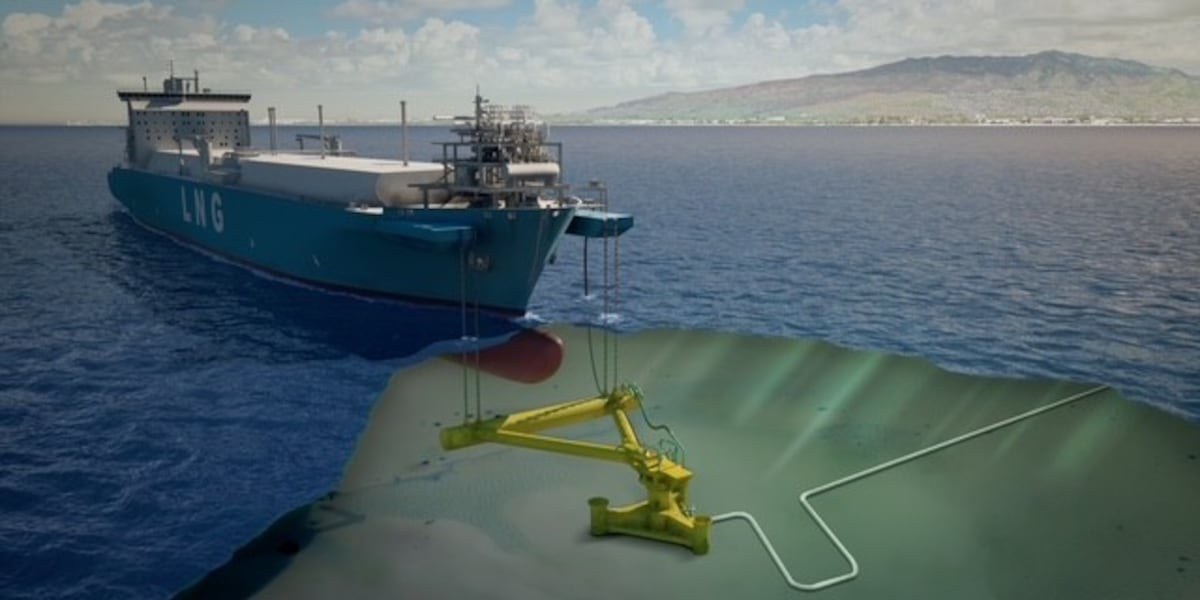
JERA, a Japanese energy firm, has applied for a federal permit to construct an offshore liquid natural gas (LNG) terminal on Oahu. This project is a crucial step towards establishing a $1.5 billion power plant expected to supply nearly half of the island’s electricity. However, the initiative faces scrutiny from environmental advocates and some lawmakers who argue that it may hinder Hawaii’s transition to renewable energy sources.
JERA defends its proposal, claiming that LNG is a cost-effective alternative to oil, which could lead to lower electric rates for residents. The process involves transporting frozen and pressurized LNG to a terminal near Campbell Industrial Park. There, it would be converted to gas at a floating gasification plant and then distributed to a 500-megawatt electric power facility. Erik Montague, vice president of JERA Americas, stated, “This is about displacing oil right now and reducing costs and reducing carbon today with a solution that works.”
A study from the University of Hawaii supports JERA’s position, suggesting that while the economic case for LNG is valid, it is contingent on high oil prices and a slow rollout of renewable energy. However, critics, including Henry Curtis from Life of the Land, argue that the proposed LNG facility might impede the growth of renewable technologies, particularly solar energy. Under Hawaii’s renewable energy goals, fossil fuels like LNG should ideally be phased out by 2045.
Montague acknowledged that the project seeks to expedite the adoption of renewables. JERA asserts that the power plant design could be hybrid, allowing for future conversion to alternative fuels such as hydrogen or ammonia. Nevertheless, details about the cost and viability of such conversions remain vague, according to Curtis.
Concerns have also arisen regarding a preliminary collaboration agreement signed by Governor Josh Green with JERA. Critics argue this favors one company and one proposal, potentially undermining competition. Curtis emphasized the need for thorough scrutiny by the Public Utilities Commission, saying, “None of that exists for this project.”
Despite these apprehensions, Montague reassured that the agreement only involves research and alignment on energy objectives and does not compel the state to proceed with the project. If authorized, JERA anticipates the facility could be operational by 2030 and projected to cut electric bills by up to 20 percent.
The content above is a summary. For more details, see the source article.









