Key Takeaways
- The European Space Agency (ESA) invites researchers and companies to test software in deep space aboard the Hera mission starting in mid-2027.
- Hera will conduct asteroid investigation and facilitate software experiments in a safe environment, aiming to advance onboard intelligence and autonomy.
- Submissions for innovative software ideas are open until mid-October 2026, with selected projects to be implemented during a month in August 2027.
ESA’s Hera Mission: A New Frontier for Space Innovation
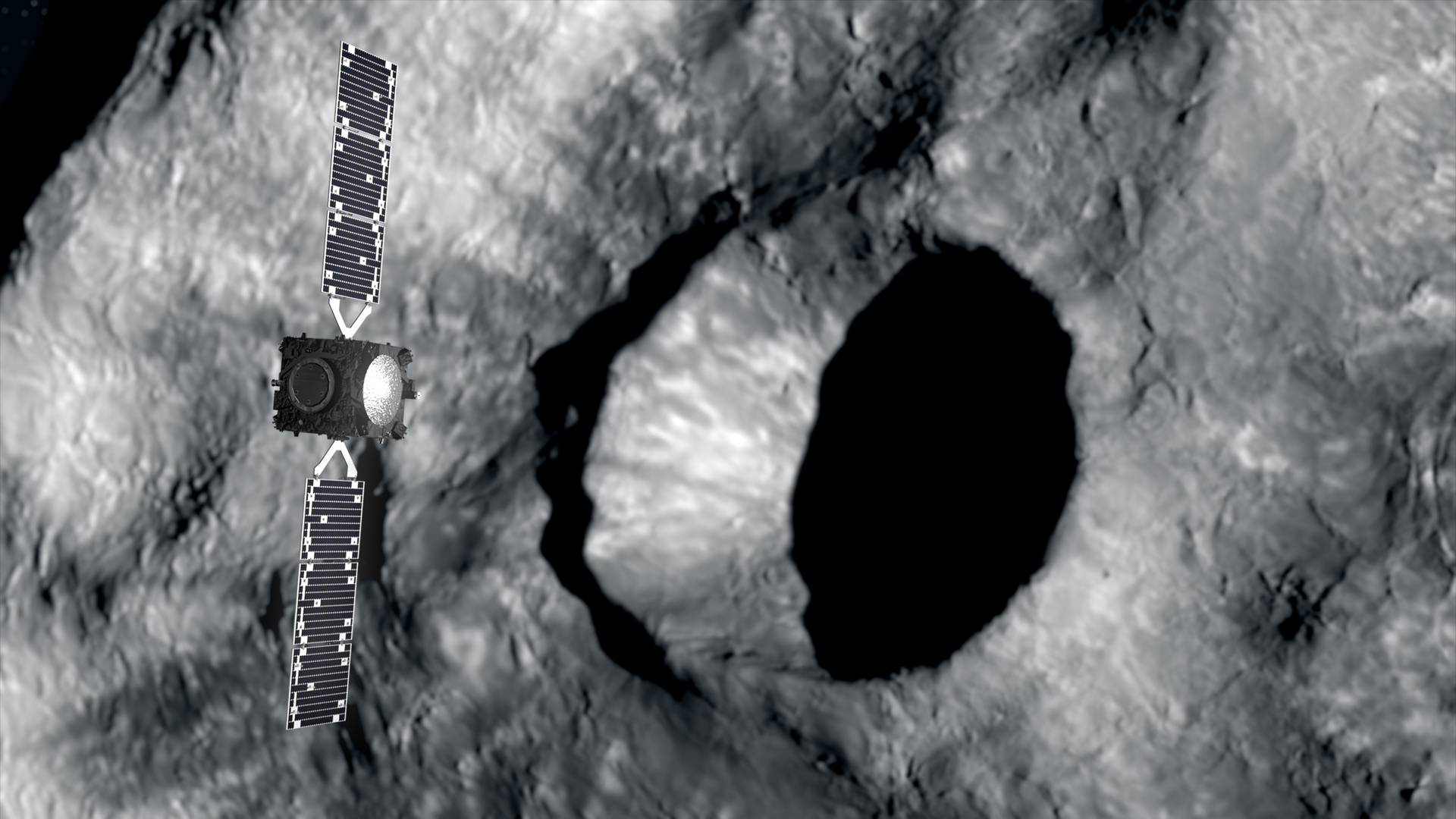
The European Space Agency (ESA) is offering an unprecedented opportunity for European researchers and companies to experiment with their innovative software in deep space. ESA’s Hera mission, set to conclude its planetary defense objectives around the Didymos and Dimorphos asteroids in mid-2027, will subsequently serve as a unique flying laboratory 150 million kilometers from Earth.
From this remarkable position in deep space, Hera will allow innovators to test the next generation of onboard intelligence, advanced image processing, and AI-based operations directly in flight. Dietmar Pilz, ESA’s Director of Technology, Engineering and Quality, remarked on this initiative, stating it is a “exceptional opportunity” for researchers to expand the boundaries of space mission technology. ESA is searching for innovative, targeted experiments that will operate alongside the spacecraft’s critical systems within a protected “sandbox” environment. These ideas are anticipated to foster technology that lessens reliance on ground control and enhances future exploration missions.
Hera, which launched in 2024, is on its way to the asteroid Dimorphos, which gained notoriety as the first Solar System object affected by human intervention. In 2022, NASA’s DART spacecraft intentionally impacted Dimorphos to alter its orbit. Upon arrival this autumn, Hera will conduct an investigation of the asteroid and how it reacted to the DART impact—addressing fundamental questions pertaining to planetary defense.
Ian Carnelli, Hera’s mission manager, highlighted the drift from conventional mission protocols, which typically involve validated procedures and consistent ground control feedback. Instead, ESA invites innovators to explore real-time mission conditions to discover novel ways spacecraft can operate in the future. This initiative does not entail ceding control of the Hera spacecraft; rather, it’s intended for safely testing ideas that could lead to more robust and autonomous spacecraft operations.
ESA facilities are leveraging the advanced capabilities of Hera’s onboard computer, which employs a European-developed dual-core LEON3 processor. This configuration allows one core to manage the spacecraft while the other provides a secure environment for guest software. These innovative software experiments will be limited to two to three hours at a time, with immediate shutdown protocols if issues arise.
Ideas for proposed software experiments can be submitted through ESA’s Open Space Innovation Platform (OSIP). A submission outline is required for initial evaluation, with deadline for ideas set in mid-October 2026. Successful applicants will then submit detailed implementation plans and source code, with a final deadline of May 31, 2027, for implementation during a planned operational period in August 2027.
ESA has previously hosted a variety of technology demonstration missions to pave the way for innovation in space operations. Hera continues this legacy, inviting the community to explore uncharted avenues in spacecraft intelligence and functionality. This initiative promises to advance Europe’s leadership in space systems while enhancing future explorations. The call for innovative software solutions represents an exciting step towards redefining how space missions may operate in the years to come.
The content above is a summary. For more details, see the source article.