


Key Takeaways
- Experts emphasize the importance of skill development over technology availability for effective smart city solutions.
- Latvia is making strides in smart technologies, with several state-supported projects enhancing urban mobility.
- Collaboration among local governments, science, and the private sector is crucial for maximizing the use of data in urban planning.
Skills Over Technology
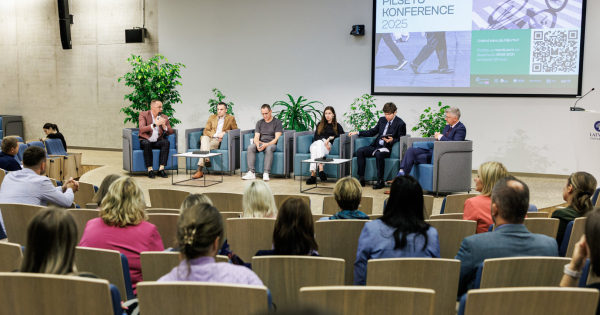
At the Smart Cities Conference held on September 18 at the University of Latvia’s House of Science, experts from various sectors discussed the need for skills enhancement in utilizing smart technologies effectively. They highlighted that technological advancements are not the primary challenge; instead, the ability to work with data and manage changes from new systems plays a key role in the successful implementation of smart city solutions.
Gatis Ozols, from the Ministry of Smart Administration and Regional Development, stressed that smart technologies significantly contribute to creating improved living environments. Multiple state-supported initiatives, including a mobility data platform in Riga, are currently in progress. Latvia is becoming a recognized player in international partnerships focused on smart technology development.
Alīna Dolmate, representing the European Institute of Innovation and Technology (EIT), detailed the benefits of EIT’s support for innovation across various stages, from lab development to market entry, boasting 29 partners and attracting substantial funding to foster entrepreneurial endeavors.
Māra Liepa-Zemeša from the RTU Institute of Architecture and Design noted that technology’s ultimate goal is to enhance life quality. Riga is reportedly advancing rapidly in smart solutions compared to other EU locations. Collaboration between local authorities and educational institutions is exemplified through initiatives like the “Knowledge Mile,” fostering innovative ideas.
The conference also underscored the importance of data-driven decision-making for inclusive and sustainable mobility. Data analysis is essential for effective urban planning, as noted by Anders Bengtsson from the EIT UM North Hub.
Ričards Fomrats from LMT introduced future possibilities of integrating AI into urban management. He mentioned that AI could revolutionize the analysis of data ecosystems, potentially leading to real-time solutions for urban challenges.
Elīna Kirilko from the Riga City Development Department shared that mobility data is already enhancing urban planning efforts. However, data fragmentation poses challenges. Ongoing efforts aim to consolidate mobility data into a unified platform, improving overall transport efficiency.
Aldis Ērglis from the University of Latvia discussed practical applications of data modeling for predicting climate impacts on local government operations. Such techniques can inform better travel solutions to meet climate targets by 2030, emphasizing the necessity of precise data-driven planning.
The conference concluded with a consensus on the critical need for collaboration among local governments, academia, and the private sector to boost data accessibility and applications while boosting public data literacy to compete with the private sector effectively.
This year’s Smart Cities Conference, the fourth of its kind, aimed at advancing sustainable urban planning, mobility, and safety, showcasing the pivotal role of technology and citizen engagement in future urban development.
The content above is a summary. For more details, see the source article.









