

Key Takeaways
- The U.S. Trade Representative’s recent report includes South Korea’s defense offset policy, raising concerns ahead of impending tariffs.
- Seoul officials expressed confusion over the USTR’s designation of the offset program as a trade barrier, which is typically common in defense deals.
- Defense industry insiders warn the U.S. might be leveraging this issue to gain an advantage in future defense contracts with South Korea.
U.S. Report Raises Concerns Over South Korea’s Defense Offset Policy
South Korean officials are expressing confusion over the inclusion of the country’s defense offset program in the U.S. Trade Representative’s (USTR) report on foreign trade barriers. Released just days before the Trump administration plans to impose reciprocal tariffs, this is the first instance of the USTR referencing Korea’s defense offsets in its National Trade Estimate Report.
Defense offsets involve agreements where the country supplying military equipment offers benefits like technology transfers or export deals to the purchasing nation. The USTR’s report indicates that the South Korean government has been pursuing policies that favor local technologies and products over American defense technologies.
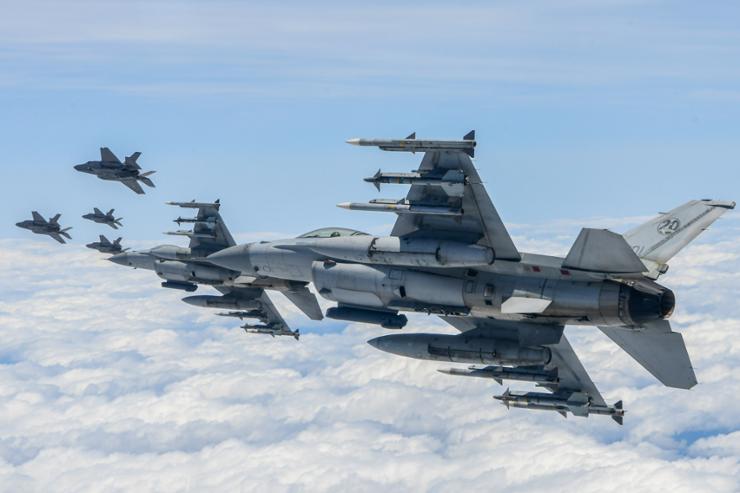
Cho Yong-jin, a spokesperson for South Korea’s Defense Acquisition Program Administration, mentioned that the two governments are engaged in ongoing negotiations to mitigate barriers in defense procurement. Cho emphasized the need for deeper analysis to understand the U.S. stance comprehensively. The USTR highlighted that any defense contract exceeding $10 million could trigger offset obligations, which has implications for several ongoing procurement projects, including upgrades for F-35A and F-15K fighter jets.
The offsets program, which requires South Korea to invest a portion—typically between 30% to 50%—of contracts in local technology, is deemed commonplace globally. Yet, the USTR’s marking of it as a trade barrier has raised eyebrows, especially given that this practice is not viewed as excessive in the defense industry. The report suggests potential U.S. discomfort with infrastructure agreements, positioning it as a possible bargaining chip in future negotiations.
Insiders in South Korea’s defense sector perceive this development as a warning signal. They speculate that the Trump administration might be angling for a more favorable position in future defense deals with Seoul, particularly concerning potential collaborations on naval projects. They argue that while offset agreements are integral to defense acquisitions worldwide, utilizing these offsets as leverage could jeopardize the longstanding arms cooperation between the two allied nations.
As discussions proceed, the potential implications of the USTR’s report remain a significant point of contention, emphasizing the intricate balance of defense procurement negotiations between South Korea and the United States. The unfolding situation will likely require careful diplomacy to ensure continued collaboration in defense matters.
The content above is a summary. For more details, see the source article.