


Key Takeaways
- Researchers at the University of Queensland are developing lead-free indoor photovoltaics for wearable health devices.
- The new technology could eliminate the need for batteries and charging, enhancing the functionality of continuous health monitoring.
- This advancement aims to improve healthcare accessibility, especially for individuals in remote areas.
Advancements in Wearable Health Technology
Next-generation photovoltaic technology may soon enable wearable health devices that require no charging. Researchers at the University of Queensland (UQ) have made significant strides in developing lead-free and low-toxicity indoor photovoltaics, which can harness energy from both indoor light and sunlight.
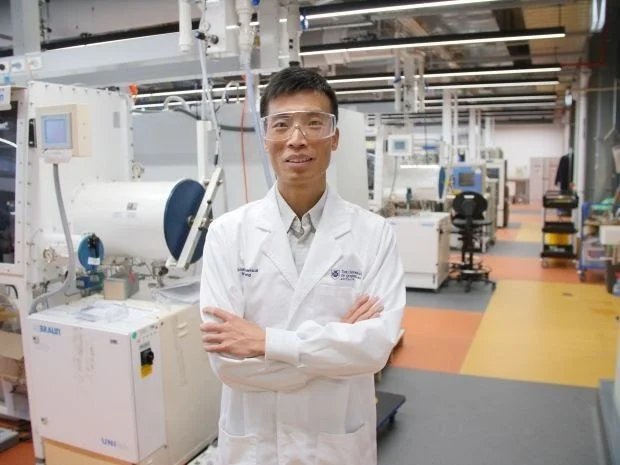
Traditional perovskite indoor photovoltaics have shown promise for powering wearable health devices, but their lead content has restricted their use in applications that come into contact with skin. Dr. Miaoqiang Lyu, a chemical engineer at UQ, is leading efforts to create safe, efficient indoor photovoltaics that could transform wearable device functionality by allowing for truly energy-autonomous operation without the need for batteries or interruptions in data collection.
Dr. Lyu emphasized the potential of these wearable devices, which include glucose sensors, ECG patches, and sweat-based monitors for lactate and electrolyte levels. Current battery limitations often hinder their usability as batteries need regular charging and eventual replacement. In contrast, the emerging indoor photovoltaic technology could provide a reliable and low-maintenance energy source, making these health monitors more user-friendly.
The advancements are further propelled by Dr. Lyu’s receipt of a UQ Foundation Research Excellence Award. This funding will facilitate the development of a prototype designed specifically for powering health monitoring sensors. Over the years, Dr. Lyu has focused on creating cost-effective and environmentally safer perovskite photovoltaic technologies.
Recent successes include the invention of a scalable vapor-deposition process that eliminates toxic lead and hazardous solvents while achieving record performance metrics with lead-free perovskite devices. This process is not only safer but also commercially viable for mass production.
Looking ahead, the research aims to refine lead-free perovskite indoor photovoltaics further using thermal evaporation techniques, which offer solid potential for scaling up the manufacturing process. If these technologies succeed, they could signal a significant shift toward self-powered electronics that gather energy from common indoor environments.
Dr. Lyu highlighted the broader implications of this research. The impact could be especially significant for individuals living with chronic illnesses, as well as those residing in rural or remote regions where healthcare access is limited. Successful development of lead-free indoor photovoltaics could facilitate a new generation of healthcare solutions that are not only safer and more sustainable but also easier to integrate into daily life.
In summary, the University of Queensland’s initiative to create lead-free, energy-efficient indoor photovoltaics presents a promising evolution in wearable health technology, with potential benefits for a wide range of users seeking more reliable and efficient health monitoring options.
The content above is a summary. For more details, see the source article.









