


Key Takeaways
- Automotive YouTuber Mat Armstrong purchased a damaged McLaren 600LT without inspection, facing financial risks.
- Armstrong employed creative and cost-effective solutions to restore the vehicle within a tight seven-day deadline.
- The project highlights tensions in the exotic car repair industry over part distribution and the right to repair.
Risky Acquisition of a Damaged Supercar
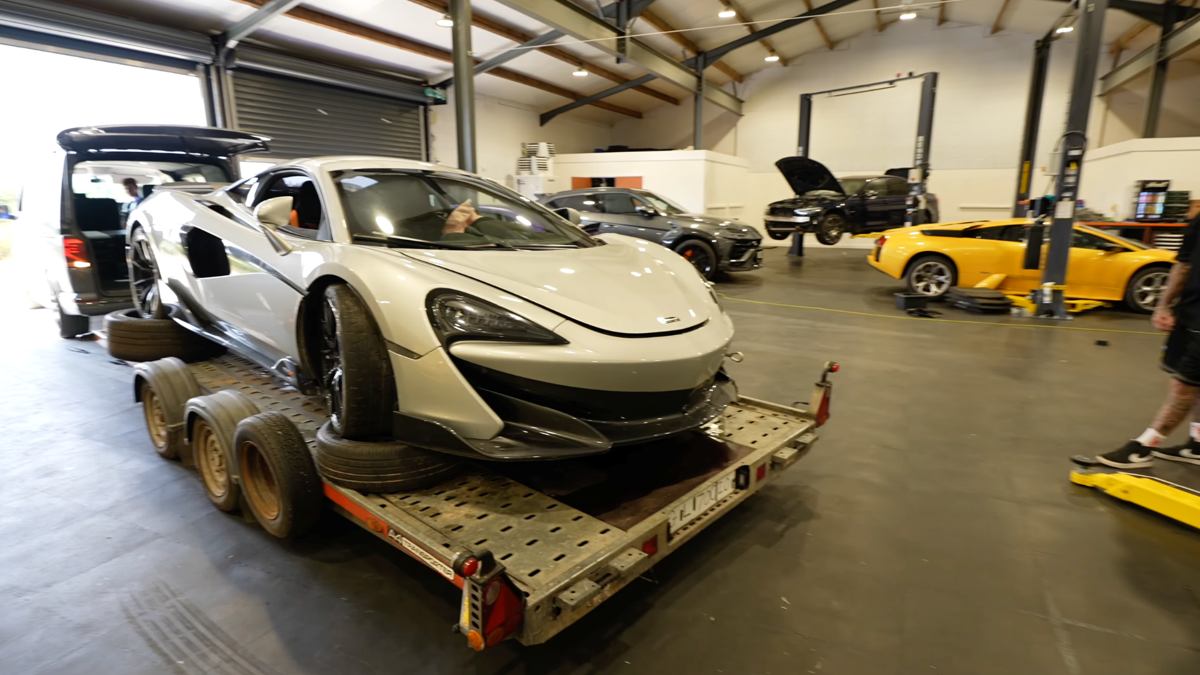
Purchasing a 2,866-pound exotic vehicle without a physical inspection poses significant financial risks. Mat Armstrong, an automotive YouTuber, took this plunge by acquiring a wrecked McLaren 600LT from Greece, navigating concerns about potential structural damage and inflated repair costs typical of supercars involved in accidents. Despite not having official insurance assessments, he transported the car to his workshop with a strict seven-day rebuild deadline.
Restoring high-performance models like the McLaren 600LT requires specialized components that often involve long wait times when sourced from dealerships. Armstrong sought to demonstrate that an independent mechanic could overcome these challenges and successfully return the vehicle to the road.
Meeting the Challenge of Repairs
Faced with a tight schedule, Armstrong opted to bypass standard supercar part supply chains. Initially, the McLaren failed to start, revealing a blown pyro fuse. Instead of purchasing an entire factory fuse box, he found an identical Mercedes-Benz replacement online for just $17. In a quick fix, Armstrong’s father manually hotwired the window motor to operate the door glass without the vehicle’s computer system.
To keep the project on track, fabrication replaced costly catalog orders. A local machinist was enlisted to TIG weld a broken cast aluminum door hinge, restoring its structural integrity without incurring international shipping delays. Armstrong also secured a lower control arm from a 720S model. However, due to the 720S’s hydraulic suspension, it lacked compatibility with the 600LT’s mechanical anti-roll bar. The team adapted it by measuring, drilling, and tapping directly into the aluminum arm.
Similarly, for the cabin restoration, Armstrong turned to local solutions. Instead of ordering new seatbelt assemblies from the manufacturer, he sent the deployed belts to an airbag specialist who reset them and dyed the webbing, circumventing long wait times and high costs.
The Right to Repair Dilemma
Armstrong’s rapid rebuild of the McLaren underscores prevalent challenges within the exotic car repair market. Manufacturers aim to maintain control over part distribution, which in turn safeguards dealership revenues and brand exclusivity. Nonetheless, independent mechanics frequently demonstrate that innovative approaches can make repairs more accessible and affordable.
In a previous instance, Armstrong successfully avoided exorbitant service fees for a Bugatti by applying similar independent repair strategies. Despite automakers generally resisting unauthorized rebuilds, the financial incentives for rebuilders are compelling. Armstrong acquired this McLaren 600LT for about $141,000, significantly below its current market value, similar to a profitable restoration of a damaged Porsche.
The content above is a summary. For more details, see the source article.









