


Key Takeaways
- Farmers in Meizhou are enhancing agricultural productivity with advanced technology as spring planting begins.
- Robotic dogs and drones are being utilized to improve efficiency in the planting process.
- Jiaoling County plans to increase its grain crop area to about 73,400 mu this spring, aiming for stable yields and timely sowing.
Spring Farming Advances in Meizhou
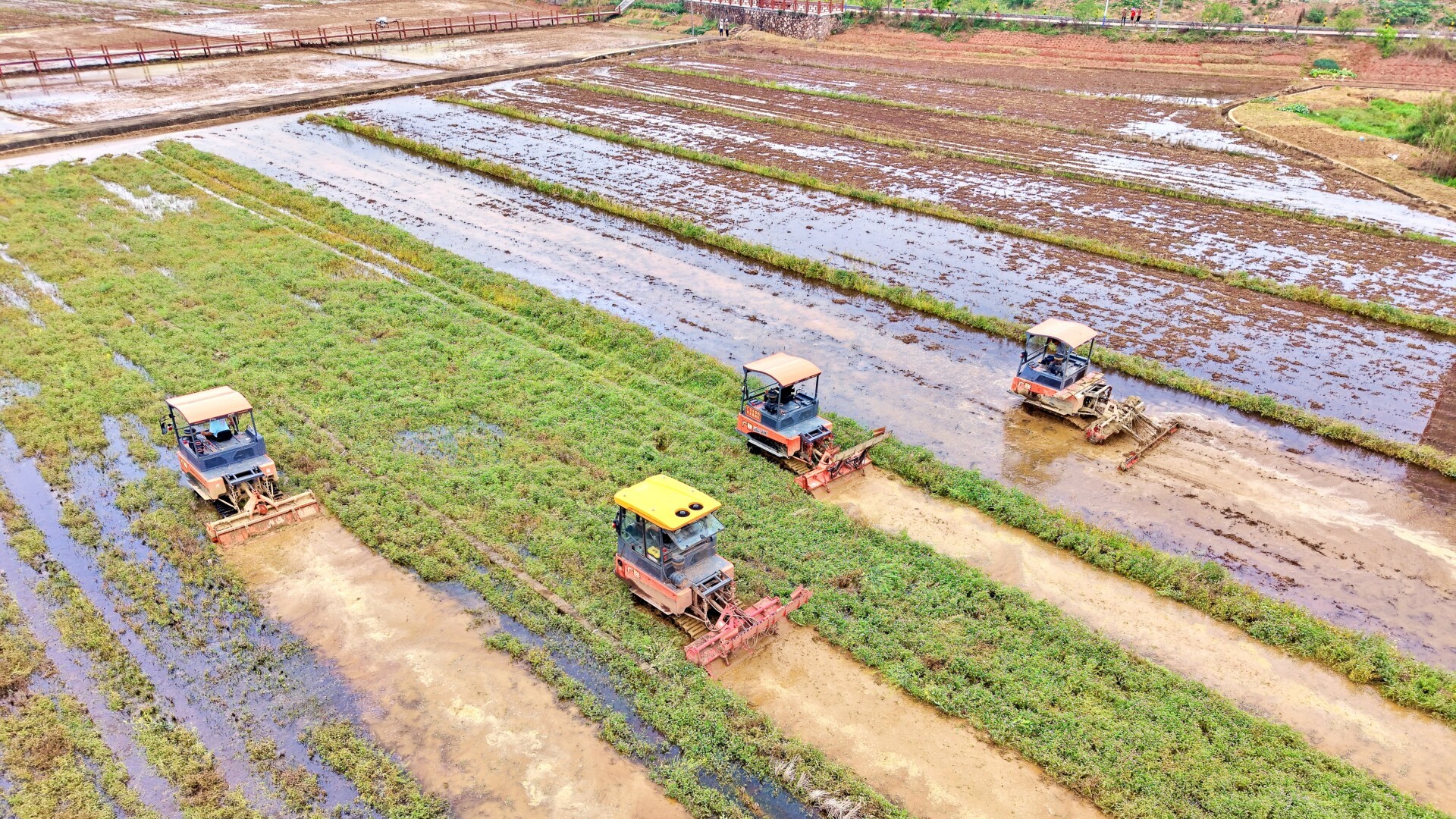
Farmers in Meizhou have begun spring plowing and planting, leveraging advanced agricultural technology and mechanization. A recent spring farming conference on March 23 in Xingning showcased innovations like robotic dogs used for field patrols and drones assisting rice transplanters by delivering seedlings directly to the fields.
In Jiaoling County, planting activities are progressing rapidly. At a standardized demonstration base in Changtan Town, machinery is being used to transplant rice seedlings efficiently, ensuring orderly rows and steady yields. The demonstration base not only serves local farmers with mechanized transplanting and land preparation but is also pivotal in enhancing overall agricultural productivity in the region.
For the current spring season, Jiaoling County aims to sow around 73,400 mu (approximately 4,900 hectares) of grain crops, indicating a slight increase from the previous year. The sowing process is expected to be completed by early April, with officials emphasizing the importance of timely planting.
According to official statistics, Meizhou reported a total grain planting area of 2.76 million mu (around 184,000 hectares) in 2025, yielding approximately 1.15 million tonnes of grain, which reflects a 0.8 percent increase from the prior year. The average yield reached 416.7 kilograms per mu (about 6.25 tonnes per hectare). Additionally, efforts are ongoing to cultivate previously idle farmland, contributing to the growth and sustainability of local agriculture.
These advancements not only illustrate the commitment of Meizhou’s farmers to modernize but also highlight their efforts to achieve sustainable agricultural practices while boosting local food production.
The content above is a summary. For more details, see the source article.









