


Key Takeaways
- Mercedes-Benz has signed a $6.8 billion deal with Samsung SDI to secure high-nickel battery supplies, aiming to enhance its electric vehicle strategy.
- The automaker is facing significant financial challenges, including a 57% drop in operating profit and a 21% sales decline in China, prompting a major cost-cutting initiative.
- Despite the new partnership, high production costs mean luxury electric vehicles are unlikely to become more affordable for American consumers in the near future.
Shifting Strategies in Electric Vehicle Production
Mercedes-Benz is rethinking its electric vehicle (EV) strategy by partnering with Samsung SDI in a landmark $6.8 billion agreement for battery supplies. This multi-year contract focuses on securing high-nickel NCM (nickel-cobalt-manganese) prismatic batteries. The move comes as the automaker grapples with disappointing sales figures, reflecting the need for a renewed approach toward EV manufacturing.
Both Mercedes and Samsung are prominent global investors in research and development, and this partnership aims to provide a competitive advantage by fostering collaboration on advanced battery technology. The backdrop for this strategic shift includes a stark financial landscape: Mercedes-Benz encountered a 57% plunge in operating profits for the fiscal year 2025, alongside facing $1.2 billion in tariff costs and a 21% drop in sales within the critical Chinese market. To address these challenges, the automaker is rolling out its “Next Level Performance” cost-cutting strategy, which includes a target to cut material costs by 8% by 2027. Partnering with Samsung SDI is viewed as a strategic means to improve supply chain logistics while buffering against profit-eroding bottlenecks.
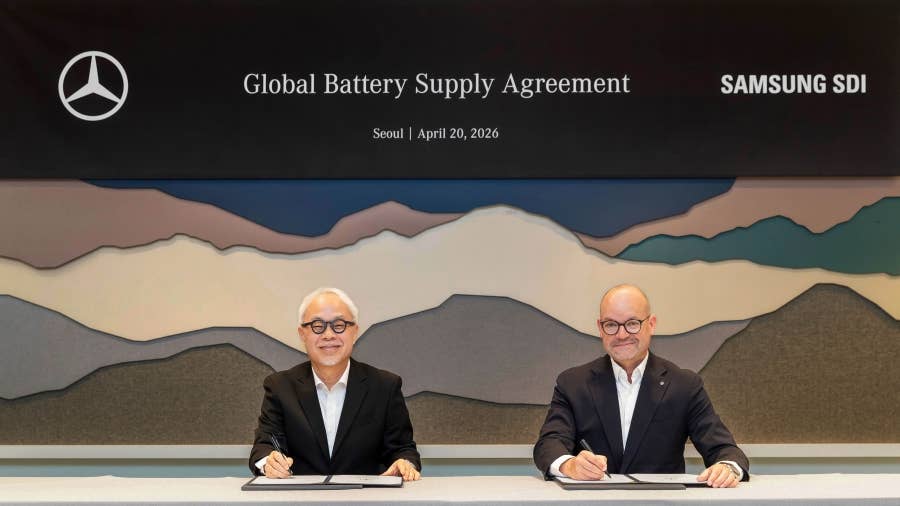
The formal agreement was reached on April 20, 2026, during a signing event in Seoul, providing Mercedes with a reliable supply of high-energy prismatic cells tailored for its upcoming range of compact and mid-size EVs, including SUVs and coupes. This partnership solidifies Mercedes’ commitment to high-nickel battery technology, distinguishing it from competitors opting for less expensive alternatives such as lithium iron phosphate (LFP), which may offer lower energy density and driving range.
Nevertheless, American consumers may face some sobering implications from this supply chain shift. While high-nickel NCM chemistry is expected to improve thermal management and performance, it is unlikely to make luxury EVs more accessible. Even with internal directives to reduce material expenses, batteries continue to constitute approximately 40% of an electric vehicle’s overall production costs. As such, the anticipated reduction in production costs may not translate into lower prices for buyers.
The collaboration between Mercedes and Samsung marks a transitional phase from experimental electrification to a more pragmatic approach focused on financial viability. For prospective buyers, the message is clear: patience is essential. The diversification of suppliers is primarily aimed at safeguarding profit margins rather than reducing vehicle prices. As Mercedes positions itself with advanced technology to maintain its luxury reputation, budget-conscious shoppers may need to delay their purchases. The current market volatility suggests that financial stabilization will take time, and early adopters are likely to bear the brunt of the initial investment required for sophisticated EV technology advancements over the coming decade.
The content above is a summary. For more details, see the source article.









