


Key Takeaways
- The Smart Cities Miami Conference focused on integrating technology and urban design to create sustainable cities.
- Keynote speakers emphasized the importance of multi-stakeholder collaboration in developing smart city strategies.
- The conference included discussions on AI’s role in enhancing urban resilience and the use of urban data for optimizing municipal services.
Conference Overview
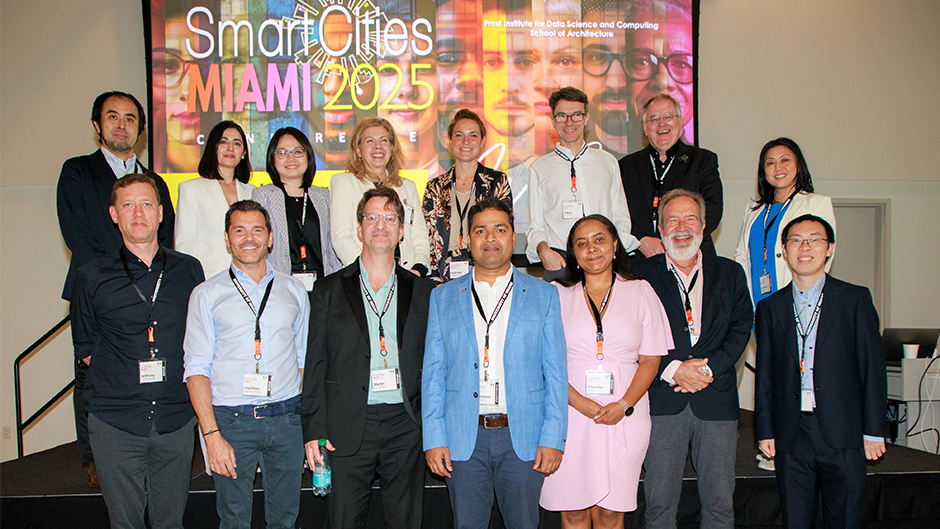
The University of Miami School of Architecture and the Frost Institute for Data Science and Computing recently hosted the ninth annual Smart Cities Miami Conference on April 3-4. This two-day event, held at the university’s Coral Gables campus, made significant strides in exploring the intersection of urban technology, data, and design.
The conference opened with remarks from Rodolphe el-Khoury, Dean of the School of Architecture, and Dr. Sarbeswar Praharaj, Conference Chair, setting the stage for insightful discussions. The keynotes were presented by Jennifer Clark from Ohio State University and Nathalie Crutzen from the University of Liège in Belgium. Clark challenged attendees to shift their focus from technology to the city itself, promoting her model of cities as platforms for technological innovation. She urged reflection on five premises of urban innovation based on her book, “Uneven Innovation: The Work of Smart Cities.”
In her keynote, Crutzen defined smart cities as multi-stakeholder ecosystems that leverage digital technologies for sustainable outcomes. Her insights emphasized the collaboration necessary among local governments, citizen groups, and private entities to enhance urban ecosystems effectively.
The conference also featured presentations from Fabio Duarte from MIT and Anthony Townsend from Cornell Tech’s Urban Tech Hub. Duarte showcased the potential of urban data science in analyzing cell phone data to improve municipal services. Townsend offered a vision for how AI can foster community resilience and empower public engagement in urban design.
In addition to individual presentations, the conference facilitated panel discussions with local government and industry leaders from South Florida. Noteworthy contributions were made by representatives from Coral Gables and Pompano Beach, which highlighted current efforts to utilize urban technologies for improving quality of life, alongside insights from technology companies such as NVIDIA.
The final day included a scientific workshop, where international experts collaborated on a special issue of the Journal of Urban Technology. This was aligned with the conference’s goal of bridging research and practical applications to construct smarter and more sustainable urban areas.
Reflecting on the event, Martin de Jong from Erasmus University Rotterdam noted the richness of discussions that can lead to actionable ideas for urban futures. Professor Sarbeswar Praharaj stated that the conference demonstrated a commitment to addressing complex challenges at the intersection of cities and technology, fostering ongoing dialogue and scholarly achievements in this critical area.
The content above is a summary. For more details, see the source article.









