


Key Takeaways
- Robot lawn mowers like the Mammotion Yuka Mini navigate using GPS and require precise placement of an RTK receiver for optimal performance.
- Finding a suitable location for the charge dock is challenging, as it must be stable, accessible, and have direct satellite visibility.
- While setting up and operating the lawnbot poses challenges, it shows effectiveness in mowing, providing a convenient alternative to manual lawn care.
Setting Up the Mammotion Yuka Mini
Testing the Mammotion Yuka Mini robotic lawn mower has revealed that the setup process is far from straightforward. Unlike robot vacuums, where setup is a simple plug-and-play experience, lawnbots require careful attention to navigation technology and placement of key components.
The Mammotion Yuka Mini uses GPS and an RTK receiver for navigation, marking a significant difference from robot vacuums that typically use LiDAR. This RTK receiver is crucial for providing accurate positioning data down to a few centimeters. It can be mounted on a pole or attached to a structure, but the second option often proves more effective. A direct line of sight to satellites is essential for the RTK receiver to function correctly, making high placement a priority.
Another important element is the charge dock, where the robotic mower returns to recharge its batteries. Identifying the right location for this dock involves multiple requirements: a flat, solid surface, proximity to grass needing cutting, easy access to a power outlet, and a direct line of sight to satellites. Unfortunately, the process can be complicated, as the selected location must also avoid entanglement with the mower’s cables.
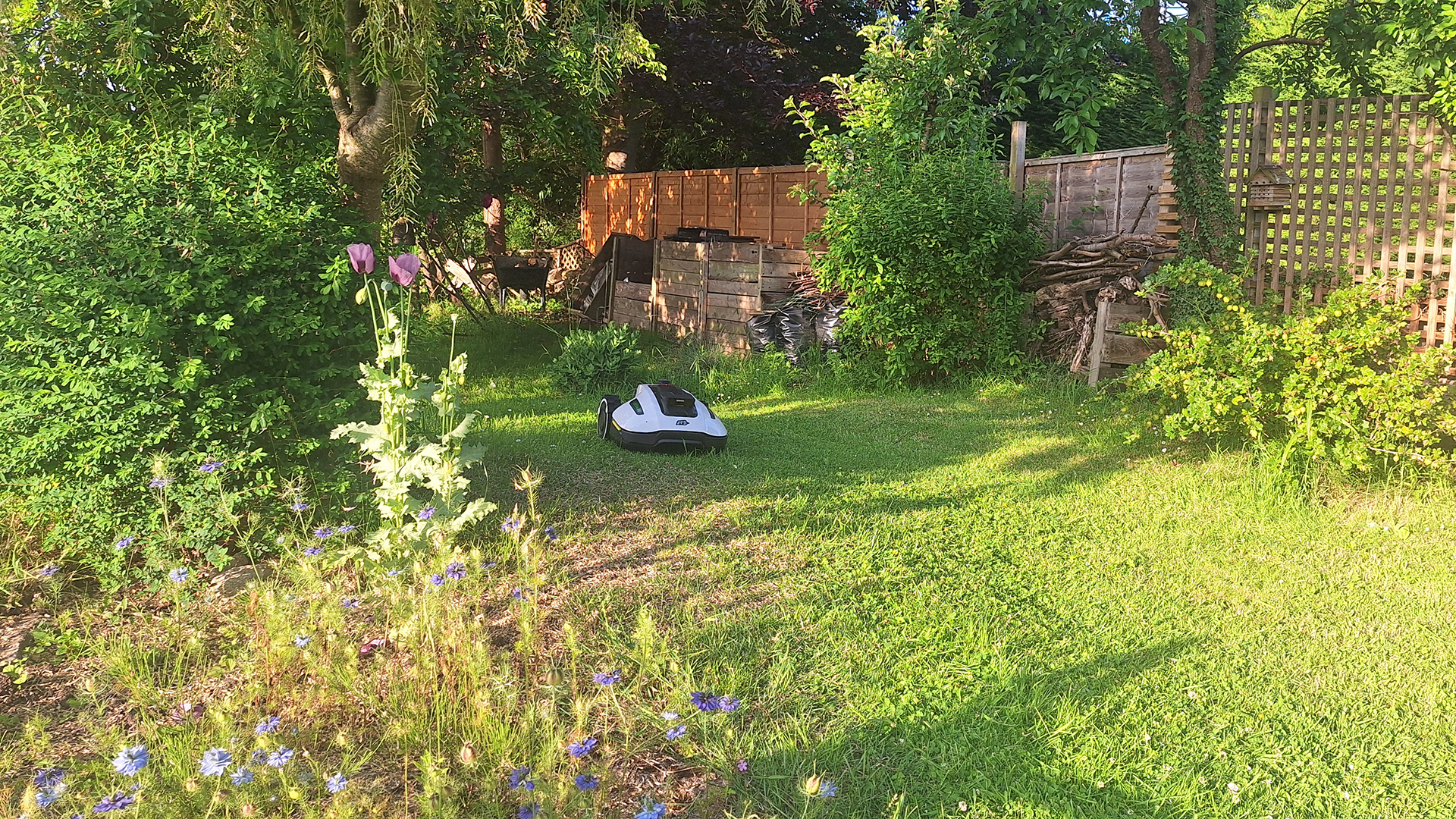
The initial setup has highlighted unexpected challenges in the yard itself. The mower has encountered various obstacles, such as netting over fruit plants and rocky pathways, often leading to entanglement or improper mowing. Additionally, mapping limitations mean the mower struggles with narrow sections of grass and avoids areas near water features.
Despite these challenges, the lawnbot has performed admirably in mowing designated areas, providing a neat finish and handling inclines with ease. Although remote control may still be necessary for specific tasks, the convenience of managing the mower from a smartphone while relaxing outdoors adds to its appeal.
As the testing progresses, finding an optimal home for the charging dock remains a goal. With continued adjustments and improvements, the experience with the Mammotion Yuka Mini promises to develop into a more efficient and less labor-intensive solution for lawn care, highlighting a potential shift in household technology.
The content above is a summary. For more details, see the source article.









