Key Takeaways
- A dormant satellite, NASA’s Relay 2, emitted a powerful radio pulse after decades of silence.
- The signal may have resulted from a micrometeorite impact or an electrostatic discharge.
- This discovery could lead to new monitoring techniques for satellite electrostatic discharges in space.
Unusual Radio Burst from a Dormant Satellite
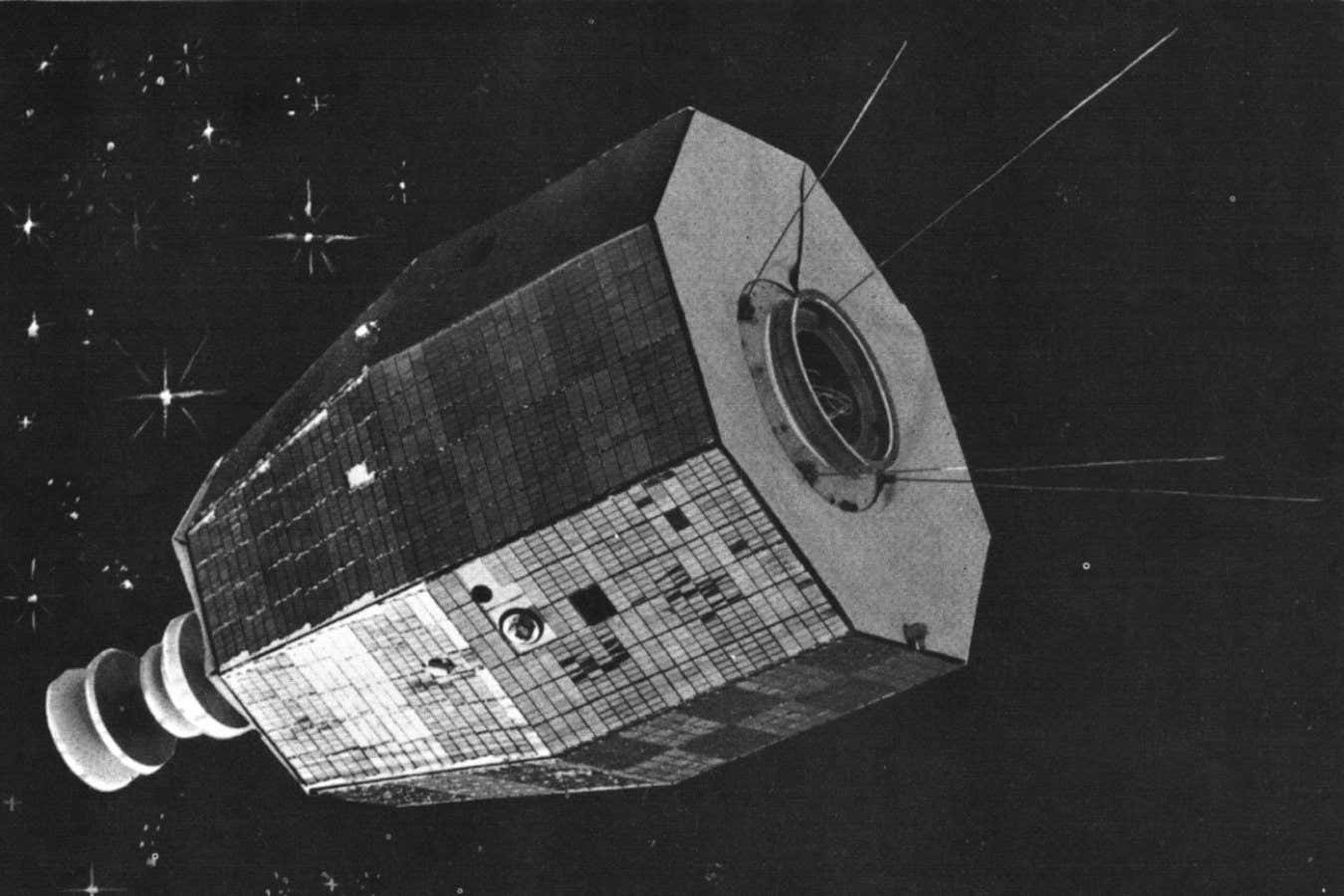
In a surprising development, NASA’s Relay 2 satellite, which has been non-functional since 1967, emitted a strong radio signal detectable from Earth. This satellite, launched in 1964 as an experimental communications device, was no longer operational by 1967, leaving it to drift in orbit.
Researchers, led by Clancy James from Curtin University in Australia, were scanning the sky for fast radio bursts using the Australian Square Kilometre Array Pathfinder (ASKAP) when they detected this unusual signal on June 13. Initially, they believed it could be a nearby pulsar or another celestial object, generating excitement among the team.
The signal’s proximity perplexed the researchers, particularly as it was so close that ASKAP was unable to focus on it adequately. This explained the necessity of determining it emanated from within 20,000 kilometers of Earth. Notably, the signal was fleeting, lasting less than 30 nanoseconds, yet it was exceptionally powerful—outshining everything else in the sky temporarily.
Upon tracing the signal’s source, researchers arrived at Relay 2 as the most plausible origin. Given the satellite’s non-functional status, they theorized the emission resulted from an external event. Considerable speculation surrounds this phenomenon, focusing on two main possibilities: an electrostatic discharge caused by electrical build-up or a micrometeorite impact generating a cloud of charged plasma.
Karen Aplin from the University of Bristol noted the challenge in distinguishing between these two scenarios, as both would generate similar radio signals. However, this incident may pave the way for more comprehensive monitoring techniques of electrostatic discharges from satellites. Aplin emphasized the relevance of this discovery in an era of increasing space debris and the proliferation of small, low-cost satellites, which often have limited protection against such discharges.
This unexpected pulse provides a fascinating case study in space research and highlights the need for ongoing vigilance regarding the interactions between satellites and their environments. The implications of this incident extend beyond curiosity, potentially influencing future satellite design and management in space.
The content above is a summary. For more details, see the source article.