


Key Takeaways
- A significant explosion occurred at the Samara Kommunar plant in Russia, vital for ammunition production.
- The cause of the explosion is unknown, with no confirmed drone strike reports.
- This incident highlights vulnerabilities in Russia’s defense-industrial infrastructure amid ongoing military pressures.
Explosion at Critical Defense Facility
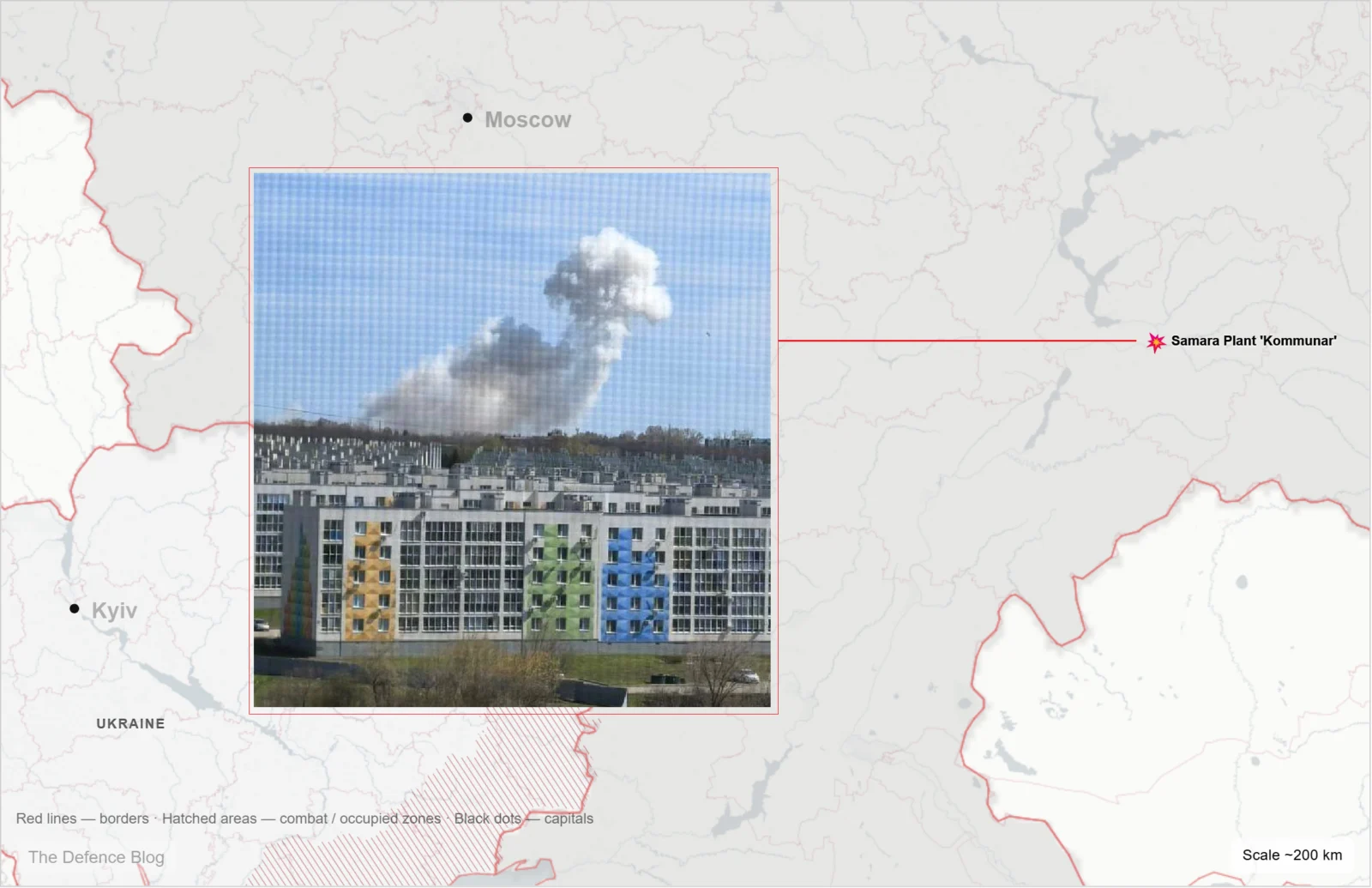
A powerful explosion was reported at the Samara Kommunar plant, a key facility in Russia’s defense sector known for producing explosives and filling ammunition. The blast has raised concerns due to the facility’s crucial role in supplying artillery shells and ordnance to Russian military forces.
Local sources and open-source intelligence (OSINT) have pointed to the explosion occurring at the Federal State Enterprise Samarsky Zavod Kommunar. While the precise cause remains undetermined, there are no confirmed reports of drone strikes or other external attacks in the vicinity. As of now, the incident has not been officially attributed to an accident, industrial malfunction, or an external strike.
The Samara plant is essential for converting shell casings and other munitions into operational rounds. This facility, specializing in filling and equipping munitions, is vital during wartime as it ensures a steady supply of artillery and explosive materials to the frontlines. Ammunition production typically involves multiple stages, with different plants focusing on various aspects. The Samara facility’s specific function underscores its importance as artillery consumption rates remain exceptionally high due to the ongoing conflict.
Witness reports describe the explosion as powerful, prompting OSINT communities to immediately flag the event due to the plant’s prominence in Russia’s military supply chain. However, images and videos circulating online have not been independently verified, and details on casualties or damage levels are still lacking.
This explosion follows a series of incidents at major Russian defense facilities, raising alarms about their vulnerability. For instance, a fire on April 14 at the Kazan Powder Plant in Tatarstan resulted from an accident and caused a partial structural collapse. Additionally, just days earlier, on April 11, a fire at the Komsomolsk-on-Amur Aviation Plant inflicted heavy damage to areas responsible for producing composite components for the Su-57 Felon stealth fighter.
These incidents collectively point to heightened vulnerabilities in Russia’s defense-industrial infrastructure during a time when artillery demands have surged. The ongoing war in Ukraine has significantly increased the pressure on ammunition production and stockpiles, as the conflict has been characterized by intensive artillery usage. Both sides are consuming shells at unprecedented rates, necessitating rapid industrial output to meet military needs.
The situation remains fluid, with the explosion at the Samara Kommunar plant emblematic of broader challenges faced by Russian defense enterprises amid sustained conflict.
The content above is a summary. For more details, see the source article.









