


Key Takeaways
- Researchers from the University of Ottawa developed photonic power converters that deliver power and data over long distances via optical fiber.
- The new technology achieves over 53% efficiency, enabling better connectivity in remote and harsh environments.
- Potential applications include smart grid monitoring, IoT sensors, and powering drones and satellites.
Advancements in Photonic Power Conversion
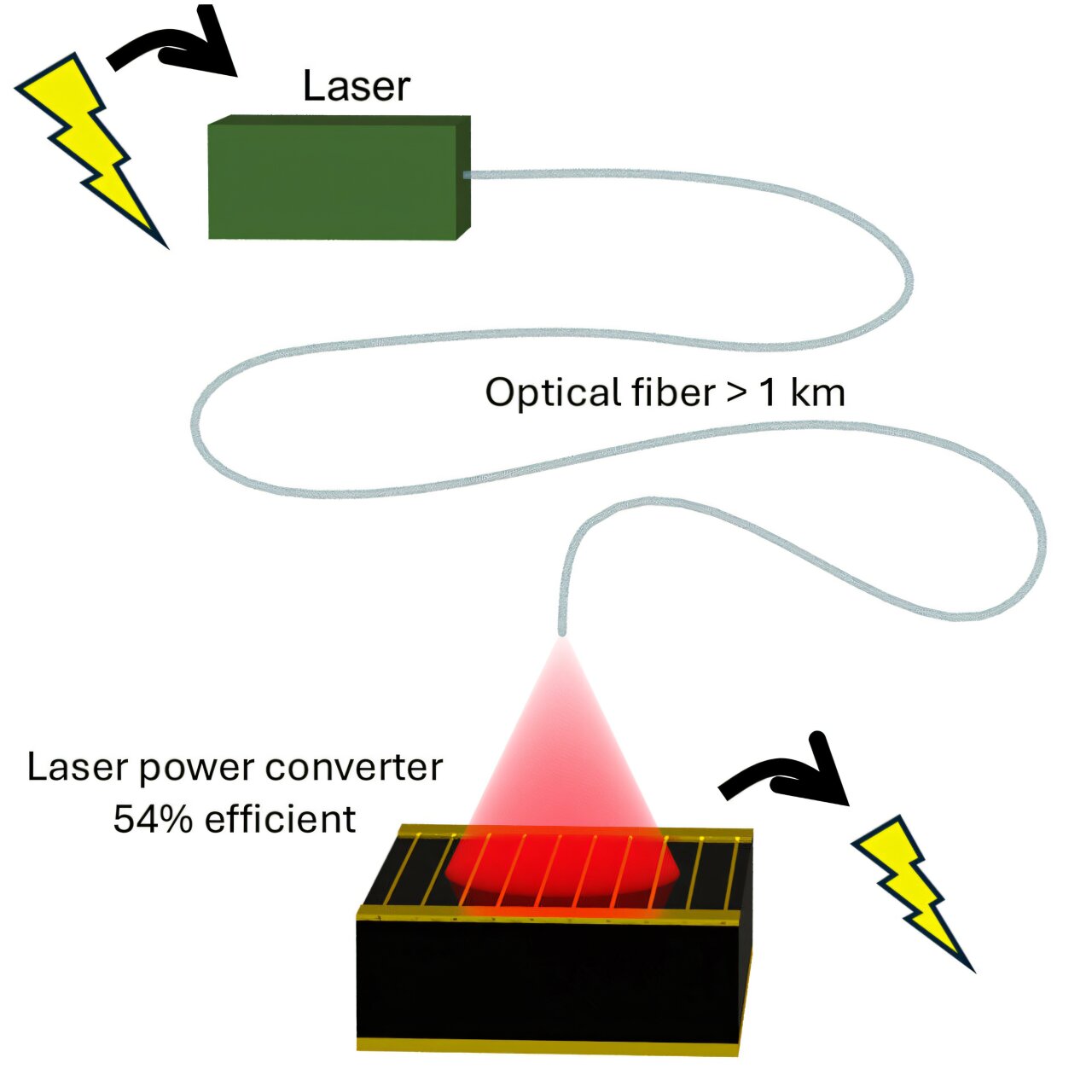
The modern world relies heavily on connectivity between electronic devices, thanks to advancements in technology. A team from the University of Ottawa, in collaboration with Germany’s Fraunhofer Institute for Solar Energy Systems, has introduced innovative photonic power converters. These devices convert laser light into electrical power over extended distances, allowing for consistent connectivity even in difficult conditions.
Traditional power over fiber systems suffer from significant laser light loss, limiting their effectiveness. Professor Karin Hinzer from the University of Ottawa’s SUNLAB explains that this new technology enables much longer fiber lengths. Researchers created a simulation model for multi-junction photonic power converters specifically designed to operate at infrared wavelengths, which are optimal for telecommunications due to their minimal attenuation losses. Gavin Forcade, the first author of a study published in Cell Reports Physical Science, noted that the new device shows significant improvements in both power and data transmission over distances exceeding one kilometer, making it a viable option where traditional systems have failed.
Innovative Design Features
The term “multi-junction” refers to the construction of these devices, where numerous semiconductor junctions are stacked to improve light absorption. This design maximizes the conversion of laser light to electrical power, achieving higher efficiencies and voltages. The photonic power converter developed by the team generates over 2 volts at its peak power output while maintaining an impressive efficiency of over 53%.
Incorporating these photonic power converters into telecom wavelength systems could lead to more robust telecommunication networks. As these devices enhance system performance, they may also lower costs, resulting in faster and more reliable networks. Possible applications span a wide array of technologies, including:
– Advanced monitoring systems for smart grids,
– Sensors for wind turbines that are resistant to lightning,
– Spark-free fuel gauges for aviation,
– Distributed sensors within the Internet of Things (IoT),
– Remote connectivity for video cameras,
– Underwater sensing technology,
– Future applications involving simultaneous power and communication for drones, satellites, and lunar vehicles.
This innovative technology has potential implications for numerous industries, reducing risks such as sparking in hazardous environments and enhancing power delivery to monitoring sensors without safety concerns related to lightning.
Professor Hinzer, who holds a University Research Chair in Photonic Devices for Energy, emphasizes the transformative nature of this research for various sectors reliant on reliable connectivity. The advancements made by the University of Ottawa and the Fraunhofer Institute signal a promising shift in how power and data can be transmitted over existing fiber optic infrastructure, setting the stage for future developments in telecommunications and environmental monitoring.
For further insights, see the research by Gavin P. Forcade et al. published in Cell Reports Physical Science.
The content above is a summary. For more details, see the source article.









