


Key Takeaways
- The proposed scheme ensures strong mutual authentication and secure key negotiation among network entities.
- Formal and informal analyses demonstrate robustness against various security threats, including eavesdropping, session hijacking, and impersonation attacks.
- Utilization of random nonces and advanced cryptographic techniques mitigates common vulnerabilities inherent in similar systems.
The article discusses a proposed security scheme focusing on mutual authentication and secure key negotiation, analyzed through both formal (using Burrows-Abadi-Needham logic) and informal methods. The formal analysis confirms the scheme’s adherence to eight specific security goals vital for ensuring trust among network entities.
To achieve strong mutual authentication, the scheme requires multiple message exchanges—specifically four during the login and key agreement phases. The exchanged messages, transformed into idealized formats for analysis, include parameters from various sources, ensuring secrecy and authentication integrity.
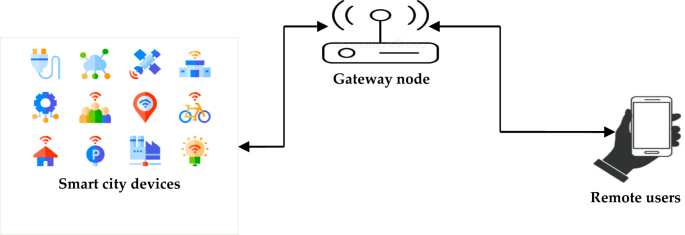
A detailed review of the system’s underlying security goals shows a well-structured approach to communication among three main entities: sensors (SNj), users’ mobile devices (MDi), and gateways (GWk). The formal proof indicates that with the established security goals, the scheme satisfies necessary conditions for secure communication.
In addition to formal analysis, informal propositions illustrate the system’s resilience against numerous attack types, including eavesdropping, replay attacks, and session hijacking. For example, the deployment of random nonces in messages maintains freshness, thus preventing replay attacks—a common vulnerability in systems using timestamps.
Each proposition articulates specific protective measures against various attack vectors. For instance, impersonation attacks are thwarted through robust registration procedures where sensitive user information is secured via one-way hashing—a method ensuring computational infeasibility for potential attackers. Furthermore, the design incorporates checks for user verification, specifically biometric and identity validations, to add an additional layer of security.
The article emphasizes that untraceability and anonymity are maintained throughout the process, minimizing the likelihood of adversaries successfully tracking users or network entities. Moreover, the scheme is resistant to physical and side-channeling attacks, addressing vulnerabilities arising from potential hardware-based infiltrations.
Finally, the proposed scheme ensures strong mutual authentication and key negotiation, enabling secure data exchange among the involved parties. By employing random nonces and cryptographic techniques, the structure fosters a sophisticated environment for managing communication securely, thus enhancing the overall integrity of smart city networks.
The content above is a summary. For more details, see the source article.









