

Key Takeaways
- GE Aerospace and Pratt & Whitney have completed design reviews for two engines, XA102 and XA103, intended for the U.S. Air Force’s next-generation fighter program.
- Both engines feature adaptive technologies aimed at enhancing thrust flexibility and thermal management compared to traditional engines.
- Each company has been awarded $3.5 billion to develop prototypes, although the future of the NGAD program remains uncertain due to budget concerns.
Engine Development for Next-Gen Fighter
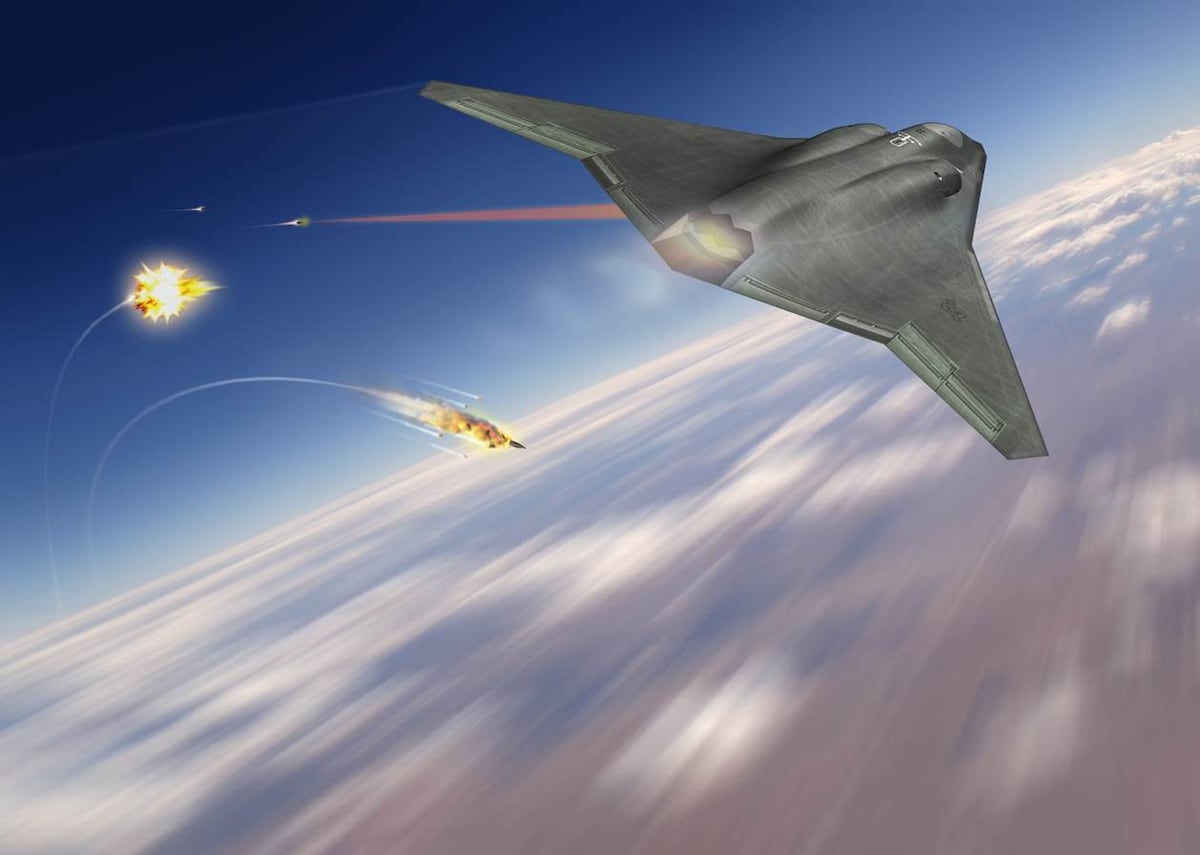
Recent announcements highlight significant progress in the development of two proposed engines by GE Aerospace and Pratt & Whitney, set to power the U.S. Air Force’s sixth-generation fighter aircraft. The engines, named XA102 and XA103, have successfully passed crucial design reviews, allowing the companies to proceed with the construction of prototype demonstration engines. These engines are part of the Air Force’s Next Generation Adaptive Propulsion (NGAP) program, aimed at equipping the upcoming Next Generation Air Dominance (NGAD) family of systems with advanced propulsion capabilities.
Both the XA102 and XA103 utilize adaptive technology, enabling them to modify thrust configurations based on different operational scenarios. This innovation promises enhanced range and improved thermal management in comparison to conventional engines. Similar adaptive technology had been considered for integration into the F-35 Joint Strike Fighter, but the Pentagon opted to upgrade existing engines due to cost concerns and limitations concerning the adaptive engine’s compatibility.
In their respective announcements, GE and Pratt & Whitney emphasized advanced digital methodologies used in their design processes. Pratt & Whitney highlighted a “collaborative digital environment” that facilitated electronic data sharing during the design review of the XA103, which was described by Jill Albertelli, president of military engines, as a critical advancement for efficient military capabilities development.
Conversely, GE praised its deployment of model-based systems engineering for the XA102, calling it a revolutionary shift in the design and testing of advanced propulsion systems. Steve Russell, GE’s vice president and general manager, asserted that their focus on model-based engineering will play a vital role as they transition into the hardware procurement phase.
In January, the U.S. Air Force announced modifications to the contracts for both companies, increasing the maximum value of each contract for the prototype phase to $3.5 billion, significantly higher than the initial maximum of $975 million awarded in 2022. As a result, both firms are now gathering the necessary materials to construct the prototypes, with Pratt & Whitney expressing plans to conduct tests on its engine prototype by the decade’s end.
Despite these advancements, uncertainty clouds the future of the NGAD fighter program. The Air Force had previously placed the initiative on hold due to concerns about escalating costs and is currently exploring alternative strategies to achieve air superiority at a lower expense. Future decisions regarding the program are expected to arise following the 2024 U.S. presidential election, with former Air Force Secretary Frank Kendall allowing the incoming administration to make critical determinations, albeit acknowledging the necessity of the NGAD system.
In related news, the U.S. Navy awarded Pratt & Whitney a $186 million contract to support the sustainment of the F-35’s F135 engines, aimed at maintaining operational readiness. Additionally, Pratt & Whitney received a three-year, $1.5 billion contract in December to uphold the F119 engines that equip the Air Force’s F-22 Raptors. These efforts are projected to enhance the performance and cost-effectiveness of over 400 engines in the fleet.
The content above is a summary. For more details, see the source article.