


Key Takeaways
- NITI Aayog has gathered experts to assess India’s critical mineral needs for strategic sectors.
- The report forecasts a surge in demand for critical minerals due to clean energy and advanced manufacturing.
- Strengthening domestic capabilities and diversifying imports are key to securing mineral supply chains.
Stakeholder Consultation on Critical Minerals
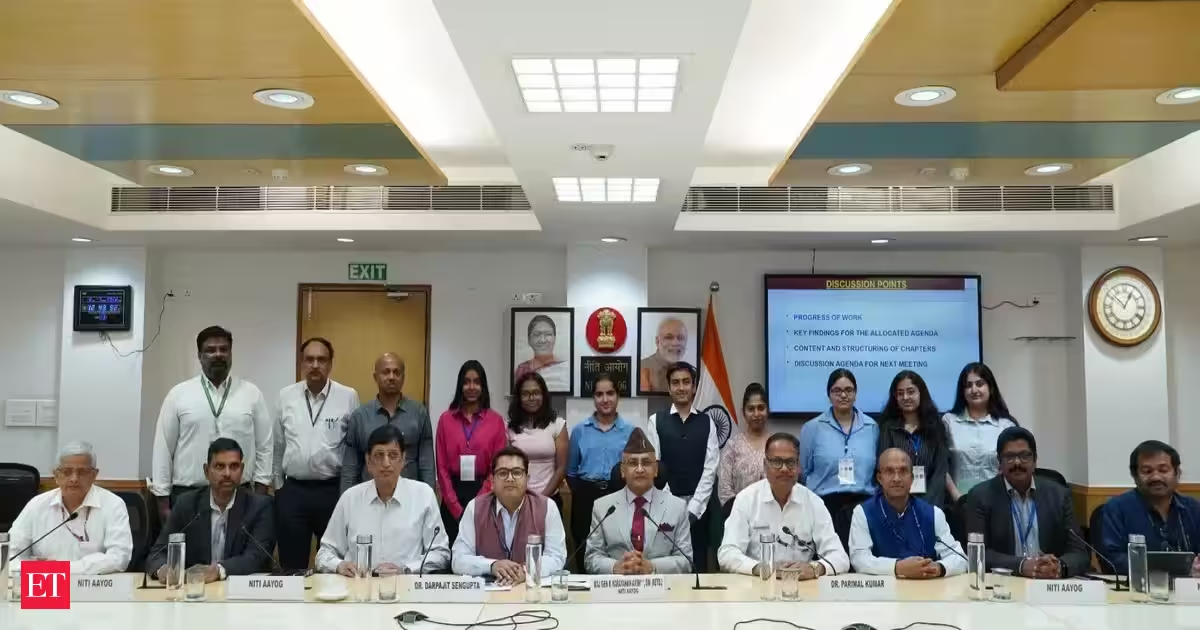
NITI Aayog held a stakeholder consultation focused on the growing requirement for critical minerals essential for India’s strategic sectors. Experts from government, research institutions, academia, and industry participated to evaluate current and future mineral demands. The initiative aims to bolster supply chain resilience in light of increasing requirements spurred by advancements in clean energy technologies and electric mobility.
The discussions emphasized estimating both current and future demands for critical minerals while identifying vulnerabilities in supply chains. A commitment to enhancing domestic capabilities in exploration, processing, and recycling was underscored, alongside the need for collaboration among key stakeholders. The consultations are part of NITI Aayog’s broader goal of evidence-based policymaking essential for economic growth, national security, and technological advancement.
According to a NITI Aayog report, India’s ambition to evolve into a developed economy and achieve net-zero emissions by 2070 hinges on secure access to critical energy transition minerals. The report estimates that under the Net Zero Scenario, the cumulative requirement for critical minerals could reach approximately 169 million tonnes. This figure is projected to be 51 percent higher than the Current Policy Scenario, with a significant demand increase for battery-related minerals.
Furthermore, the report highlights that the majority of India’s critical mineral requirements are anticipated to arise post-2050. The current dependency on imports for several vital minerals adds urgency to the challenge of diversifying supply sources. It stresses that developing domestic value chains is a strategic priority for the nation.
To address these challenges effectively, the report recommends several actionable strategies. These include enhancing domestic exploration and mining capabilities, expanding refining and recycling infrastructure, promoting mission-driven research and development, and diversifying sources by strengthening international partnerships. Improved institutional coordination is also suggested to ensure the long-term security of critical mineral supplies.
The stakeholder consultation is expected to shape future policy measures aimed at securing critical mineral supply chains and supporting India’s long-term economic, industrial, and national security goals.
The content above is a summary. For more details, see the source article.









