


Key Takeaways
- Nvidia expands its AI and robotics offerings, introducing new hardware, software, and partnerships to enhance intelligent machine deployment.
- The launch of Cosmos 3 Edge aims to improve robots’ real-time environmental interaction without relying on cloud computing.
- Collaborations with major Japanese firms signal a shift towards ecosystem-based development in physical AI.
Nvidia Expands AI and Robotics Portfolio
Nvidia has unveiled a broad expansion of its AI and robotics portfolio, presenting new edge AI hardware, robot foundation models, developer software, and strategic industrial partnerships aimed at enhancing the deployment of intelligent machines. This announcement, made during an event in Tokyo, underscores Nvidia’s ambition to become the leading full-stack platform for physical AI. By addressing the entire robotics development pipeline—from AI models and simulation software to manufacturing collaborations—Nvidia seeks to strengthen its market position.
According to analysts, the extensive announcements position Nvidia as a standard in the robotics industry. Himanshu Kumar Ojha from Gartner emphasized the importance of Nvidia providing comprehensive reference architectures, making them a vital player in the robotics sector.
A standout feature of the updates is the launch of Cosmos 3 Edge, a new world foundation model boasting 4 billion parameters, designed to operate directly on edge devices. This innovation allows robots and vision AI systems to better navigate their environments and make decisions in real time without the need for cloud computing. However, Omdia analyst Alex West pointed out that the primary challenge in deploying physical AI lies in data management rather than model sophistication. For effective implementation, enterprises need to address messy and unstructured data, which is essential for robotics operations.
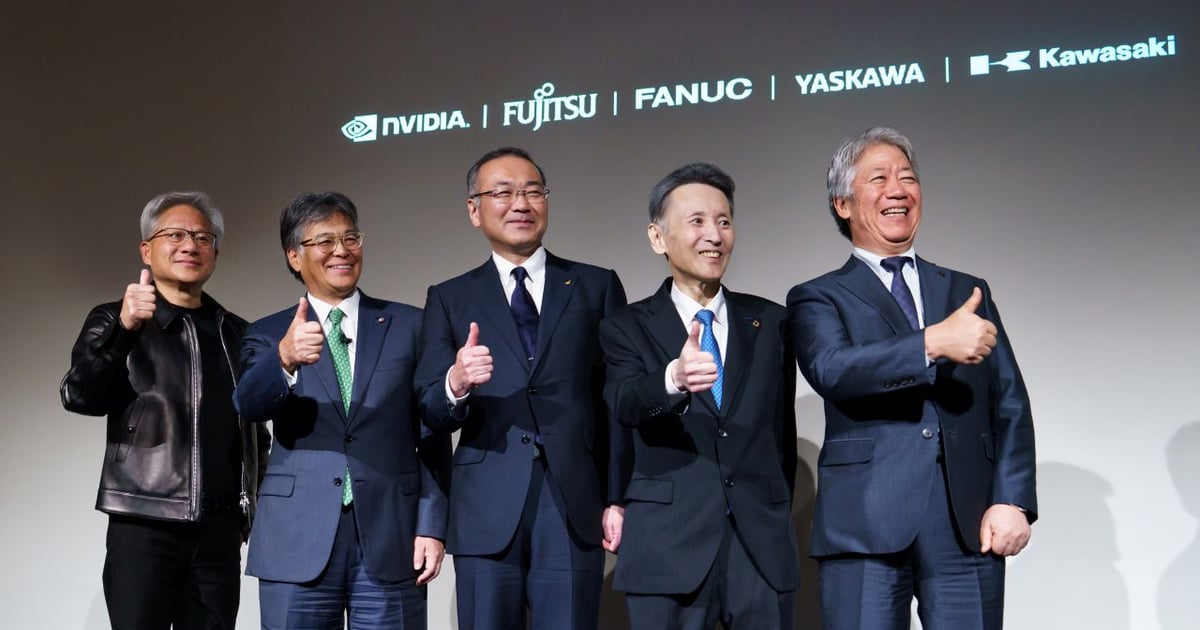
Furthering its efforts, Nvidia expanded its Cosmos Coalition into Japan, engaging key industry players such as FANUC, Fujitsu, Hitachi, and Sony. Nvidia CEO Jensen Huang highlighted this initiative as a pivotal collaboration that merges Japan’s mechatronics expertise with Nvidia’s AI technology to usher in a new era of industrial automation.
These alliances signify a crucial transition towards ecosystem-based development in physical AI, where AI developers, robotics manufacturers, and industrial firms collaborate to create solutions. West noted that these partnerships are vital, as they provide the necessary knowledge and resources to scale robotics effectively.
In a notable development, Toyota has deepened its AI collaboration with Nvidia, extending their partnership beyond autonomous driving to applications in smart cities and manufacturing. Building on their previous agreement related to driver assistance systems, Toyota will now incorporate Nvidia technologies for various uses, including factory digital twins and urban traffic management systems.
Alongside other updates, Nvidia introduced the Jetson T3000 and Jetson T2000, new edge computing modules designed to enhance the capabilities of humanoid robots and other intelligent machines. These modules promise improved efficiency for multimodal AI workloads, maintaining compatibility with advanced models.
Moreover, updates to Nvidia’s Metropolis platform have added over 80 new developer libraries and AI skills. These enhancements aim to facilitate the development of vision AI systems that can analyze real-time video input, generate summaries, and support automated decision-making processes.
Collectively, these advancements reflect Nvidia’s strategy to deliver foundational infrastructure for building and deploying physical AI, ranging from foundational models to simulation software and industry partnerships. While the strategy may propel enterprise adoption forward, experts like Paul Miller from Forrester caution that encountering longstanding challenges related to data quality and operational readiness will be crucial as firms explore the optimal blend of AI, automation, and human workforce capabilities.
The content above is a summary. For more details, see the source article.









