


Key Takeaways
- New York City’s congestion pricing is showing promising results, with overall congestion dropping from 25.8% to 19.6% since implementation.
- Transportation Secretary Sean Duffy’s order to halt the program raises concerns about reversing traffic improvements.
- Congestion pricing has potential nationwide implications for urban mobility, requiring a comprehensive approach alongside improved public transportation and infrastructure.
Successful Traffic Management in NYC
Ralf-Peter Schäfer, vice president of product management for traffic at TomTom, reports that data from five months of New York City’s congestion pricing indicates positive trends. Traffic congestion has decreased significantly, with overall congestion levels falling to 19.6% from 25.8% earlier this year. The time taken to cover six miles has also improved, with drivers experiencing about 35 seconds less delay on average.
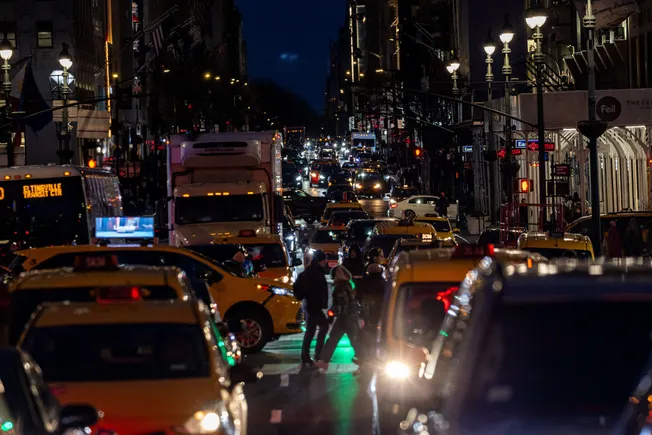
In 2024, New York City was ranked as the most congested city in the U.S., with drivers wasting around 117 hours per year in traffic. This excessive congestion has historically affected both quality of life and economic productivity. However, congestion pricing is presenting a solution, reflecting what transportation experts have long advocated: it can effectively reduce traffic, enhance urban mobility, and improve air quality. Other cities such as London, Stockholm, and Singapore have successfully implemented similar pricing mechanisms to curb congestion and promote public transportation.
Despite initial successes, the future of New York’s congestion pricing is uncertain due to Transportation Secretary Sean Duffy’s directive to pause the program. This decision poses a serious dilemma for local policymakers: continue a successful strategy or risk undoing the achievements in reducing congestion and travel delays. If rolled back, the congestion could return, leading to significant economic losses and travel unreliability.
“Curbing congestion pricing could lead to a resurgence in gridlock and decreased economic productivity,” warns Schäfer.
Beyond transportation, congestion pricing has a vital economic role. Enhanced travel predictability translates into fewer delays for businesses, timely deliveries, and reduced time spent in traffic. Studies indicate that managing traffic bottlenecks can revitalize commercial areas, benefiting local economies.
However, congestion pricing should not be viewed as a standalone solution. A comprehensive urban mobility strategy requires a blend of approaches, including strengthened public transportation, improved traffic management systems, and smarter investments in infrastructure. By integrating these strategies with congestion pricing, cities can cultivate environments that are more adaptable, livable, and efficient.
The successes in New York could offer a blueprint for urban mobility across the U.S. City planners and policymakers can draw lessons from this practical application of congestion pricing, considering how to alter travel behavior, design equitable solutions for lower-income drivers, and effectively allocate the resultant funds towards public transportation and infrastructure improvements. As urban populations expand, employing data-driven strategies like congestion pricing becomes critical to creating sustainable, economically viable cities.
As discussions about the program’s future unfold, it is vital to keep in mind the long-term advantages that congestion pricing offers—not only in terms of transportation and environmental benefits but also for businesses and the economy at large. The evidence is clear: congestion pricing can work, and its continued application may lead New York City towards a more efficient and prosperous future.
The content above is a summary. For more details, see the source article.









