Key Takeaways
- Researchers have developed a model, PlanetWaves, to predict wave behavior on extraterrestrial bodies, focusing on Titan’s lakes.
- On Titan, gentle winds can generate waves up to 10 feet tall due to its low gravity and different liquid composition.
- The model was also applied to other celestial bodies, revealing insights into their potential wave formations and dynamics.
Exploring Titan’s Waves with PlanetWaves
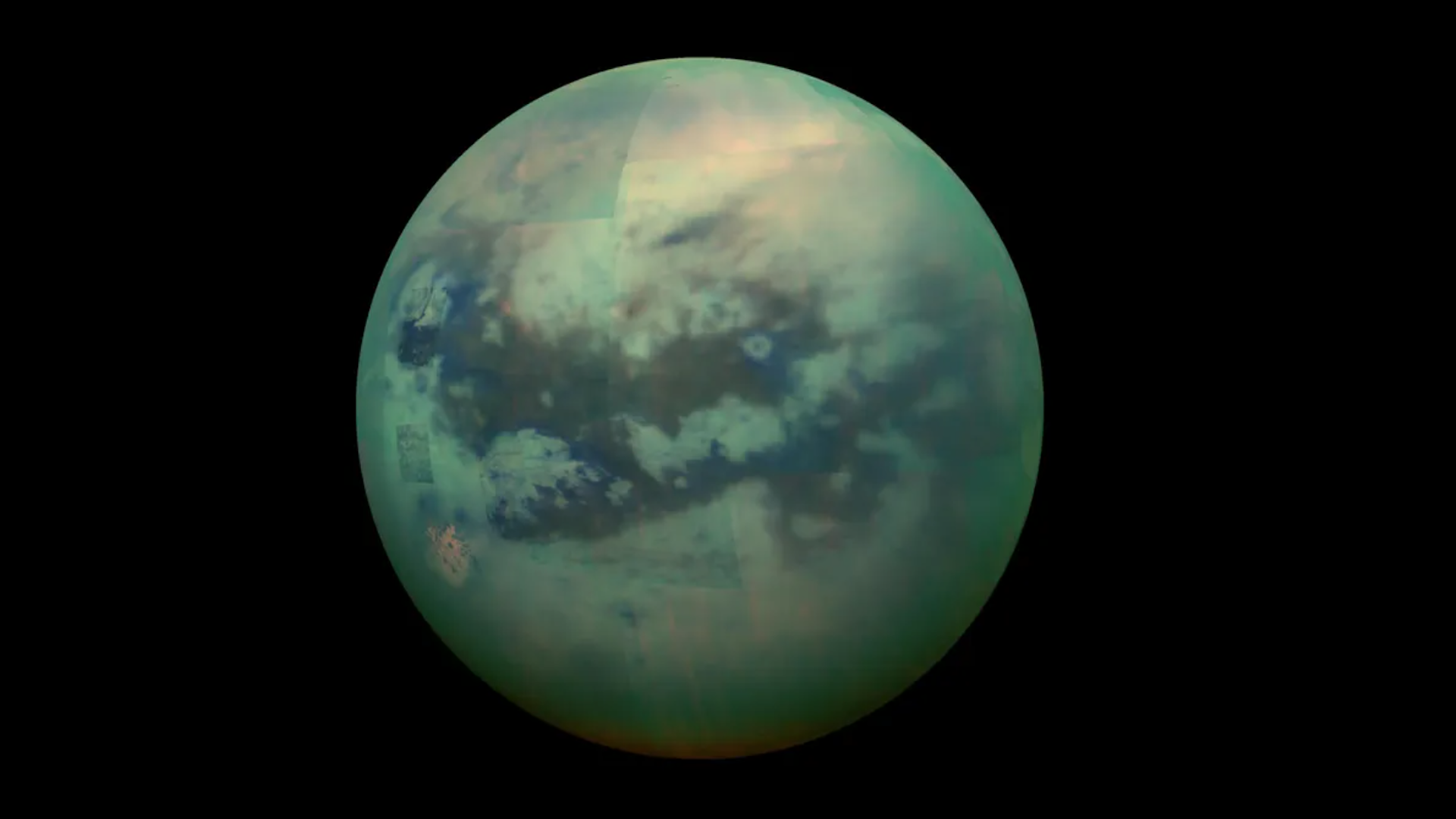
Saturn’s moon Titan has emerged as a potential surfing destination in the solar system, where light breezes could generate waves up to 10 feet tall. This surprising phenomenon has been modeled by researchers at MIT through a new framework called “PlanetWaves.” Unlike previous models that focused solely on gravity, PlanetWaves incorporates atmospheric pressure and the properties of different liquids, such as density and viscosity, which influence wave behavior.
Lead author Una Schneck and her team calibrated this model using two decades of data from Lake Superior, allowing them to accurately replicate wave measurements. As MIT researcher Andrew Ashton noted, this new approach helps challenge our understanding of wave dynamics across different celestial environments.
Titan, the moon primarily studied with this model, distinguishes itself as the only known world with surface liquids—comprised mainly of hydrocarbons like methane and ethane due to its frigid temperatures of -179 degrees Celsius (-290 degrees Fahrenheit). The unique characteristics of Titan’s environment mean that the waves formed here differ significantly from those on Earth. “If you were on the shore of a Titan lake, you might experience a gentle breeze, but massive waves would be rolling toward you,” commented Schneck.
Furthermore, understanding wave dynamics on Titan opens avenues for scientific inquiry, particularly regarding how waves may affect the moon’s geographic features. Taylor Perron, another MIT researcher, pointed out the lack of deltas on Titan despite the presence of rivers, suggesting that such powerful wave activity could be a factor in shaping this landscape.
The implications extend beyond Titan. The PlanetWaves model has also been applied to other worlds, including Mars, which previously harbored liquid water. The model indicates that stronger winds would be required to generate waves in Mars’ lower atmospheric pressure compared to its ancient conditions.
Exploring potential liquid environments beyond our solar system, the researchers examined exoplanets like LHS 1140b, which may contain water. However, its greater gravity suggests smaller waves with the same wind speeds as Earth. In contrast, Kepler-1649b, a Venus-like world with a dense atmosphere rich in sulfuric acid, may require intense winds to generate any ripple effects on its surface.
The findings from this research, published in the Journal of Geophysical Research: Planets, deepen the understanding of extraterrestrial wave dynamics and are critical for future exploratory missions. If a probe were ever to float on Titan’s lakes, knowing the wave energy would guide the design of resilient instruments capable of withstanding the harsh environmental conditions.
In summary, the PlanetWaves model not only provides insights into Titan’s waves but also enhances the scientific community’s understanding of potential wave activity on various celestial bodies, paving the way for future explorations and discoveries in astrophysics and planetary science.
The content above is a summary. For more details, see the source article.