


Key Takeaways
- China’s innovation strategy focuses on making technology affordable and accessible, challenging traditional high-margin models.
- Chinese firms like DeepSeek and BYD are rapidly scaling AI and autonomous driving technologies, aiming for mass-market adoption.
- Open-source technologies are emerging as competitive alternatives to proprietary innovations from Silicon Valley, evidenced by DeepSeek’s success.
China’s Disruption in Technology Innovation
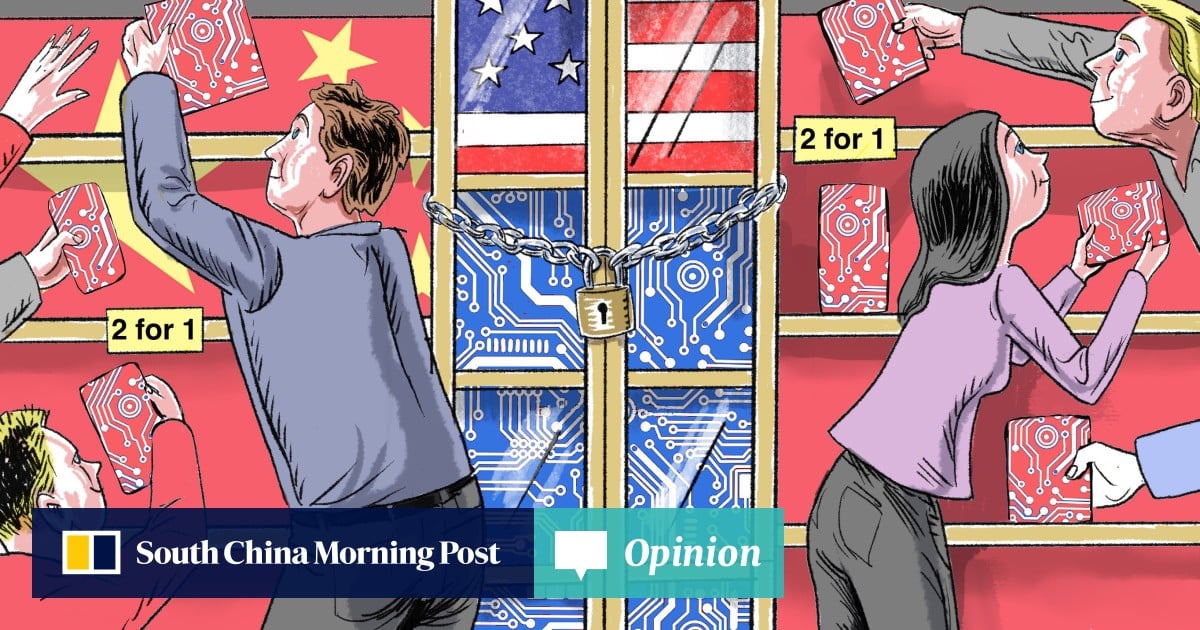
Recent trends indicate a shift in technology leadership from the traditional high-margin innovation model to one that prioritizes affordability and accessibility. China, in particular, has embraced this transformation by effectively rejecting the conventional routes established by Western tech giants. While foundational breakthroughs in artificial intelligence (AI) and biotechnology still predominantly originate from the United States, China has demonstrated an ability to rapidly scale and cost-optimize these innovations, converting them into mass-market products faster than any other player in the global market.
A noteworthy example is DeepSeek, a Chinese AI firm that aims to compete against Silicon Valley through low-cost, open-source AI solutions. The company made waves recently by releasing its open-source reasoning model R1, coinciding with the U.S.’s announcement of its substantial $500 billion Stargate AI investment initiative. Following the launch, DeepSeek’s chatbot application achieved remarkable success, even surpassing OpenAI’s ChatGPT on the U.S. iOS App Store shortly thereafter.
The landscape of innovation is shifting to one where the priority lies in broad adoption before understanding profit margins. This is evident across various sectors in China, including biotechnology, where local manufacturers are effectively undercutting their U.S. counterparts in the drug development arena. Additionally, automotive companies like BYD are leading initiatives to make autonomous driving technology widely available to consumers, contrasting sharply with the more discerning and high-cost approaches of established firms in the West.
This emerging model is not merely about slashing costs; it is a strategic maneuver driven by the fierce competition present within China’s market environment. The government’s industrial policies continue to foster the growth of global champions capable of competing on an international scale. The result is an ecosystem where incumbents that traditionally relied on high-margin products find themselves needing to adapt swiftly to the new paradigm—one where rapid scale and user adoption take precedence over immediate profitability.
Historically, Silicon Valley and tech luminaries like Bill Gates have underestimated the potential of open-source software, considering it quasi-niche. However, the success stories of Linux revolutionizing enterprise computing and Android surpassing Apple’s iOS illustrate the power of accessibility and collaborative innovation. This trend is being echoed in the AI space, as open-source AI models from DeepSeek, Meta Platforms, and Mistral AI close the gap with proprietary models such as OpenAI’s GPT-4.
In summary, the dynamics of technological innovation are pivoting, with China’s approach signifying a growing acknowledgment that widespread accessibility and lower costs can outmaneuver traditional high-margin business models. With firms like DeepSeek at the forefront, the competitive landscape is shifting toward leveraging open-source technologies that may redefine success criteria in the tech industry.
The content above is a summary. For more details, see the source article.









